










After being relatively inactive in Asia, SkyTeam is now integrating two carriers in one fell swoop. How do you explain this strategic change?
Pierre-Henri Gourgeon - SkyTeam has not changed its strategy. It consists of recruiting quality carriers whose networks are complementary to its own, in all regions of the world. Korean Air is one of the four founding members of the alliance, joined in 2007 by China Southern. Two other Asian carriers have recently joined the alliance or have announced their intention to do so: Vietnam Airlines and China Eastern. With four Asian members, SkyTeam will be able to become the leading alliance in this part of the world.
Is Africa still a key market for Air France? Why aren't there more synergies with African carriers?
P.-H. G. - Africa is a major market for Air France-KLM and, along with the Middle East, accounts for around 14 % of our capacity and traffic. The Group serves 50 destinations in 40 countries. It is our third long-haul network. In this part of the world, Kenya Airways is a strategic partner. With regard to other African airlines joining SkyTeam, the alliance remains open to any expression of interest, as long as it opens up opportunities for growth and offers advantages to our customers.
Is demand recovering in all markets?
P.-H. G. - During the first quarter of the 2010-2011 financial year, the Air France-KLM group's business recovered strongly. This was despite the closure of airspace for five days following the eruption of the Icelandic volcano. Unit revenues have recovered, mainly driven by the long-haul networks, both in the high-contribution classes and in the rear cabin. On medium-haul routes, unit revenues have also improved, thanks to the new Premium Eco product and the new seat offered on domestic flights.
Is Air France's regional strategy still geared towards feeder flights to the Group's major hubs?
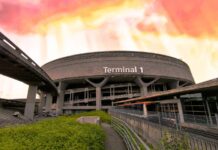
P.-H. G. - The Air France-KLM business model is based on a network organised around the two hubs of Paris-CDG and Amsterdam-Schiphol, where the domestic and European networks feed the long-haul network. This concentration effect enables us to offer very large capacity aircraft several times a day throughout the world. This model cushions the effects of the crisis and is a powerful lever for growth in times of economic expansion. In addition to this connecting traffic, Air France offers point-to-point flights for customers travelling between Paris and French cities. This traffic is concentrated at Orly, with La Navette flights. This service is complemented by intra-regional services.
What role is Transavia playing in winning back the French regions?
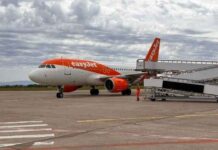
P.-H. G. - Our subsidiary Transavia is gaining a foothold in the French regions, notably with the opening of leisure destinations. This does not call into question our own business.
Seven dates
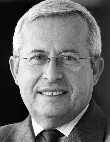
Pierre-Henri Gourgeon is 64 years old. He is a graduate of the Ecole Polytechnique de Paris and the Ecole Nationale Supérieure de l'Aéronautique.
- 1985-1988 : Snecma: director of military programs.
- 1988 : Ministère de l'Équipement, du Logement, des Transports et de la Mer: civil aviation advisor.
- 1990-1993 : Direction Générale de l'Aviation Civile (French Civil Aviation Authority): Director General.
- 1997 : Air France: Executive Vice President, Development and International Affairs.
- 1998 : Air France: Chief Executive Officer.
- 2004 : Chief Operating Officer of the Air France-KLM Group.
- Since 2009: Chief Executive Officer of Air France-KLM and Chief Executive Officer of Air France.