














The 2000s saw the emergence of a new approach to collaboration and team management. At the root of this evolution is the observation that work is less and less based on the execution of tasks, in favour of the accomplishment of missions and the realisation of projects. For a long time confined to the world of technology and consultants, the method has finally caught on, to the point of appealing to more traditional and industrial organisations looking for ways to improve their human resources. The agri-food and automotive industries, among others, also want to benefit from the flexibility of an organisation based on exchanges and flows, rather than on the simultaneous presence of participants.
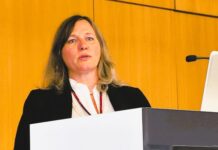
Bringing together remote teams, located at several sites in different countries, and the occasional need for skills that are not available locally are both consequences and causes of this need for remote management. By definition, a project team is fragmented, ephemeral and under pressure. Are the days of office colleagues coming to an end? It's a fact that the nature of collaboration has changed," says Alexandra Steinberg, researcher and professor at the Lyon School of Management and a specialist in collaborative management. Everything is disjointed, teams are changing, and so are the locations. It's all very destabilising. Pierre-Yves Tilly, Director of Human Resources at HP France, agrees: "Offices are no longer rear bases. They have become places for people to pass through, exchange ideas and hold meetings.
It's hard to create an affinity with the place, to put down your photo frame and your green plant. While the benefits of this decentralisation are high, the challenge is no less so. One of the risks is that you no longer see or know the people you're working with," continues Alexandra Steinberg. But the human element is crucial, particularly in terms of establishing trust.
When a project relies on something as light and flexible as a remote project team, this trust is imperative. There are two opposing schools of thought. Some say that trust is a natural order that cannot be determined," explains Alexandra Steinberg. The other school maintains that it is the context that creates it. And context is a management issue.
Control and confidence
"Empowerment rather than control. This is the main condition for the success of collaborative management", adds Alexandra Steinberg. The corollary of this requirement is a training policy that must be "central, a pillar of the HR strategy". Easy to say, harder to do. An experienced organisational consultant who wished to remain anonymous said: "It's difficult to give up this control. The top management who decide and the employees who gain space agree. It's middle management that feels threatened. They lose their prerogatives". Clearly, presence for presence's sake remains a way of making yourself look good. And when the cat's not out of the bag... "Empowerment sends managers back to their self-confidence and their methods. That's where the good ones come in!"
The word is out, because collaborative management is demanding and does not tolerate imprecision. "An HP project team may have a manager in the UK, three people in France, two in Italy... You have to keep it together," explains Pierre-Yves Tilly. Technological tools are there to help teams network. In addition to the various email formulas, audio-video conferences and real-time document sharing are productivity tools. But you have to arrive with a precise agenda, lead the meeting and really work," adds our consultant. I know people who spend 70 % of their time in meetings, and it's easy to fall into meetingitis. Impossible with a dispersed team. You can feel the gap right away. Clearly, improvisation is out of the question.
Objectives and sharing
There is still a generational and sectoral effect in our relationship with technology. E-mail is easy to use. But work flow and videoconferencing tools are not easy to master, even if they do make a real contribution. A training policy is therefore essential, but not always sufficient. It has to be said that we always expect more from technology. So all the informality, the discussion over coffee or lunch, the connivance must be replaced by a flow of information. Replacing management with nature is a colossal task. That's why setting up personal networks is vital," adds Alexandra Steinberg. Collaborative skills have become fundamental elements of evaluation. At IBM, 80 % of a post-mission assessment is based on the opinion of other project members." In the new world of collaboration, is competition an obsolete concept? "You have to give more than you get, sharing is central", Alexandra Steinberg sums up.
Achieving objectives has become necessary but no longer sufficient. Collaborative capacity, as a facilitator of mission accomplishment, is becoming increasingly important. The greater the level and frequency of remoteness, the greater the need for clarity to compensate for the absence of direct contact. Our consultant explains: "Since people have to be judged on their output rather than their presence, objectives have to be redefined and redetailed. It's very demanding and often a matter of cobbling things together..." Setting objectives remains the crucial point in a fragmented organisation.
Difficult to relax
As a result of these upheavals, the impact on the individual is greater, but not always more visible than in other forms of organisation. Not everyone is cut out for working remotely, or even from home. Teleworking projects in France have come up against a number of obstacles. From a legal point of view, there is still a notion of post and working time. So you have to be at your desk at home, whereas teleworking is intended to be more flexible. Our consultant, who specialises in this area, says: "Some projects have met with little success and are viewed with suspicion. The working hours are not flexible, and the unions are fiercely opposed because it calls into question the notion of working hours. On the other hand, in Germany, where the preservation of social benefits depends on consultation and therefore flexibility, these projects work. "At BMW, 10 % of the workforce in Munich are partially teleworking, at all hierarchical levels.
Just as a consultant expects to be constantly on the move, non-managerial staff in industry find it hard to adapt. Working from home has had its heyday, particularly with the development of broadband Internet, which has brought communication conditions closer to those in the office. Not practical, not prestigious, the lack of appeal is surprising compared to the advantages that the formula can offer. As a result, teleworking is stagnating.
Flexible and attractive
But making working conditions more flexible is a human resources issue, and a factor in attractiveness. "Trust is one of HP's values. More flexible working conditions are a win-win situation when they are well managed. And that's what sets us apart," explains Pierre-Yves Tilly. To compensate for the lack of reference points, the offices are designed on the same model, whatever the site. Connection, printing and decoration processes are standardised. The aim is to focus on productivity. The concept is similar to that of a hotel. Finding a familiar environment wherever you are is a key factor in building loyalty.
Subjecting managers to changing working conditions also means reassuring them... in order to keep them. Feelings of stress and isolation are risks that managers need to monitor. In the course of a mission, you need to maintain a human link. The benefits of reduced travel time, noise and the constant demands of an office are easily cancelled out. "Large-scale studies are beginning to question the predominance of comfort over stress when working from home," concludes Alexandra Steinberg. Faced with the ever-present pressure to be efficient and productive, it would seem that the solution lies in the network.
Feature - Remote collaboration: issues and consequences
- Remote collaboration: issues and consequences
Pierre-Yves Tilly HR Director, HP France