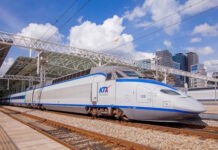

















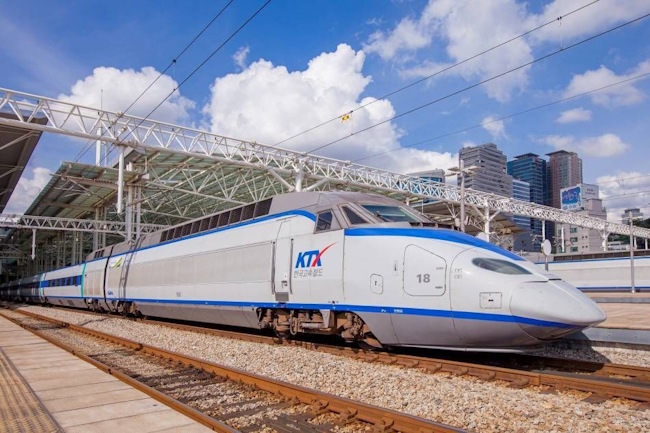
As Europe opens its lines to competition, other countries are doing the opposite, as is the case in Great Britain and South Korea. The latter has thus decided to merge its railway companies just ten years after a move to open the market. The historic national company Korail And its KTX trains will thus absorb the public operator SR (with the SRT-Super Rapid Train trains), whose capital was already divided between the state (59%) and Korail (41%). The South Korean competition authority (KFTC) gave its official green light to the operation last August 2, which is expected to bring more choice to passengers and, above all, lower prices.
The government thus promises more frequencies, especially on weekends, and a 10% reduction in the prices of the KTX trains in order to bring them in line with those of SR. This process is expected to be completed this autumn, with the added benefit for passengers of having a single ticket for boarding KTX and SRT trains. This applies to both the websites of the two companies as well as the apps, vending machines, and ticket offices in the stations. A unified pricing system and loyalty programs will eventually be harmonized.
Better management of high-speed trains departing from Seoul stations
In the train stations themselves, the project allows for the streamlining of high-speed lines departing from the stations. Seoul, Yongsan, in the eponymous district, and Suseo, whose train station is located in the southeast of the city. Korean capital. Now, travelers can board KTX high-speed trains at Suseo Station and SRT stations in Seoul and Yongsan. Until now, Korail trains only operated from Seoul and Yongsan, and those operated by the SR operator only from Suseo.
The government hopes to increase the supply of some 16,000 seats per day through better management of the supply. Indeed, while KTX trains often had plenty of seats available from Seoul Station, especially during off-peak hours, the SR company faced a chronic shortage of seats departing from Suseo. The merger will strengthen Korail, which already operates the largest high-speed network in South Korea.