











They reigned for a long time and had many children. They were the Habsburgs, the emblematic dynasty that ruled Mitteleuropa from 1273 until 1918 and whose more or less mythical offspring include Charles V, master of an empire over which the sun never set, and Maria Theresa, a mistress and wife and mother of Marie-Antoinette. There was also, by marriage, the iconoclastic Sissi; and finally, Archduke Franz Ferdinand, whose death in Sarajevo marked the end of a line whose history is entirely intertwined with that of Austria.

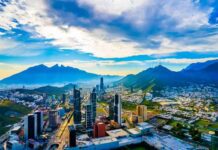
Amidst these enfants terribles, Maximilian I occupies a more discreet place in the textbooks, at least in France. In Tyrol, he is worshipped and adored. A fitting return for an emperor who fell in love with the region to the extent that he preferred to live in Innsbruck rather than Vienna. And it's hard not to understand why, given that the regional capital has all the nobility of the great mountains, surrounded as it is by sublime peaks. Nordkette, Patscherkofel, Hohe Munde... Innsbruck is like being caught in a mineral storm, waves of motionless stone frothing at their eternally white crests, bursting at their feet with an ever-regenerating greenness.
Right next to the city centre, the Bergisel looks almost ridiculous. It's a tiny mountain, but it's big in terms of history. It was on this hill in 1809 that Andreas Hofer and his army of peasants victoriously defended the Tyrol against Napoleon and his Bavarian allies. Along with Maximilian I, he is the other hero of this region steeped in history and tradition. Where each valley has its own customs and accent; where the waitresses proudly wear the Dirndl, an innocent peasant dress that reveals much that the devout cannot see; where, in the shop windows, flannel jackets with fir green facings and leather breeches - the famous Lederhosen - compete with the latest creations from international labels.


Beautiful weddings
But let's get back to Maximilian, in the 16th century. He was a fiery man, like the Inn, the river that flows through the Tyrolean capital. But he was also a charmer. Illustrating his consummate art of marrying well - a habit with the Habsburgs - he married Mary of Burgundy, the daughter of Charles the Bold, and then, on her death, Maria Bianca Sforza, from a wealthy Milanese family. The union was very welcome, as the emperor was also a bit of a basket case... During his last visit to Innsbruck, he was refused entry, as the bourgeoisie no longer wanted to put up with the lavish expenses of his retinue. A crime of lèse-majesté! His Highness therefore decided not to be buried in the town as planned... And rather well planned, in fact, since he had had a sumptuous tomb designed by Dürer, among others, surrounded by some forty life-size statues of the most worthy representatives of his family. Fortunately for Innsbruck, the first statues were cast and could not be transported near Vienna in accordance with the wishes of the deceased. From then on, the cenotaph was housed in the Hofkirche, Tyrol's pantheon, as Andreas Hofer was also buried there.


Maximilien's trademark
 The memorial is undoubtedly the real jewel of the city, along with the Goldener Dachl, the "little golden roof". This majestic loggia, topped with 2,657 tiles gilded in fine gold, backs onto the Habsburgs' first residence in the city. Here's a little riddle: who was responsible for this addition? Maximilian, of course, sculpted in stone, surrounded by his successive wives, enthroned for eternity in the very heart of his beloved city. The "little golden roof" is indeed the epicentre of the old town, surrounded by a unique group of medieval houses under whose arcades it's a pleasure to stroll and enter one or other of the inns whose shopfronts seem to whisper: "The little golden roof is the epicentre of the old town, surrounded by a unique group of medieval houses under whose arcades it's a pleasure to stroll and enter one or other of the inns whose shopfronts seem to whisper: "The little golden roof is the epicentre of the old town.Take a seat, we'll take good care of you. We've been doing this for centuries".
In spring, students - there are 30,000 of Innsbruck's 130,000 inhabitants - flock to the terraces of the bars along Maria Theresien Strasse. It's not hard to understand why, as this chic pedestrianised thoroughfare has an air of grandeur, even grace. It owes much to Empress Maria Theresa's urban planning vision. Under her reign, the city was enriched with sumptuous Baroque houses, grandiloquent architecture designed to strike a chord with believers after the Reformation. In a more contemporary style, it's by strolling around these palaces that you can do your shopping, at the Kaufhaus Tyrol, a department store designed by David Chipperfeld, or under the arcades of the Rathaus Galerien, a complex designed by Dominique Perrault that surrounds the old town hall with trendy boutiques and a design hotel, the Penz.
A metro designed by Zaha Hadid
Without losing touch with the past, Innsbruck is looking to the future. This subtle interplay of mirrors is clearly visible at the congress centre, ideally located in the city centre. Here, the most modern facilities are combined with walls steeped in history, such as those of the Dogana, which date back to the end of the 16th century and once housed the imperial palace's court games room. Under its high ceilings, the Dogana can accommodate large events - 3,000 people standing and 800 seated for gala dinners - but the venue has a total of 39 rooms suitable for meetings of all sizes.
At the foot of the mountain, an unusual metro station, shaped like a glacier, is an unmistakable eye-catcher. Designed by Zaha Hadid, it is part of the transport network that takes you up the mountain to an altitude of 2,000 m in less than twenty minutes. Incentive groups don't hesitate to use it to enjoy the panoramic views from the Seegrube restaurant. "It's a must in both summer and winter, for lunch or dinner, as it can be made private in the evening.says Claudia Mitterbauer, Nordkettenbahnen representative. In winter, the Seegrube also has an igloo where you can spend the evening."Depending on the season, the surrounding area lends itself to all kinds of sports: skiing, of course, but also hiking and mountain biking, or even flying fox, an activity better known in France as... tyrolienne!

After this moment of relaxation, it's time to hit the road for Austria's most chic resort, Kitzbühel. But as everything here is more or less linked to the history of the Habsburgs, the route also follows in their footsteps. Just outside Innsbruck, Hall im Tirol is well worth a visit. This charming little town is hoping to be awarded the UNESCO label in July. And it's got something to show for it: the thaler, the currency of the Holy Roman Empire, which has gone on to become known as the dollar. It was in Burg Hasegg, the castle, that the first machine was installed to mechanise the minting of coins, which would greatly facilitate trade throughout Europe. Financial institutions planning to carry out an incentive operation in the Tyrol will not be insensitive to this detail... But Hall is also worth a visit for its medieval town centre, which is even bigger than Innsbruck's, with the same 15th-century houses and the same gentle pace of life, all enhanced by Baroque masterpieces such as the Sacred Heart monastery and the church of St Nicholas.
Further on, the silhouette of Château Tratzberg can be seen on the heights, surrounded by forests. During the Renaissance, this former hunting lodge of Maximilian was transformed into the summer residence of the Fuggers, the great moneymen of the Holy Roman Empire. They were the new rich, but they had very good taste: the courtyard of the castle is delicately painted with allegorical scenes, while inside, the woodwork and marquetry furniture bear witness to the family's lifestyle. A family that was not lacking in wit, covering the ceremonial hall with a long mural depicting the Habsburg family tree. A subtle way of forging an intimate bond with their patrons! "The castle is inhabited year-round by Count Enzenberg, the current owner, comments Hélène Fellner-Seebacher. But you can make it your own for events, starting with a concert in the courtyard, followed by a tour in period costume, and then dinner at the restaurant below the château."
Before you take the first bend in the road to Kitzbühel, the fortress of Kufstein stands proudly on its promontory. Guarding the Munich-Venice road for the Bavarians, it was taken by Maximilian in 1504. Until the end of the 19th century, its only purpose was to scan the surrounding area for enemy attackers. Today, the town has been toned down and hosts major open-air events in summer, with views of the Zillertal glaciers. A sublime setting that companies from the region and neighbouring Bavaria have no hesitation in privatising.


Monaco in the mountains
On the trade route from Munich to Venice, Kitzbühel was another key passage thanks to its coal mines. Kitzbühel bears witness to this rich past in the form of its two churches, both of which have been converted from Romanesque and Gothic styles to the Baroque style, with their dashing bulbous bell towers. In the small medieval town centre, it's no longer wealthy merchants who live in the brightly coloured houses. They have been replaced by chic hotels and Vuitton or Rolex boutiques. The change had been in the making since 1893, when Franz Reisch first tested skis from Norway. The village mayor had just found the town's new goldmine. Gold as white as snow.
By 1926, the mines had closed, but the resort had already embarked on the winter sports trail, welcoming the celebrities of the Roaring Twenties. Above all, "Kitz" established its reputation with an event, a myth, the Streif, which is to Alpine skiing what Monaco is to Formula 1: a social event attracting a crowd of VIPs as much as a crazy race where skiers practically throw themselves into the void to race down the Hannenkam.
Adorned with tender fir trees, this cow mountain looks almost insignificant. And yet, only the greatest have been able to tame it to victory, not least Jean-Claude Killy, but also Toni Sailer, the village boy. "Some people compare this race to an opera. It starts with a bang, then calms down, then ends in a climax," says Claudia Waldbrunner from the tourist office. "All operations down the Streifshe continues. Whether you're out walking in fine weather or skiing in winter, you'll always be thrilled to see the vertiginous spots through which the racers pass."
In addition to all the sports on offer, Kitzbühel also offers unique moments that leave a lasting impression of the timeless charm of the Tyrol. A few three-hundred-year-old farmhouses with no comforts apart from their charm, which, if you know how to show your stuff, can host very intimate evenings, refuges in winter where participants meet arm in arm over a family dish or Rosi's Sonnbergstuben, a traditional mountain restaurant used to very large tables and which can be privatised all year round: the resort knows how to maintain its 'Best of the Alps' status, a closed circle of the most beautiful resorts in Europe. The equal of Megève, Davos or Zermatt.


Special report - Tyrol: the old aristocracy at the top in Austria
- Tyrol: the old aristocracy at the top in Austria
Austria / Tyrol: address book
Interview with Veronika Handl, Director of the Tirol Convention Bureau