





The traditional back-to-school event for buyers and travel managers, Univ'AirPlus was held on Thursday 9 September. An event organised for the first time virtual because of the uncertainties linked to the pandemic and the desire of the corporate payments specialist for this edition to be held.
The theme of this fifteenth edition was better travel, " a trend that already existed before the crisis, but which has gone from being a need to a necessity. an obligation" As Julie Troussicot, Director of France at AirPlus International, pointed out at the start of the afternoon session. One of these obligations goes well beyond the scope of business travel, and is in line with the existential concerns of the planet: CSR. Covid has initiated what we hope will be an irreversible change in attitude towards business travel, which represents a significant proportion of the world's energy consumption. half the greenhouse gas emissions of businessesand even more so in the services sector.
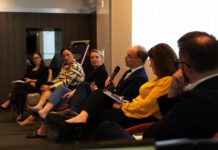
" We are seeing a growing interest in this subject from employees and top management. But how can we make it work?" asked Lucile-Laure Plesse, in charge of sourcing for the Roche Group. The round table on CSR highlighted a number of difficulties in putting CSR into practice. effective sustainable travel policiesIn particular, the diversity of carbon footprint measurements across suppliers. " For example, if you change travel agencies, the calculation method will no longer always be the same" says Amélie Berruex, Managing Director of Axys Odyssey. To go further, the calculation methods adopted internally by companies must also match their ambitions. " If a company wants to tackle this issue head on, it must adopt a strict method of calculation" said Laurent La Rocca, founder of The Treep.
Another difficulty highlighted was that of providing the right information at the right time in the booking tools for helping professionals choose environmentally-friendly modes of transport or responsible accommodation. What emerged from the discussions as a key priority for accelerating change was the need to passenger awareness through positive communication on CSR issues. " We need to give employees a sense of responsibility, but first we need to educate them and give them a sense of purpose." says Thibaut Massiet du Biest, Director of Internal Services and Purchasing at Metro. In the same vein, Laurent La Rocca, founder of The Treep, encourages gamification. to make a real impact and encourage travellers to take CSR actions. "
For her part, Lucile-Laure Plesse spoke of the recent launch in her company of a communication platform around travel and CSR. She also emphasised the importance of relays within the company to spread the good word. " There are proactive employees who become my influencersshe explains, while others are always afraid of losing comfort by giving up flying, for example because they live near an airport or because they can earn miles. "
Two start-ups rewarded at Univ'AirPlus
As in previous editions, UnivAirPlus has showcased a number of start-ups through its Innovation Rooms one of which was logically devoted to... CSR. Four young companies came to pitch: Search Mobility, Jeekan, TaxyMatch and Rategreen, whose tools measure CSR impact and sort out the disparate labels and other CO2 calculators. A start-up declared the winner after a vote by internet users. The other Innovation Room was devoted to well-being of travellers and saw start-up Bonport win the prize for its idea of tranquillity bubbles installed in the heart of railway stations for business meetings in complete peace and quiet. The other entrants were HtoH, Runnin'City and SanctiFly.
As for the other topics discussed, UnivAirPlus returned to the subject of duty of care, the famous "duty of care According to a recent survey by BCD Travel, travel managers have declared 99% to be their number 1 priority. A subject whose importance has naturally been heightened by the crisis. " For a decade now, the notion of duty of care has been firmly entrenched in the majority of large French companies.said Nicolas Bourgeois, Renault's Director of Safety. But with Covid, employee expectations have risen sharply. "Cécile Caplin, Regional Security Manager at International SOS, also noted: "There is a growing awareness on the part of both managers and travellers. For example, we received five times as many calls from employees during the pandemic. "
The pandemic has also changed the way we approach riskby demonstrating that they go well beyond risk areas alone. " Companies were not always aware of other risks" said Amélie Berruex, from Axys Odyssey. A point confirmed by Nicolas Bourgeois: " Traditionally, the Security Division has focused on traditional security risks - crime, terrorism and road accidents. "To go further, he encourages the joint development of new protocols between HR management, occupational medicine and travel management:"We were already working together in high-risk areas, but the crisis has reinforced the need for us to work together. "
As with CSR, informing travellers about the risks is a key elementThe pandemic demonstrated the need for constantly updated monitoring tools. During the crisis, for example, International SOS set up a covid impact score for each country, based on whether or not it was possible to enter a territory and work there, subject to any curfews. However, for Ziad Minkara, Managing Director of the CDS Group, " There is still room for progress in working across the entire value chain, using common standards. "With the crisis, hotel reservation specialist CDS began offering a Covid Index, based on the new health measures put in place by hoteliers. " Today, accommodation policies are being rewritten in the light of these new requirements" explained Ziad Minkara, who sees the crisis as " accelerating the end of bookings outside company channels" .
CSR, digital, duty of care: three ways to travel better
It's no surprise that the pandemic has led to a phenomenal acceleration in the digitisation of travel, the final topic discussed at Univ'AirPlus this afternoon. According to McKinsey, Covid has taken digital technology three years forward compared with pre-crisis forecasts, all sectors combined. But there is still plenty of room for improvement in the world of business travel. " Digitalisation has made great strides for the general public, but in the business travel sector it has been slower to take off, whether in agencies, airports or airlines", says Helene Billon, Orange Group Director of Business Travel and its alternatives.
With the number of trips being revised downwards, the arrival of new tools to improve the traveller experience is a key factor for this travel management professional, whose company began automating the booking, payment and management of expense claims in the mid-2010s. " Those who continue to travel will be more demanding, wanting less stress and more fluidity, she foresees. Otherwise, they'll stay at home and do a video. "This demand for effective digital tools also has an impact on the company's employer brand, in order to attract new talent. For Raphaël Daverio, Product Director at TravelPerk, the crisis has above all encouraged companies to " look at their costs by going increasingly digital. "
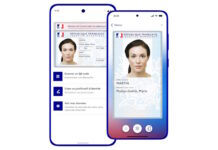
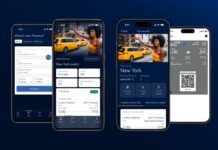
On the suppliers' side, Pierre-Hugues Schmit, Commercial and Operations Director at Vinci Airports, underlined the effectiveness of the European digital certificate, which " has worked remarkably well, avoiding hours of waiting in airports. "Among the innovations implemented by its group, Vinci Airports has launched in Lyon a biometric travel companion which allows travellers to move through the airport seamlessly and without contact. This application has also been deployed in Lisbon, and is set to grow with the addition of new airlines and a range of services at the hubs. Or when digital is closely associated with better travel.