

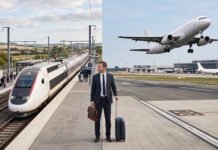










Whether travelling by land or by air, as part of an individual business trip or as part of an international symposium, conference or incentive operation... in all these cases, the fight against global warming is essential for large companies. Even though many travel managers admit that "the projects they are currently working on have not yet reached a sufficient level of maturity". However, there are tools available to measure this. Starting with the carbon footprint, which enables companies to assess their greenhouse gas emissions, either gradually or on a targeted basis. Once these emissions have been calculated, it is possible to reduce them by identifying the room for manoeuvre based on the constraints linked to the activity. And to define courses of action: energy efficiency, reducing consumption, employee travel plans... Voyages d'Affaires takes a look at the situation with the sustainable development directors of four major organisations: Arval, Aéroport de Lyon, Club Méditerranée and SFR.
For what reasons and since when has your company implemented a sustainable development policy for business travel?
Agnès Weil
In 2006, Club Méditerranée carried out the first Life Cycle Assessment (LCA) of a holiday village. This study was carried out by Bio Intelligence Service, with the support of Ademe, the French Environment and Energy Management Agency. Given the nature of our business, our priorities are the construction of villages and their operation in terms of sustainable development. Since 2007, we have integrated this concept by taking into account the business trips that our employees make from our Paris and Lyon head offices to our villages in Europe and Africa.
Lionel Lassagne
This is a fairly recent development. In early 2008, Lyon-Saint Exupéry airport, which is France's third-largest airport with almost 8 million passengers a year, made a commitment alongside the French government by signing the Grenelle de l'environnement agreement. Since then, we have put in place an action plan to combat global warming. One part of this involves offsetting our business travel by air. Another is to provide our passenger customers with a calculator via our website, enabling them to find out the emissions linked to their travel. Since last summer, they have been able to make an online donation to fund a CO2 offsetting project in a developing country.
François Piot
In 2004, Arval signed the United Nations Global Compact. This includes measures on three levels: environmental, human and economic. Since then, as specialists in operational car leasing, we have made a number of changes to our employee car fleet. The aim is to reduce the CO2 emissions of each category of vehicle.
Catherine Moulin
For SFR, environmental protection goes beyond the simple regulatory framework. It is an integral part of its strategy and concerns both its employees and its customers. For several years now, SFR has been stepping up its commitment to sustainable mobility for its employees and customers.
When did you draw up your first carbon footprint for business travel?
Agnès Weil
Our first calculation was made in 2007. Since then, our partner, the CWT network of travel agencies, has drawn up a monthly report on the carbon emissions linked to our business travel. Our department also recalculates these CO2 emissions using Ademe coefficients based on the distances travelled, either by train or by plane. In both cases, our CO2 emissions are higher than those communicated by CWT.
Lionel Lassagne
For the moment, we haven't yet drawn up a carbon footprint. We're thinking of doing one next year. In the meantime, we are using the calculator developed by Geres, the Renewable Energies, Environment and Solidarity Group. In 2009, we offset all our carbon emissions from air travel by our employees in 2008. This represents a cheque for around €5,000.
François Piot
To date, we have not implemented a carbon footprint. But for the past three years, we have been offsetting the CO2 emissions from our own vehicle fleet. In 2008, we donated €15020 to the Action Carbone programme run by the GoodPlanet association. More specifically, this represents 653 tonnes of CO2, or €1,360 to offset the nominal emissions of the 210 vehicles in our fleet, based on a price of €20 per tonne. To this amount must be added 98 tonnes, or 15 additional %, or €1,960 to compensate for emissions in addition to those announced by the manufacturers and recorded on the track, i.e. in optimal conditions.
Catherine Moulin
In 2006, our first carbon footprint took into account CO2 emissions linked to business travel by employees: air, rail, car fleet and short-term car hire. For air travel, for example, CO2 emissions fell from 3,500 tonnes in 2006 to 2,847 tonnes in 2007 and 2,279 tonnes in 2008. Excluding SRR, Société réunionnaise du radiotéléphone.
Between this first carbon footprint and the first offset, what measures have you taken to reduce CO2 emissions when your staff travel?
Agnès Weil
It is on the basis of this assessment that we offset our emissions each year with Action Carbone. In 2007, for example, we offset 50 % of our business travel for a total of 30,000 euros, based on a tonne of CO2 at 15 euros.
Lionel Lassagne
We have put in place a plan for air travel. When there is an alternative to this mode of transport, we opt for the train; even for appointments at other airports. For example, to get to Orly, we arrive at Gare de Lyon, then take the RER. If we need to go to London for an afternoon conference, we take the Eurostar, while for a morning meeting, we prefer the plane. On the other hand, there is no alternative for travelling to Dubai. For example, a trip from Lyon to New York, 6135 km, results in the emission of 2.71 tonnes of CO2.
François Piot
Our aim is to highlight the potential for improving driver behaviour and the need for eco-responsible driving. In 2003, we signed a joint charter with the Caisse Nationale d'Assurance Maladie and the Direction de la Sécurité et de la Circulation Routière. At the time, we were the first rental company to take this initiative. Between 2002 and 2006, the number of accidents suffered by our employees fell by 38 %. This is a long-term effort, and we are taking the necessary steps.
Catherine Moulin
In 2008, we launched four new company travel plans (PDE) at SFR's main sites in the Ile-de-France region. This brings us to a total of seven company travel plans created since 2006, with the aim of optimising our employees' home-to-work journeys and at the same time encouraging the use of alternative means of transport to the private car. As part of the Rennes MP, set up in partnership with Rennes Métropole, a shuttle bus has been created between the station and the business park where we are based. Also at the Rennes site, parking spaces are now reserved for service providers who carpool.
What changes will your group's travel policy undergo?
Agnès Weil
The changes relate more to travel practices, which have been modified, let's face it, by the economic climate. Between 2007 and 2008, in terms of distances travelled, the share of rail travel rose sharply compared with that of air travel. Air travel declined in all sectors: domestic, continental and intercontinental. This trend can also be explained by greater use of videoconferencing, and even by the postponement or cancellation of certain long-distance trips for economic reasons.
François Piot
The changes mainly concern the choice of equipment. In order to move towards a more environmentally-friendly fleet, 80 vehicles were renewed in 2008, representing almost 40 % of the fleet. At the end of 2008, 61 % of the fleet had CO2 emissions of 140g CO2/km or less, compared with 47 % in 2007. In addition, as part of the BNP-Paribas group, Arval is present in 22 countries, mainly in Europe. Naturally, our travel policy is based on that of our parent company. In order to reduce overheads, we use videoconferencing if physical travel in France or abroad is not essential.
Catherine Moulin
In 2007, SFR established an internal travel policy encouraging sustainable mobility. For example, we prefer to use the train for all journeys of three hours or less. This measure is taken into account in our online booking tool. Beyond that time, employees can take the plane, which is what they do when they travel, for example, from our Paris headquarters to Nice or, of course, to our subsidiary on Reunion Island. To raise their awareness, we have introduced an eco-calculator on our intranet and on our KDS online booking tool. This allows employees to see the amount of CO2 generated by their journeys. In addition, for both economic and ecological reasons, we are encouraging the use of videoconferencing and audio/web conferencing. This policy is bearing fruit. Overall CO2 emissions from business travel fell by almost 20 % in 2007 compared with 2006, and by almost 10 % in 2008 compared with 2007.
Is the ecological impact of staff transport still a secondary or even marginal concern?
Agnès Weil
At present, the impact of staff transport is a secondary concern, as the issues surrounding our customers' stays are much more important. CO2 emissions are in a ratio of around one to ten. However, we are taking initiatives, most recently when we renewed our car fleet and asked our partner to supply us with vehicles that emit no more than 140g of CO2 per kilometre.
Lionel Lassagne
Because of the nature of our business, ecological impact is a major concern for us. Of all the French airports, we are probably the most advanced in this respect. As the manager of an airport hub, we are currently working with the French Environment and Energy Management Agency (Ademe) on setting up a carbon footprint for an airport, which would constitute a pilot operation. Is it just a question of calculating CO2 emissions for buildings, or also those linked to the air journeys made by the airlines we host? If so, should we consider the journey from Lyon to its destination or only, for example, up to an altitude of 2,000 metres? The industry has not yet formed an opinion.
François Piot
It's neither secondary nor marginal, but essential. Hence our strong involvement in this area, both at our level and that of the BNP-Paribas Group. For example, at Cortal Consors, another Group subsidiary, we have set up a fleet of environmentally-friendly vehicles for employees; the management committee has a Toyota Prius and the sales staff have a Polo Blue Motion.
What other sustainable development initiatives?
Agnès Weil
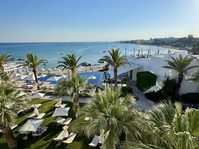
Before any trip by train or plane, CWT provides our employees with two travel solutions in terms of pricing. So that they can better take into account the environmental issues involved in their travel, we would like CWT to also inform them in advance of the CO2 emissions associated with these trips. Club Med also has a number of other sustainable development initiatives, which are detailed on the Club Med corporate website. For us, environmental management involves ecolabelling sites. For example, Club Med d'Opio, in the Alpes-Maritimes, was awarded the European eco-label for tourist accommodation in March 2008. It is the only holiday village in France to have received this certification, which is based on more than 80 strict environmental performance and management criteria. In 2008, four villages in North America also embarked on a Green Globe 21 certification process.
Lionel Lassagne
When the Lesly express shuttle service comes into service in 2010, linking Lyon city centre to the airport in 25 minutes instead of the current 50 minutes, we will be launching a company travel plan. Designed to influence the behaviour of the 5,000 or so people working at the airport, this plan should encourage the use of public transport and car-sharing.
François Piot
We are introducing a company travel plan for our thirty or so sales offices in France, because it is important for our employees to organise their journeys wisely. We also want to encourage our visitors to our branches to use public transport. Lastly, we are paying close attention to the launch of the electric vehicle in France, for which we have high hopes.
Catherine Moulin
This is an important part of our approach as a responsible and committed company, which is shared with all our employees through awareness campaigns called Eco-attitudes. This is why SFR decided in 2008 to offset the CO2 emissions linked to its employees' air travel. For 2007, this represents 2847 tonnes of CO2 equivalent.