


















Valencia was in the spotlight this year, as both the World Capital of Design and the European Capital of Intelligent Tourism, shared with Bordeaux. The latter distinction provided an opportunity for the Spanish city of 800,000 inhabitants to hold an international conference at the end of November to promote its actions and projects in the field of "intelligent tourism". sustainability, accessibility, digitisation and promotion of its cultural and tourist heritage" . With ambitions for both leisure and MICE customers, a sector in full post-covid recovery, Valencia poses as an alternative to Madrid and Barcelona. All the more so as hotel, restaurant, activity and other service rates are more attractive than those of its two rivals.
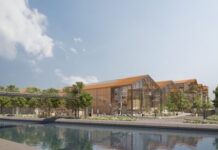
Spain's third-largest city has a good image, particularly since hosting the America's Cup regattas in 2007 and 2009. This image was further enhanced by the construction of the City of Arts and Sciences at the turn of the millennium. buildings with futuristic lines designed by the famous local architect Santiago Calatrava, are widely open to events. As far as business tourism is concerned, the America's Cup has left a legacy in the Veles e Vent, a superb white building with light, angular architecture designed by the English architect David Chipperfield. Its private areas include several restaurants and terraces, a meeting room and an exhibition floor with a capacity of up to 700 people, all overlooking the marina.


housed in the former Valence post office
At the Cité des Arts, the new feature is the transformation of the impressive agora into a a 6,500 m cultural space2CaixaForum, run by the Spanish bank's foundation. This is a place where companies can find an auditorium with 296 seats, a meeting room for 63 people, an agora for 300 people and a restaurant with 100 seats. They can also take advantage of the proximity of OceanograficThis large aquarium, whose equally avant-garde pavilions house two auditoriums - seating 100 and 482 people - offers outdoor terraces for events of up to 600 people. There are also several rooms for dinners or cocktails for up to 200 people, surrounded by huge aquariums. You're sure to have a great time diving into the depths of the world's seas!
With its futuristic silhouette, also designed by Calatrava, the Palacio de las Artes Reina Sofia, which houses the city's opera house, is a must-see. one of the city's other key event venues. Located in the gardens of the Turia, built in the bed of the river diverted after its dramatic flooding in 1957, this musical venue offers an extremely wide range of solutions, from meeting rooms for 25 to 100 participants to foyers for 550 to 1,000 people, not forgetting the various auditoriums with 370 to 1,470 seats.
Far from being limited to the architectural works of Santiago Calatrava, Valencia has a rich heritage ranging from ancient times to the Art Deco period. During their stay, groups can enjoy a guided tour in French, on foot or by bicycle, based on this theme combining architecture and history. A number of emblematic buildings regularly host events such as the delicate silk exchangedating from the end of the XVe century, as well as the Centre del Carme Cultural Centre (CCCC), a former monastery that has become a local cultural hotspot, and the very Art Nouveau Palais des Expositions.
A varied historical heritage
A former post office with exuberant architecture barely dating back to the latter, the Palais des communications, located opposite the town hall, has recently devoted part of its 9,400 m2 space for exhibitions and events taking place under its immense, colourful glass roof. Industrial heritage not forgotten with Bombas Gens, a former hydraulic bomb factory transformed into a contemporary art centre. An original, trendy venue where cocktails and gala dinners are held amidst works of art, in the cobbled courtyard or in Ricard Camarena's Michelin-starred restaurant in a wing of the building.


In its positioning, the city is committed to responsible tourism by allowing organisers to calculate the carbon footprint of their operations. In order to reduce emissions These include the elimination of plastic, the use of short distribution channels for catering and the use of more environmentally-friendly modes of transport. It's very easy to get around by bus or metro (which even connects to the airport in 20 minutes), as well as on two wheels (for hire or via the self-service system) thanks to its network of cycle paths.
Like others, it is moving the car backwards, Valence has recently returned several major areas to pedestrian use, including the Plaza del Ayuntamiento, the Plaza de la Reina in front of the cathedral and around the central market, a modernist masterpiece that is a must-see. " Valencia is a city on a human scale, with a very Spanish temperament, and very much alive thanks to its welcoming and sharing inhabitants, unlike Barcelona, whose central districts are populated only by tourists." says Jose Ferri, co-founder of the Valencia DMC agency.
Green operations in the Valencian countryside
In tune with the times, the destination is playing the sustainable tourism card, with excursions on offer. in the Albufera nature reserveSpain's largest coastal lake. A trip in a traditional boat will take you to the Tancat de la Pipa, a bird-watching area where the lake is a stopover on migratory routes. A member of the NGO Accio Ecologista Agro, Frenchman Mathieu Lassalle welcomes groups to the new Visitor Centre, housed in a former rice farm. " We also explain how our 90-hectare lagoon naturally treats the water in the lake through the plants that grow there. "he explains.


This visit to a unique natural environment can begin - or end, as the case may be - with a boat trip to Nau Raco, a veritable local institution with a restaurant offering a wide range of facilities (for up to 350 people) for working and, above all, tasting. the "real" paellaThis typical Spanish dish was invented in Valencia. Along with rice, oranges are the other treasure of the Valencian countryside. Several plantations are "MICE welcome", such as the elegant masia Campo Anibal, a former 19th-century mansion.e whose thick walls conceal a number of function rooms, from 230 to 1,200 people. In the shade of its 6,000 orange trees, the Masia de Xamandreu estate also makes its terraces and lounges available in the historic mansion and several outbuildings, for events ranging from 20 to 1,200 people.
Getting there
Air France from Paris-CDG, Transavia and Vueling from Paris-Orly, Volotea from Nantes and Lyon, Ryanair from Beauvais, Marseille, Nantes, Toulouse and Bordeaux, Easyjet from Basel-Mulhouse and Air Nostrum from Nice.
