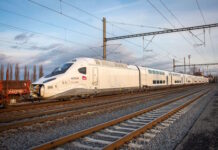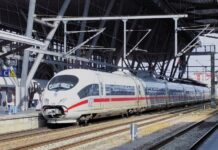



















The monopoly Eurostar is attacked from all sides. After Trenitalia and Virgin Trains With the trans-Channel connections, it is now HeuroTrain’s turn to step out of the shadows by announcing its intention to compete with the SNCF’s international subsidiary on the Paris-Brussels-Amsterdam axis. To do so, it has taken a first step by signing a 10-year agreement with SNCF Réseau, the branch of the SNCF Group that manages the hexagonal rail network. The agreement is more geographically broad, as it covers the possibility of operating high-speed trains between Paris and Wannehain, on the Belgian border, for a decade, from December 2030 to December 2040.
Unknown in France, HeuroTrain is a Dutch railway company founded in 2023 that aims to develop high-speed services in Europe by relying on attractive fares and volume growth on routes currently operated by operators in a monopoly situation. Frankfurt and Berlin are also in its sights. On the Paris-Brussels-Amsterdam line, HeuroTrain estimates the market potential between the three capitals at 14 million annual trips. It highlights, in particular, unsatisfied demand at certain times of the day, with full trains and tickets at high prices. For its part, Eurostar recorded a 6.7% traffic growth on this route in 2025.
A fundraising campaign to be carried out in 2027 to finalize the project
For HeuroTrain, this framework agreement with SNCF is an important element in a project whose many stages remain to be completed. This is therefore a strong argument in its search for capital to acquire a train fleet, recruit its teams and prepare for commercial launch. According to the French Association du Rail, Afra, the funds to be raised for the launch of a railway company amount to the order of a billion euros, including the initial years of operation, which are necessarily deficit-producing. However, HeuroTrain is at this stage sticking to a launch budget of €400 to €500 million.
Furthermore, the deadlines can appear to be very short, with a planned commissioning in late 2030, while it is still necessary to find a suitable railway manufacturer, assemble the trains, define the interior arrangements and launch a testing campaign on the various national networks. A delay in the delivery of the carriages or in the approval and homologation procedures could delay the commercial launch.
One train per hour expected in each direction
HeuroTrain has set itself four objectives: to run more trains, to offer prices more affordable than those of Eurostar, including at the last minute, to display greater availability of seats and to offer better quality of service on board. The target offer would eventually be 16 daily return trips with a high hourly frequency during the day. By comparison, Eurostar offers eleven departures per day during the week (scheduled at peak hours) between Gare du Nord and Amsterdam Centraal in 3h25. HeuroTrain claims that its increased frequency will bring numerous benefits to passengers with reduced waiting times between two departures, more choice for business travelers, and a better distribution of passengers between the trains, thus making fares more accessible. However, no price information has been presented at this stage.