Quality and tight prices: an infernal couple when it comes to business travel. Whatever their size, companies tend to look for the best available prices for their staff travel, without necessarily taking into account the quality factor from the outset. This quest for the best value for money is reflected in virtually all travel policies. "Our job is to work with companies to develop the travel policy that best suits them, taking into account who their travellers are, where they go and how often they travel," explains Dominique Savart, Vice President of Operations at AEVA. And he continues: "Far from being set in stone, a company's travel policy can be reconsidered at any time so that it can be adapted as closely as possible to the various requirements.
Hardly uniform, travel policy varies according to the culture of the company where it is implemented, as well as the hierarchical level of the travellers. Technicians will not travel under the same conditions as executives, export managers or members of the general staff. The length of the journey and the strategic importance of the trip can also determine the level of comfort and the means of transport. With the development of the TGV and high-speed trains such as Eurostar and Thalys, more and more people are travelling by train, as long as the door-to-door journey takes around four hours.
Economical air transport
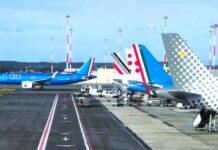
Another phenomenon is the rise of low-cost airlines serving French and foreign destinations. Even though these airlines do not yet offer corporate contracts, many companies are allowing their staff to travel on their routes. When tickets are booked in advance, the savings can run into hundreds of euros. For example, you only need to pay around forty euros to travel from Paris to a city in Central Europe. This compares with around 400 euros for a flight operated by a traditional airline. Obviously, with a low-cost airline, passengers do not benefit from the advantages - sometimes personal - of any loyalty programme.
"Our added value is also based on our staff's knowledge of airlines - type of aircraft, level of equipment, percentage of an airline's fleet equipped with new comfort concepts. For example, we advise certain customers to take the routes of foreign airlines - medium-sized or extreme Eastern airlines - which have focused their development on comfort and service", explains Jean-Jacques Bessière, head of the transport committee at Afat Voyages. "Despite the general slowdown, the price level of the upper classes is quite attractive, as these foreign players often pursue a more aggressive commercial policy."
Of course, these choices must be integrated into the customer's travel policy. "Aware of our duty to advise, we can submit ourselves to obligations of both means and results", emphasises Yves Nanique, Managing Director of BTI France. This network of agencies provides its customers with reports on the quality of service provided in terms of operations, incidents resolved and cost savings achieved.
The desire to control travel expenditure is not confined to large companies. It also applies to SMEs and SMIs, which are introducing mid-budget policies. "Companies spending less than €500,000 a year on travel tend to want to implement travel policies, and to do so they rely on the advisory role of travel agents specialising in business travel," notes Jean Korcia, Chairman of the Manor agency group.
Comfort and safety
Even though these policies are clearly written down, they are not applied rigorously. Indeed, approval circuits often allow for exceptions. In such cases, if the aim is to improve passenger comfort, the solution that gives priority to quality will be preferred to the least costly.
But the choice doesn't stop there. Security is now an essential element for customers. "As standard, we are able to very quickly identify the list of travellers potentially affected by a crisis event. We have now enhanced our system with tools designed to assess risk, prepare and protect business travellers, and respond 24 hours a day, seven days a week to life-threatening incidents. Our customers can now benefit from a new risk management system, with reporting on the level of exposure of each traveller, wherever they are in the world, as well as on the various options available to them for communicating with them", explains Christophe Renard, Sales and Marketing Director at Carlson Wagonlit travel France. Quality, price and security are the three key criteria for companies.