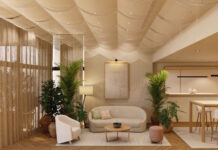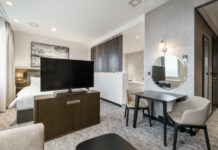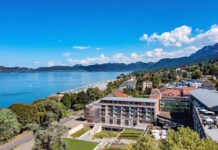

















The alarm had already gone off for Louvre Hotels. The first alarm sounded at the end of 2023, with the unveiling of a five-year strategic plan designed to relaunch Europe's second-largest hotel group, which had been losing momentum for some time. After a major overhaul of its offering, the former 'sleeping beauty' can now present itself in a much brighter light. The first phase of this revival is nearing completion with the laying of new foundations for its historic brands, Campanile, Kyriad and Première Classe.
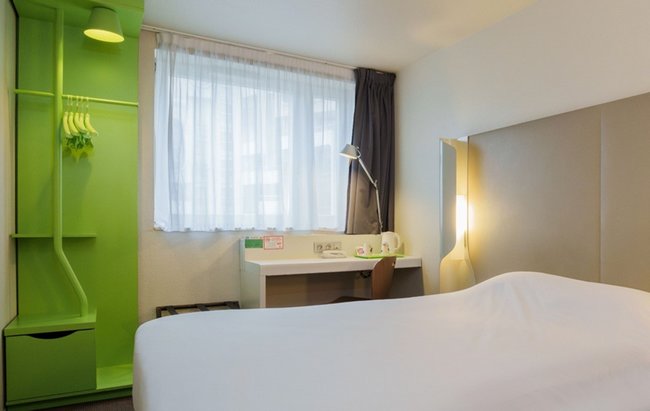
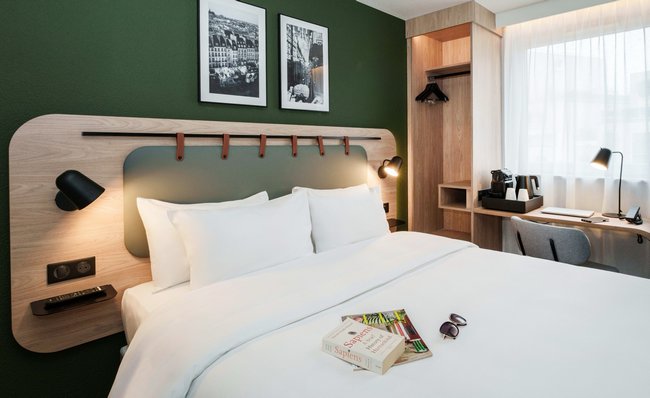
Thicker mattresses - 30 cm thick at Campanile - new pillows and duvets, an improved shower experience and a rethought welcome: the "Brillant Basics" raise the standards of comfort, positioning these brands above the competition in their respective segments. But the most visible difference is obviously in the design of the establishments. From old school to contemporary, there is a striking youthfulness between the before and after for hotels that have already been renovated. This trend is supported by the owner of Louvre Hotels, the Chinese group Jinjiang, whose investment in the relaunch of its European subsidiary, postponed for three years because of the pandemic, amounts to 400 million euros.
" I feel honoured and fortunate to be able to lead one of the most exciting projects in the hotel industry, the transformation of the second-largest hotel group in both Europe and France. "Eduardo Bosch, the new CEO of Louvre Hotels. This metamorphosis is particularly noticeable in France, as the plan essentially concerns the group's 900 establishments on its home ground, where Louvre Hotels has a total of 1,750 establishments worldwide.
Symbolising this new era, the Campanile Prime Paris Porte d'Italie reopened its doors at the very end of last year, after two years of closure for works costing €10 million. With a lobby open during the day for coworking, 155 contemporary rooms, four meeting rooms equipped with the latest technology for a total of 130 people, high-speed WiFi and TL Chromecast, a fitness room for business travellers and, as always, a restaurant offering B&B or half-board options, the hotel embodies the brand's revival, embodied by the Prime label.
Campanile des villes et des champs
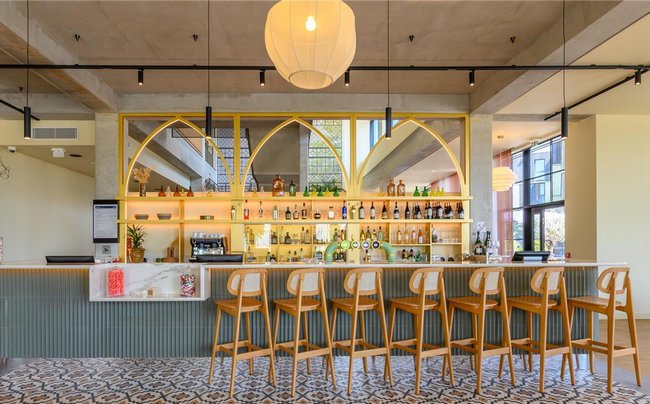
What's more, travellers have a very simple way of recognising Campanile hotels that have already been renovated. While hotels in the cities are recognised by this Prime label, Campanile hotels in the countryside have added the Nature label to their name. This new generation revisits the motels with outdoor walkways that were at the origin of the expansion of the brand launched in 1976 by the Taittinger family. In addition to their contemporary decor, Campanile Nature hotels are also showcasing their outdoor spaces, with terraces and gardens featuring outdoor activities such as Mölkky, pétanque and deckchairs for relaxing. The peppy "Shrek" green of the Campanile of yesteryear has been replaced by a colour palette in keeping with today's tastes, with olive and fir greens and other soft colours such as beige and terracotta.
The cornerstone of this recovery plan, this wave of renovations concerns not only Campanile, but also Kyriad and Première Classe. Unlike other groups that have gone asset-light, Louvre Hotels still owns 20% of its portfolio, a policy that enables it to rapidly deploy these repositionings. Half of the 160 hotels owned by Louvre Hotels have already been renovated, and the 80% mark should be reached by the end of the year. At the same time, 130 of the 550 franchised hotels have also followed this renovation plan, while the vast majority of the others are due to start work.
Once this initial phase has been completed, by the end of 2026, Louvre Hotels expects to benefit from a boost in organic growth, with a development strategy focused on the centres of major French cities and secondary towns where the group is not present. By 2029, once this strategic plan is complete, we will be looking at opportunities for external growth. The long-term objective is clear: to be the leader in the mid-range hotel sector in the group's three key markets, France, but also China - as its owner JinJiang is obliged to do - and India, where Louvre Hotels is well positioned to take advantage of the current explosion in the hotel sector following its acquisition of Sarovar hotels in 2017.
A story of cousins
However, this strategic plan is not just about bringing existing establishments up to date, soon to be accompanied by an extensive communications campaign. It also aims to boost their profitability, notably through enhanced distribution. In the last quarter of the year, a new platform will go online, bringing together all the brands, rather than one site per chain as before. But above all, to maximise sales and gain market share, Louvre Hotels will also be able to draw on possible synergies with its "cousin", the Radisson group, of which JinJiang is also one of the main shareholders.
While Radisson teams have been involved in defining the new design of the hotels in France, this partnership goes much further. From next October, the Louvre Hotels brands will be integrated into the Radisson Rewards loyalty programme, which currently has 25 million members. As for marketing, the two entities are making common cause, whether in negotiations with OTAs such as Booking and Expedia, or in winning corporate contracts. Finally, a new global purchasing platform has been launched, bringing together the two groups Louvre Hotels and Radisson with their parent company JinJiang. How do you say "ménage à trois" in Chinese?