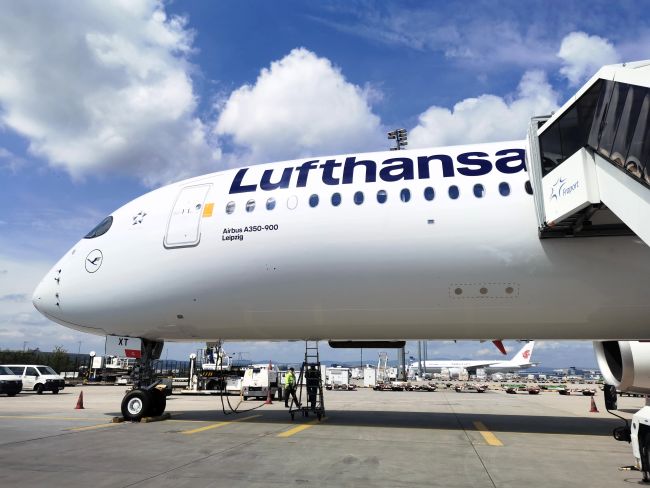
Programme adjustments will reduce the number of unprofitable short-haul flights in the Lufthansa Group's network, leading to a more efficient route rationalisation. Nevertheless, the airline promises to maintain the vast majority of its destinations by transferring passengers between the hubs of its six subsidiaries (Frankfurt, Munich, Zurich, Vienna, Brussels, and Rome). Ten routes will thus be consolidated within the group via other hubs. Routes to Gdansk, Ljubljana, Rijeka, Stuttgart, Tivat, and Wroclaw will be among those announced. Passengers will nevertheless continue to benefit from long-haul connections at the hubs of the group's various airlines.
The purge, however, began as soon as the group's announcement was made last week, with Lufthansa proceeding to cancel 120 daily flights. This affects loss-making routes such as Bydgoszcz and Rzeszow (Poland) and Stavanger (Norway), all three being connected to Frankfurt. Three destinations are disappearing, at least temporarily, from the current schedule. In total, 11% of European flights are being dropped…
Medium-term route planning for the coming months is currently undergoing revision in the context of capacity reductions and will be published at the end of April / beginning of May. It will include further optimisations of the short-haul offering for the entire summer, thereby ensuring planning stability for the flight schedule period. Lufthansa, however, wishes to be reassuring: for flights scheduled in the summer programme, the group anticipates a largely stable fuel supply.
Regarding Transavia France, it has just revealed that it will cancel some 2% of its flights. The low-cost subsidiary of Air France-KLM aims to be reassuring. The vast majority of its routes will still be operated, with the company adjusting frequencies rather than cancelling routes.