


















Accor: growth in a contrasting global environment
" Once again this semester, and despite the disruptions related to the situation in the Middle East, the Group's performance shows solid growth."stated Sébastien Bazin, CEO of Accor." For the remainder of 2026, we anticipate continued growth and will continue to execute our strategic roadmap. ". The hotel group is in fact expecting growth in revenue per available room – RevPAR – of between 2% and 2.5%, in line with its first-quarter results, when growth reached 2.2%.
However, this increase would, of course, have been even higher – reaching +4.6% excluding the Middle East – had it not been for the impact of the conflict, which was felt most acutely in the second quarter, particularly in relation to its luxury and lifestyle hotels in the Middle East. Hence the group’s launch of a profit protection plan to mitigate the impact. Whilst the region accounted for 8% of the group’s room portfolio at the end of December 2025 – representing 12% of accommodation revenue last year – Accor’s business in the United Arab Emirates did indeed suffer a decline of nearly 80% in April, before recovering to around 40% in June.
Consequently, this sharp fall has led to an 11.3% decline in RevPAR for the lifestyle segment, whilst growth excluding the Middle East stands at 10.3%. The same trend was observed, albeit to a lesser extent, in the luxury segment, with overall growth of 2.5%, but +9.1% excluding the Middle East. All of this resulted in revenue per available room remaining virtually stable globally (-0.2%) in the second quarter compared with 2025, with RevPAR growth outside the Middle East standing at +3.3%.
Against this backdrop, hotels in the Premium, Mid-range and Economy divisions also recorded only a slight increase in RevPAR (+0.2%) in the Europe and North Africa region. RevPAR growth in Paris slowed in particular, in contrast to an acceleration in the provinces, driven by leisure guests, whilst Germany saw a slight decline due to a less favourable calendar of events and trade fairs. Conversely, both South-East Asia and the Americas region were key drivers of business.

In terms of development, Accor has seen net network growth of 3.2% over the last 12 months, thanks to the opening of 109 hotels – representing nearly 14,000 rooms – in the first half of the year. At the same time, the group has a pipeline of nearly 1,600 hotels and more than 268,000 rooms, with pipeline growth of 11.4% in the first half of the year. For new hotels expected to generate around 1,700 euros in royalties per room per year, compared with around 900 euros for those leaving the network.
Essendi sale and new partnerships
Aside from these results, the first half of the year was marked by the recent agreement for the sale of Accor's stake in hotel owner and operator Essendi to a consortium comprising Blackstone and Colony IM for an amount of up to €975 million. Within this framework, all hotels in the Essendi portfolio are expected to remain under Accor brands through new franchise agreements with an average duration of 20 years. This, according to Sébastien Bazin, "completes the group's transformation towards a resolutely asset-light, simple, transparent, and predictable model ".
In parallel, the question of whether or not Initial Public Offering In North America, Ennismore, Accor's lifestyle hotel division, should be decided " by the end of the third quarter », according to Sébastien Bazin, Accor must maintain control over its " EBITDA machine ".
Finally, the group returned to the subject of loyalty programme partnerships on the occasion of the presentation of its half-year results. The past few months have seen the strengthening of his alliance with the Chinese group H World, for cross-loyalty benefits between their programmes, in addition to the distribution of certain hotels via their respective booking platforms in China, Europe and the Middle East.
Another strengthened partnership is that with India's leading airline, IndiGo, which supports Accor's position among Indian travellers, while opening up opportunities for accelerated hotel development across the subcontinent. Others more directly target French and European business travellers, allowing Regular Uber users – and Uber Eats – to connect to the ALL programme’s ecosystem, and conversely, booking ride-hailing services or ordering meals will earn points for Accor’s loyal customers.
Latest the one concluded with American Express, Centurion and Platinum cardholders are recognised within the Accor Group as holding ALL Platinum or Gold status. This type of partnership, which is relatively inexpensive to run and brings in a large number of new members for the Accor programme – which is growing from 15% to 20% per year – is expected to be further developed in the coming months.
Air France-KLM shows agility in an uncertain environment
Despite an international context marked by geopolitical tensions and soaring fuel prices, Air France-KLM is demonstrating its resilience and ability to adapt. The group reported revenue of €9.3 billion in the second quarter, up by nearly 9.9%, with unit revenue also rising by 8.7%.
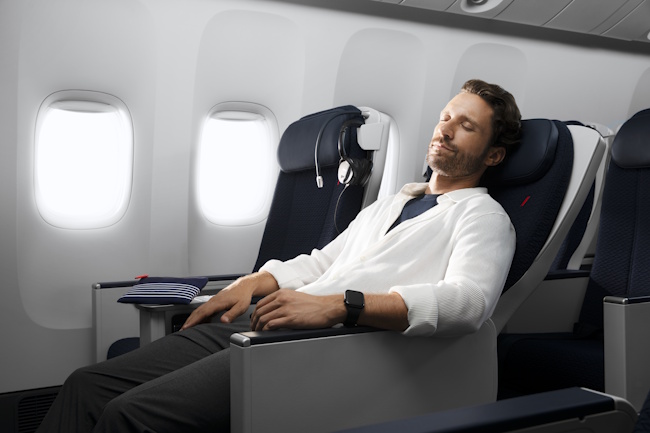
This strong performance was driven both by the increase in passenger numbers in the second quarter and by the ‘premiumisation’ of the customer base. Air France-KLM carried 28.32 million passengers, representing an increase of 3.9% compared with the second quarter of 2025. The load factor fell very slightly by 0.1 percentage points to 87.7%.
Demand is being driven by premium cabins and long-haul journeys, with Air France-KLM visibly benefiting from the difficulties encountered by Middle Eastern airlines during the Iran-USA conflict. Air France has indicated that it has deployed larger capacity aircraft on routes to Asia and East Africa in particular. Business, Premium Economy and La Première classes are seeing strong demand, particularly on routes to Asia and North America.
The main financial challenge is fuel. The energy bill has risen by 804 million euros compared with last year, driven by geopolitical crises. Thanks to a flexible pricing policy, Air France-KLM has nevertheless managed to offset around 85 % of this increase, well above the initial forecast of 60%.
Fleet renewal and moderate capacity growth
Adjusted operating profit reached €484 million, down from 2025, while the group maintains a solid financial position. Its cash flow increased to €928 million and its liquid assets exceeded €10 billion, providing comfortable room for manoeuvre to continue its investments.
One of the priorities is fleet renewal. New-generation aircraft now account for 38 % of the fleet in operation, reducing both fuel consumption and CO₂ emissions whilst improving passenger comfort.
For 2026, Air France-KLM is forecasting moderate growth in its capacity. Long-haul capacity is expected to increase by 2%, down from the previously forecast 2% to 4%, whilst short- and medium-haul capacity is expected to fall by 1%, compared with the stagnation initially forecast. However, the low-cost carrier Transavia is expected to see its capacity increase by 8%. The group now estimates its fuel bill at $8.9 billion for the full year. (L. Citrinot)
SNCF: Record net profit despite climatic hazards
Despite the winter storms which resulted in twice as many minutes lost by the end of February compared to 2025, like the heatwave episodes which caused an increase in cancelled trains or significant delays, and despite a gloomy economic context, the SNCF reported a 2% increase in turnover for the first half of 2026. A performance “ satisfactory again, with solid results achieved in a particularly challenging context », commented Jean Castex, the CEO of the SNCF group.
As is often the case, it is the long-distance routes that are driving the results, with SNCF Voyageurs recording a 2.8 % increase in passenger numbers on its TGV services, having carried more than 83.4 million passengers in France and across Europe over the half-year. At the same time, the Transilien (+4.1 %) and TER (+2.3 %) services also saw an increase in passenger numbers. With regard to Public Service Delegation contracts, the group also welcomed the three tenders won by SNCF Voyageurs during the first half of the year, bringing the total number of contracts won since 2021 to 11 out of 15.
Facing climate risks
In terms of service quality – a key consideration for companies organising business travel – TGV punctuality stood at 83.9 % over the half-year, TER punctuality at 90.5 %, Transilien punctuality at 88.3 % and Intercités punctuality at just 70.5 %, with the latter two services having been particularly affected by traffic restrictions linked to the heatwave.
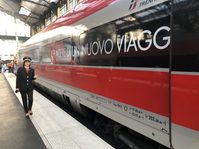
Faced with the increase in extreme weather events, SNCF is also announcing an acceleration of its network regeneration investments, with a target of €3 to €4.5 billion per year from 2028. New trains designed to withstand temperatures of up to 55°C will be gradually deployed with the arrival of new TGV INOUI trains. the highly anticipated TGV M – from the start of the school year, then Intercités Oxygène train sets on the Paris-Clermont-Ferrand and Paris-Orléans-Limoges-Toulouse lines in 2027, before new Eurostar trains from 2031. The deployment of intelligent sensors should also strengthen the monitoring of vulnerable equipment and optimise preventive or corrective maintenance.
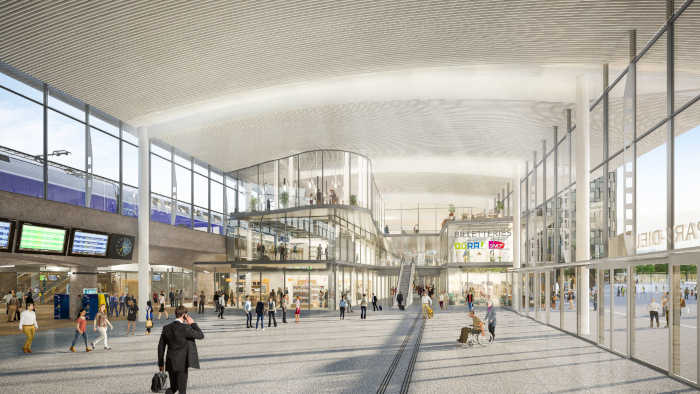
In parallel, the group continued its investments in the regeneration and modernisation of the rail network, with €1.5 billion invested by SNCF Réseau in the first half of the year, for 390 km of track and 160 km of overhead lines renewed. As part of its €4.9 billion investments in the first half of the year, €1.8 billion was also allocated to rolling stock and €300 million to station modernisation.
