Berlin Airport: Liquids and computers will remain in the cabin baggage
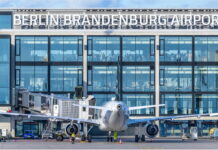
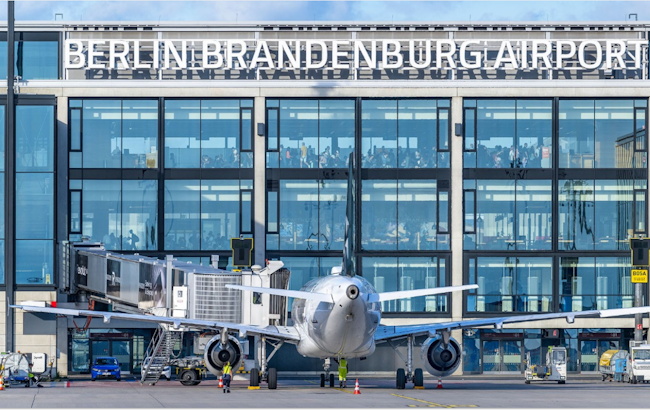
Berlin-Brandenburg Airport (BER) is launching the final phase of modernization of its security controls, with the installation of CT scanners in zones 2 and 4 of the central hall of Terminal 1.
By Florian Guillemin -
DR Günter Wicker / Flughafen Berlin Brandenburg GmbH
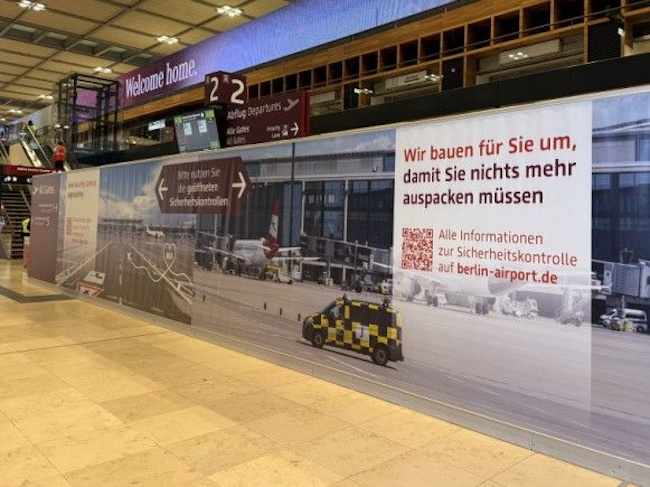
The Flughafen Berlin Brandenburg GmbH (FBB), the operator of Berlin-Brandenburg Airport, launched on November 11 the final phase of its modernization program for security controls. The work concerns checkpoints 2 and 4, in the center of the check-in area of Terminal 1. Equipped with aging X-ray machines, they are currently only open in case of heavy traffic. The work is carried out in phases, without interrupting operations: first the 2nd checkpoint, then the 4th checkpoint. FBB guarantees sufficient control capacity throughout the entire duration of the project. However, the operator does not provide a date for the end of the work.
The Flughafen Berlin Brandenburg GmbH (FBB), the operator of Berlin-Brandenburg Airport, launched on November 11 the final phase of its modernization program for security controls. The work concerns checkpoints 2 and 4, in the center of the check-in area of Terminal 1. Equipped with aging X-ray machines, they are currently only open in case of heavy traffic. The work is carried out in phases, without interrupting operations: first the 2nd checkpoint, then the 4th checkpoint. FBB guarantees sufficient control capacity throughout the entire duration of the project. However, the operator does not provide a date for the end of the work.
In the long term, all BER passengers will pass through CT scanners. They will no longer have to remove liquids and electronic devices from their cabin baggage. The majority of passengers already use the check-in lines at the north and south pavilions of Terminal 1 and those of Terminal 2. These 24 control lines were converted before the end of August 2025. According to FBB, the CT scanner-equipped lines accept up to two liters of liquids per person, compared to 100 ml per container on the X-ray lines in the central hall. The airport also stopped booking slots for the BER Runway, which is located in this area: 90% of passengers who booked a slot the previous month did not use it.
A program launched in 2024
This project completes a program launched nearly three years ago. Since January 1st, 2024, FBB is responsible for passenger and baggage screening, a task previously carried out by the federal police. The BER thus became the second German airport, after Frankfurt, to manage its own security checks. FBB entrusted the execution of these tasks to Securitas Aviation, which at the time employed nearly 1,800 agents. The first CT scanners were put into service the same year in Terminal 2.
Source: BER – Berlin Brandenburg Airport LinkedIn account
Shared carpets to make passage more fluid
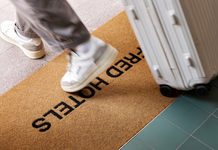
Beyond the scanners, FBB is revising the layout of the check-in lines. Long common drop-off mats replace the individual preparation stations. Travelers thus have more space to prepare their cabin baggage. They can also squeeze in if necessary, which optimizes the use of each line. According to FBB, this arrangement streamlines the flow of passengers. Furthermore, the operator is taking advantage of the project to modernize the building’s technical equipment and ventilation systems.
" Passengers are already benefiting from the advantages of CT technology in Terminal 2 and in the north and south concourses of Terminal 1., ", explains Aletta von Massenbach, CEO of FBB. The extension that remained to be completed in the central check-in hall is now underway. The modernized security checks will then be accessible to all passengers of the BER and will also significantly streamline the process in the main hall of Terminal 1. ». The waiting times remain available on the BER website, in its app, and on the screens of the terminals. Each control point gives access to all the boarding gates of Terminals 1 and 2.
By using our site, you consent to the use of cookies.
We use cookies on our site to store and/or access information about your device, in particular to offer you advertising and to compile statistics in order to improve ergonomics, navigation and editorial content.
Analytical cookies enable us to gather valuable information to optimise the performance of our site and improve your user experience.
By accepting cookies, you are supporting the work of our editorial team in providing you with quality information, while enabling us to offer you content and services tailored to your interests.
For more information, please consult our page Privacy policy.