
















Athens? Mythology, philosophy, democracy, the crucible of European culture, no less! And, of course, old school memories... The history syllabus in sixth form was entirely devoted to the 'ancient world', with its parade of great men: Sophocles, the master of tragedy, Hippocrates, the father of medicine... And then there were the school exercise books of the time, those of the Heracles brand with the effigy of the demi-god sculpted by Antoine Bourdelle, bent between two rocks, all muscles flexed on a gigantic bow... An impressive posture that encouraged even the most distracted to pay close attention to Greece, this country like no other, the cradle of heroes.
You never arrive in Athens untouched, but accompanied by fond memories of lessons, readings, theatre and cinema: a maelstrom of images combining the classics and the flop films, Antigone, Plato and Homer, and the slew of fanciful peplums that inspired Ulysses to Italian film-makers in particular.
The chaotic city of Athens, which for a long time suffered from a plethora of uncontrolled traffic, has now been brought under control. The huge Olympic construction site has integrated the management of urban transport, and the city is now reaping the benefits of these major developments on a daily basis. The creation of new lanes, the development and modernisation of public transport, a brand new metro and a fleet of non-polluting buses have undeniably helped to ease traffic congestion. For visitors to the city, this new, clean and safe metro system and the creation of a large number of pedestrian walkways have made a major contribution to the pleasure of discovering the city. All the archaeological sites can now be visited on foot, from the Ceramics district to the ancient theatre of Dionysus.
At three kilometres long, it has become the longest pedestrian walkway in Europe and is the city's inevitable attraction, as it leads to the Acropolis, the "upper city" situated on a plateau, the limbo of Athens. In the 5th century BC, this wealthy city had asserted its supremacy over its rivals thanks to a powerful fleet that ensured it the dividends of trade. It was then that Pericles, its 'strategist' (military governor), embarked on a policy worthy of this golden age... including the erection of a temple dedicated to Athena, the city's patron saint. The rest is history: the Parthenon, since elevated to the status of a masterpiece of classical Greek antiquity, now receives some 1.5 million visitors from all over the world.
Despina Gyra (see interview), the Francophile founder of Pam Tours, regrets that "it is not possible to privatise even the least important temples. Greek archaeologists rarely 'restore' a site," she explains, "they prefer to preserve it as best they can, but as it is, for history and future generations. It's a very different philosophy from Italian archaeologists, for example, who are more inclined to develop remains in order to enhance them for tourism.
Roman, Byzantine, Neoclassical, Ottoman...
But there is much more to Athens than its antiquity. There is the Roman city, the Byzantine city, the neoclassical city... Close to the Parliament, the upmarket district of Kolonaki bordered by the National Garden, 16 hectares in the heart of the city, is home to some of the most majestic neoclassical residences, including the Benaki Museum, whose collections paint an exceptional portrait of Hellenism, from the Neolithic period to the 20th century. "Françoise Deschamps, director of the incoming agency Profil voyages, explains: "The museum can easily be made private, and it's an opportunity to discover 35 centuries of history all in one place. This Frenchwoman, who has lived in Greece for some thirty years, also concocts programmes in which Byzantine culture takes pride of place, promoting the immense heritage left by the Byzantine Empire both in Athens and in the surrounding area: a superb museum, which can also be privatised, and a host of churches and monasteries such as that of Kessariani (11th century), remarkably well preserved in the heart of a beautiful forest 5 km from Athens.
As for Athens itself, it is not the least of the capital's charms to be dotted with small churches scattered in the most unexpected corners. Right in the middle of the public highway, like the Kapnikarea on Ermou Street, or tucked away between two concrete porticoes of a 1960s building like Aghia Dinamis (16th century), a tiny 20 m2 building where the faithful burn a candle before going to their offices on Mitropoleos Street.
These buildings are also dotted around Plaka, the old quarter that stretches out below the Acropolis, a maze of narrow streets, squares and staircases winding along the hillside: a sort of local Montmartre, just as touristy, but more secretive because of its labyrinthine layout.
A section of the Cyclade in the capital
When you reach the highest part of the district, you enter a maze of narrow whitewashed alleyways (barely 50 cm), which are crammed with clusters of tiny white houses, with their characteristic blue shutters and frames... Anafiotika, the district of the masons from the island of Anafi (to the east of Santorini) who came here at the end of the 19th century to build the Royal Palace, exudes the unlikely atmosphere of a rural setting in the heart of the city: a part of Cyclades lost in the metropolis, with its wild grasses, its silence and its population of indolent cats.
"The city offers a wide variety of atmospheres, gastronomy and traditions from all over the country, from mezze restaurants to fish taverns, as well as lots of live music, singing and dancing, from bouzouki to tsifteteli, our oriental dance", explains Alexandra Vassilopoulo, Corporate Sales Manager for Classical Hotels. And how could we forget to mention the intense Athenian nightlife? North of Monastiraki, the lively Psiri district is a reminder of this. In this local Soho, teeming with bars, galleries, discos and restaurants set up in the workshops of what was once a tanners' district, the streets and terraces are packed until 4am. And for those tempted to celebrate dawn on the beach, there's no need to go far...
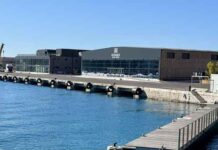
"The historic centre is less than half an hour from the sea", points out Despina Gyra, who frequently organises activities on the myriad beaches in the area, or feasts in one of Mikrolimano's excellent restaurants. In this small port 20 minutes from Athens, you can dine by the water in a peaceful atmosphere, at least out of season, as in all the country's popular spots. Just two kilometres away, however, is Piraeus, teeming and bustling with pitiful buildings. A grimy bunch, but the gateway to the islands...
In Athens, island life begins half an hour by boat when you disembark on Poros, an island unjustly ignored by tourists. It is actually larger than it appears from the quayside, comprising two islands, the largest of which, Kalavria, is sparsely built, lush with greenery and dotted with small coves of fine sand and pebbles. Built around its harbour in an amphitheatre-like layout, the 'capital', a maze of narrow streets, has a gentle provincial feel. However, its architectural quality, with its extensive heritage of neoclassical houses, is perhaps what has done it a disservice. The academicism of the architecture probably didn't fit in with the idea that visitors had of a Greek island, influenced by the widespread images of Cycladic housing.
Hydra, the car-free island
Another hour by boat and you're on Hydra, an island where all the public roads are paved with cobblestones, an island where tarmac is a thing of the past. And with good reason: the entire site is pedestrianised. No cars, no scooters, nothing that uses an internal combustion engine! Hydra is a world apart, where rumours are limited to the murmur of conversations and the clatter of mule hooves, the only means of transport. At the U-shaped port, they wait on the quayside, in the shade if possible, for the boats from Athens carrying all the necessities of local life, food and everything else, building materials and all those goods that make up consumer society. While the refrigerators and gas bottles are taken care of by the dockers, who manoeuvre their handcarts with the nonchalance of doughnut sellers, the donkeys take care of the lighter, often just as bulky, parcels, mattresses and building materials, sandbags and bricks in batches of forty.
Cultural broth
But little is built on Hydra, only renovated, as the site is ultra-protected. Hence the unity of the island, made up of 18th and 19th century dwellings, imposing residences inspired by Florentine, Venetian and Genoese architecture. These are the buildings that dominate the harbour, strict volumes of grey stone, devoid of any ornamentation. This austerity is offset on the inside by a profusion of painted ceilings and gilded mouldings, in keeping with the idea of comfort that their owners, wealthy merchants and shipowners, had in mind. And then, as you enter the village, the fishermen's houses get smaller and smaller, whitewashed and crammed together along traboules leading to small squares planted with lemon trees. In the hustle and bustle that some tourist islands can sometimes generate, Hydra has managed to make the most of its calm. It has succeeded in attracting a less boisterous clientele, who appreciate the authenticity of its small accommodation units and its crystal-clear waters due to the absence of sand.
Alexandra Vassilopoulo sums up: "Imagine Paris just a stone's throw from a small Mediterranean port before the development of the motor car...".