









Rationalising expenditure. Both business travel managers and players in the MICE (Meetings, Incentives, Congresses & Events) sector have embarked on the same course. But have they got into the same boat? Has the travel manager finally taken the helm? How old is the captain? At least two of these three questions have been shaking up the world of business travel for several years now. And the answers are very different, depending on the company, the market and each individual's interests. But one thing is certain: in the wake of business travel, the management of which has become much more professional in recent years, meetings and events are now entering the age of reason. New processes are needed to put some order into this expenditure, which, according to Coach Omnium, reached the princely sum of eight billion euros in France last year.
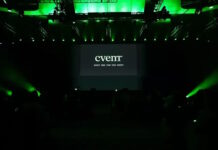
For a long time, the Meetings & Events sector relied on the creativity of people who were certainly motivated, but who were not necessarily trained in budget management. Today, more formal concepts are flourishing, such as return on investment (ROI) or total cost of ownership (TCO), i.e. calculating the overall cost of an event. The anglicism "Strategic Meeting Management Program" (SMMP) is also being heard more and more often and, according to the definition given by the Global Business Travel Association (GBTA), corresponds to "a rigorous way of managing the company's activities, processes, suppliers and Meetings & Events data in order to achieve tangible objectives (...) and unlock value in the form of savings, risk reduction and service quality.To such an extent that Cvent, one of the leading technology specialists in the sector, has published a white paper entitled "How to make the best use of the Internet".Five myths about Strategic Meetings Management"...
Be that as it may, the trend is here to stay, confirming that the MICE market has well and truly turned the corner towards professionalisation. It remains to be seen who will be responsible for overseeing this sector, and in what form. "It's not always easy to identify who makes the decisions in a companysays Arnaud Katz, co-founder of the Bird Office meeting room reservation website. Everything depends on the philosophy of each company, depending on whether they choose centralisation or decentralisation.". However, the role of buyers and travel managers seems to be asserting itself, as Wim Mirer, General Manager of the Pullman hotel chain in France, explains: "The role of the travel manager is becoming increasingly important.Large companies are seeing the emergence of the role of the buyer, who now also deals with this type of service. He lays the foundations for the collaboration between the hotelier and his company, particularly in terms of the general terms and conditions of sale, before handing over to the travel manager. But each company moves forward at its own pace, according to its own priorities."he adds.
Limits to synergies
The world of British business travel seems to have already moved towards this model, if the Business Travel Show's annual survey is anything to go by. Back in 2013, the London show highlighted the fact that a majority of travel managers (58 %) were in charge of MICE expenditure. While the French market lacks the equivalent data to provide an objective assessment of the phenomenon, its players are unanimously in favour of bringing MICE and travel management closer together. Tracking and consolidating expenditure, reporting and integrating technological tools are already part of the daily routine for most travel managers, and extending these skills to the MICE sector seems logical, not to say inevitable.
The other link between the two businesses lies in the famous synergies with common suppliers, since air transport and hotels make up the bulk of costs in both areas. It is therefore very tempting for companies to reconcile individual business expenditure with collective MICE costs. This is on the assumption that negotiations will be all the more favourable as they involve larger volumes. At first sight, the reasoning is logical. But suppliers don't necessarily understand it in the same way. "Individual nights allow the hotel to fill up gradually, whereas blocking 300 or 400 rooms for one or two nights can disrupt this homogeneous filling," points out Wim Mirer at Pullman. In this case, the hotel has to compensate for the drop in occupancy around the date of the event. These parameters are taken into account in the rate offered to the company.".

Agencies enter the dance
At a time when the company is trying to find new common ground with its suppliers, another player is taking on an unprecedented dimension. The last few months have shown that travel agencies are betting more than ever on MICE to diversify their activities. Frequent Flyer Travel Paris sounded the charge in May by formalising its merger with Dream Concept. This specialist in corporate event travel has thus become the 'MICE brand' operated exclusively by the business travel agency. In the wake of this merger, Carlson Wagonlit (CWT) concluded the acquisition of Ormès in June. By combining the four decades of experience of the French events agency with the expertise of its own Meetings & Events division, CWT is sending out a strong signal to the market, while gaining both resources and legitimacy. While BCD Travel has not embarked on external growth, the agency has created a BCD Meetings & Events division by merging its BCD M&I and BCD Travel Groups units. "It was the ideal time to merge these two entities"explains Scott Graf, head of the new division, which employs 700 people.
These successive reorganisations clearly show that business travel agencies do not intend to miss the MICE turning point, continuing their transition towards a consultancy role. More generally, they show that the sector is extending its reach into new areas, from events to new technologies, to fully enter the era of mobility management.