

















It's 2010 and British Airways has noticed that its image as an innovative player, which had largely characterised it in the 90s, is beginning to fade. The airline felt that it needed a serious marketing overhaul, and that year it revived the slogan that had long accompanied its image: "To Fly. To Serve". This tarnished aura had more to do with the dual competition of the low-cost air transport on its short-haul routes and premium foreign airlines, particularly from the Middle East and Asia on intercontinental routes than to possible weaknesses in a company considered to be the embodiment of British excellence in air transport.

So we've got a marketing battle on our hands! And it paid off. British Airways, official sponsor of the London 2012 Olympic Games, has at the same time become a benchmark once again, relying on three concepts to win back its public: the tradition of excellent travel unrivalled in the United Kingdom, a well-designed and personalised service and So British" style. The British Airways crest has been used in everything from tableware and uniforms to airport lounges.
British Airways' move is symptomatic of the challenges facing Europe's incumbent carriers in an extremely complex economic environment. Who are they? By "incumbents", we mean the major national airlines, symbols of an entire country like Air France, SAS, Lufthansa or Iberia. And therein lies the challenge of today's strategies. In 2017, identity enhancement has become the best way of seducing passengers. Passengers who are often lost as the differences between traditional scheduled airlines and low-cost carriers become increasingly blurred.
It is often said that the differences between airlines are now merely cosmetic. This is probably true, since the essence of the airline product is still basically the same: transporting a passenger from point A to point B. Hence the idea of striking a chord, particularly in Europe where travellers are very attached to their national carrier.
We all remember the shock caused by the disappearance of Swissair in the local psyche and the swift action taken by the Swiss Confederation to recreate a Swiss carrier. So it's hardly surprising that, since 2015, Air France's advertising campaign has been playing up the elegance and French glamourFinnair's new Airbus A350s have been designed in the Scandinavian style, associating the Château de Versailles, fashion and gastronomy with its aircraft. At Finnair, it's the cool, Scandinavian feel that has influenced the style of the new Airbus A350s, with leading local designers working on the product and the overall ambience, such as Marimekko, which has created tableware, pillows and blankets, while the cabin lighting evokes the northern lights.

End of the golden age
The other strength of the 'historic' airlines lies in their network. For decades, Air France, Lufthansa, British Airways, Alitalia, Iberia, as well as Austrian, Swiss, SAS and TAP Portugal, have each cultivated their own specific characteristics through promoting their niche marketsAustrian, for example, championed routes to Central and Eastern Europe, while British Airways chose North America and English-speaking Africa as its preferred destinations. Austrian, for example, championed routes to Central and Eastern Europe, while British Airways chose North America and English-speaking Africa as its preferred destinations. For their part, TAP Portugal and Iberia cultivated their relationships, the former with the Portuguese-speaking world, particularly Brazil, and the latter with Spanish-speaking America. Finally, Air France was vying with Sabena, then Brussels Airlines, for the position of leading European airline to the vastness of Africa.

This positioning still works today in the choice of business travellers, particularly on long-haul routes. At the annual conference of the International Air Transport Association (IATA), Fernando Pinto, CEO of TAP Portugal, pointed out that "Our base in Lisbon has helped us in our development strategy. Our location in Western Europe means we can serve new markets in Brazil and the United States with a low-capacity aircraft like the long-range Airbus A321neo."
But what about the rest? European deregulation has buried the golden age of national operators in Europe, the very ones who controlled seat capacity, frequencies and prices. And it was low-cost air travel that first shook up this comfortable world by making price the reference paradigm for many passengers. From a marginal position in the mid-1980s - with a few routes mainly between the UK and Ireland - low-cost air travel has grown steadily and today accounts for more than 32 % of air travel across the continent, compared with 13 % in 2007. Some experts even predict that by 2025, more than 50 % of intra-European routes will be operated by low-cost carriers!

After low-cost airlines, it was the Gulf carriers that began destabilising European air transport a little more at the end of the 1990s. The excellence of their servicesAs a result, the major European hubs - Amsterdam, Frankfurt, London and Paris - have seen their share of the market to destinations in the Americas, Asia and Africa eroded in favour of the new airports. As a result, the major European hubs - Amsterdam, Frankfurt, London and Paris - have seen their market share to the Americas, Asia and Africa eroded in favour of the Gulf airports. According to an OAG publication analysing airline capacity and frequencies, Gulf carriers increased their capacity each year by an average of 4 % between 2011 and 2015. The Association of European Airports also notes that between 2007 and 2017, the market share of Middle Eastern airports, including Istanbul on connecting routes from Europe, rose from 2.1 % to 10 %.
The competition is therefore total for Europe's traditional carriers, with low-cost airlines being the most formidable of competitors, going so far as to call into question the very existence of the Old Continent's historic airlines. Many have lost their lives in the process.

While Sabena and Swissair have been resurrected under new identities, others have not been so lucky. In the space of two decades, Greece's Olympic Airways, Hungary's Malev, Britain's Air Atlanta Europe, Air UK and British Midland, and more recently Cyprus Airways and Estonian Air have all disappeared. And then some, the threat of extinction The catastrophic situation in which Alitalia finds itself is a textbook case (see below).
For its part, the success of low-cost air transport is based on a simple fundamental idea: cost containmentCost reduction, cost reduction and more cost reduction. The result is a high aircraft utilisation rate, a positioning based exclusively on point-to-point routes in order to reduce ground and airport operations to a minimum, and fewer staff on board. To guarantee fares that are generally 30 % lower than those of traditional airlines, passengers are asked to pay for services that are considered "non-essential" through additional charges.
As a result, ticket prices have fallen steadily in thirty years, and is now almost half the price paid in the 1980s, and even less than in previous decades. For example, in Air France's 1970 winter timetable, the classic economy fare on a Paris-Warsaw round trip was offered at 1,088 francs, or 1,161.75 euros according to the INSEE constant franc-euro converter. On the same route, Air France was offering a fare of 118 euros, including baggage, in September 2017 (departure on 6 and return on 9 for a booking made in July)!
More recently, in a study dating from the end of 2016, Expedia noted a fall in ticket prices for the third consecutive year worldwide. Last year, they averaged 4 % to 5 % in Europe, due to both competition and overcapacity. The low-cost model has therefore been emulated by incumbent operators, who are aware of the impact of prices on consumers.
Ireland's Aer Lingus, for example, has completely changed its business model in the face of the Ryanair steamroller. Ireland's national carrier first transformed itself into a low-cost airline, before reverting to a hybrid" companyhalfway between a traditional airline and a low-cost carrier. For their part, Brussels Airlines, SAS Scandinavian Airlines and Austrian were among the first to adapt their prices to the downward spiral generated by low-cost transport, usually with a range of tickets including more or less services.

Air France has followed suit and now offers three fares and three choices on European routes: "Light" for a service close to low-cost, with no rebooking possible and no baggage in the hold, billed at an additional €25 if necessary; "Standard", including baggage and a limited possibility of rebooking; and finally "Flex", the equivalent of the former full economy or business fare, giving passengers total flexibility.
Preserved aura
To preserve their aura as a 'service' company, the incumbent carriers are engaged in a real balancing act ! Because, unlike low-cost carriers, traditional carriers have an almost moral duty to offer passengers a complete range of services in order to justify their status as "Premium" carriers. This includes a long-haul offer, easy and optimised connections, several classes in the cabin and differentiated treatment on the ground for business or high-contribution passengers.


Speaking at IATA's annual meeting in Cancun, Richard Gustafson, CEO of SAS Scandinavian Airlines, summed up the challenge facing the incumbent airlines as follows: "SAS Scandinavian Airlines is the world's largest airline.During the restructuring of the company, we realised that simply cutting costs wasn't going to be enough. So we decided instead to focus on the types of customer we wanted to win over and retain." Capitalising on the strength of a brand that embodies the Scandinavian spirit, SAS initially targeted business travellers and premium traffic in Northern Europe. "For every marketing decision, for every investment, we ask ourselves the question: Are we heading in the right direction? We've noticed that with this method, we've expanded our customer base every year. But it's a real challenge"added Richard Gustafson.
From theory to practice, SAS was one of the first to offer total price flexibility. Since 2007, the airline has allowed passengers to combine classes of travel: a long-haul trip in Business class and a return trip in Economy Extra or Economy class, for example. It is also possible to upgrade to Business class at a special rate.

Lufthansa has also become a specialist in this flexibility. While "premium" or "frequent flyer" passengers continue to benefit from free access to the lounge, priority handling at the airport and a reserved seat on board, these same services are now also available to "frequent flyers". accessible to all other passengers... but for a fee. For example, up to one hour before departure on a European route, passengers can purchase a business class service. They can even decide on the maximum price they would like to pay for an upgrade on all the airline's routes, a few days before departure. An e-mail is sent if the transaction is accepted.
"We are now working on personalised à la carte services, such as access to the lounge or priority treatment on the ground. Via our mobile application, we want to send connected passengers messages with these service options, which appear thanks to geolocation in the airport."explained Heike Birlenbach, Lufthansa's Vice President Sales, at the ITB Berlin tourism trade fair in March.
A la carte offers
An à la carte service also allows you to preserve this famous identity British Airways, Finnair, Austrian, Swiss, SAS and of course Air France. On long-haul flights, for example, Air France is offering menus for a fee. in the purest French culinary tradition. For a supplement ranging from €12 to €28, you can enjoy a gourmet menu, an Ocean menu, a menu by chef Jean Imbert or a menu concocted by Lenôtre. Austrian is also showcasing Austrian and international cuisine, with nine menus starting at €15. This (re)conquest of the passenger is based on the idea that every traveller is unique, and that a specific, segmented product is available for each one.
Brand diversification is also a new response from the incumbent carriers. With low-cost airlines cannibalising point-to-point traffic, all that remained for the traditional carriers was to integrate their own low-cost airline. "If you don't cannibalise yourself, others will do it for you", wrote former Apple founder Steve Jobs in his autobiography. Lufthansa, IAG (the parent company of British Airways and Iberia) and Air France-KLM are multiplying their brands with a classic 'Premium' product and low-cost/hybrid products, each playing on the complementary nature of the other. to appeal to different market segments.
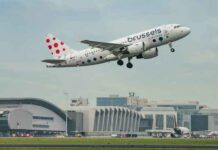
Here again, the Lufthansa group was the first to seize the opportunity ofa multi-brand range, "a bit like the Volkswagen group with its subsidiary Audi"as its management likes to describe it. The group is made up of half a dozen airlines. In addition to the three 'premium' airlines Lufthansa, Swiss and Austrian, the group also includes the hybrid airline Brussels Airlines and Eurowings, an airline somewhere between low-cost and hybrid. Each has a very different operating territory, with Swiss, Austrian and Brussels Airlines focusing primarily on their home markets.
On the other hand, Eurowings was created to stop the haemorrhage caused by the low-cost phenomenon. At the same time, Lufthansa refocused on its Frankfurt and Munich hubs, Eurowings moves upmarket on point-to-point routes from Berlin, Düsseldorf, Hamburg and Stuttgart. In addition, Eurowings offers a hub in Cologne with both short- and long-haul destinations, including North America and Asia. However, faced with the push of Ryanair and easyJet in Munich and soon in Frankfurt, Eurowings has also set up in the Bavarian capital this year and is preparing to land in Frankfurt in 2018 to offer routes in parallel to those offered to Lufthansa.
IAG also brings together two premium airlines, British Airways and Iberia, as well as Aer Lingus, a hybrid airline based in Dublin, and Vueling, Iberia's low-cost subsidiary based in Barcelona. Finally, the latest addition to IAG's multi-brand range, the long-haul low-cost carrier Level has taken off with four routes from Barcelona to Buenos Aires, Los Angeles, Oakland and Punta Cana.
Joon" at Air France
For its part, Air France-KLM is closer to the strategy followed by Lufthansa, even if the Franco-Dutch duo has fallen behind the competition. While HOP takes on point-to-point regional traffic as a complement to Air France, and Transavia is positioned in the low-cost segment, Joon, the new company announced this summerpresents a hybrid offering with its Business and Economy cabins.
In ten years, Transavia has become the largest low-cost carrier in the Netherlands and at Paris Orly, with a network of around one hundred destinations, the vast majority of which are leisure destinations. Between 2011 and 2016, the fleet grew from 38 to 63 aircraft, while passenger numbers jumped from 6.3 to 13.3 million. For its part, the hybrid medium- and long-haul airline Joon will begin operations in the autumn and will eventually have a fleet of 28 aircraft, 10 of which will be long-haul. For Air France, this new airline will not only make it possible to reduce costs on routes deemed to be loss-making like Paris-Bangkok for example, while allowing Air France to return to markets it had abandoned, but also to target new categories of travellers. The airline is promising a carrier with a contemporary look, aimed particularly at the 25-35 age group.

This development is reassuring. The incumbent operators are far from becoming air travel dinosaurs, as the doomsayers predicted. Quite the contrary, in fact. By redefining their strategy, they are once again in tune with the times and attracting new customers. A "happy identity" of sorts. Sounds like a political slogan, right up there with the times...