









How do you explain the fact that the 2017 results were better than forecast in the previous EVP barometer?
Philippe Chérèque - Business travel is one of the biggest items of expenditure. Purchasing managers are taking precautions, as they would always like to be able to spend less. It should also be noted that growth in France has been higher than forecast.
The barometer forecasts 7% of growth for British business travel: a collateral effect of Brexit?
P. C. - This is a factor to be taken into account. These growth forecasts in the UK can indeed be explained in part by the BrexitHowever, there is still some doubt as to what rules will apply to financial flows and expatriates. But doubts remain: we don't know what the rules will be on financial flows, expatriates...
How does the travel agency fit in with the trends highlighted by the EVP barometer?
P. C. - Key accounts are looking for a partner who can provide them with global support. To deal with issues such as securityrespect for travel policyIt's simpler and more efficient to work with a single operator than to operate in a fragmented ecosystem. So we are well positioned in this area. To target the other part of the market, the small and medium-sized enterprisesWe are investing heavily in new technologies, as demonstrated by theacquisition of KDSto guarantee added value in this area. We are growing significantly in this SME segment because we have developed a much more integrated offering, which gives them access to better rates. For example, in the hotel sector, we offer both GDS and Booking.com Business content. We have become a kind of mega-search engine in business travel.
How does the barometer explain the market's mistrust of new players like Airbnb?
Philippe Chérèque - La security is the number 1 concern according to the companies surveyed as part of the EVP barometer. This partly explains the low demand for collaborative economy players. Our agreement with Airbnb concerns back office integration, but we don't integrate Airbnb into the booking tool.
To what extent does the traveller experience shape travel policy?
P. C. - Two or three years ago, around eight out of ten buyers were not interested in passenger comfort. Little by little, we are contributing to educate buyers about TCO (Total Cost of Ownership), which is not limited to the price of the ticket. If a traveller is stuck in India with a non-refundable ticket, is it more appropriate to pay for one or two extra nights in order to save 20% on the price of the ticket? Before, companies were looking for pure and simple savings on the price of travel. Now, thanks to mobile traveller support tools, we can help buyers to better understand the TCO, which includes the time spent by the traveller, incident management, etc. Airlines have understood this: when you see the investments made to improve business class, the development of premium classes, etc., business class seats are now better than those offered in first class five or ten years ago.
What new tools or services are you working on?
P. C. - We recently introduced a tool called Proactive Traveller Care (PTC). We work with the airlines, which send us information in the event of flight delays or cancellations. This enables us to keep travellers informed in advance and to prepare an alternative solution. Carriers often wait until their customers have arrived at the airport before notifying them and taking charge of them. And naturally, airlines will not offer alternative solutions on a competitor's flight. We are trying to be more proactive, and to offer the best solutions. We have also set up a chat service, offering an additional channel of communication via the application.
Could you use a chatbot to automate this chat function?
P. C. - We are carrying out tests in this area. Human intervention is not necessary for a simple flight cancellation.
What are your plans for the mobile sector?
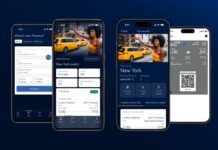
Philippe Chérèque - We're working hard on this mobile applications issue. We are currently looking into the possibility of launch mobile booking this year. It's not the number one priority for companies, but we do get requests, particularly from small businesses, for hotels and airlines. We too often forget that the person travelling is not the one paying. So we have to take into account travel policy, validation circuits, etc. The way things work is very different from the way they work in leisure.
To what extent are you inspired by leisure offers?
P. C. - For a long time now, leisure industry players such as Amazon and Fnac have been offering recommendations based on customer history. We are also working on this aspect. We have a five-year history of our customers' travel data, which enables us to offer them relevant recommendations, taking into account the company's travel policy and fares... We are in the process of launching this tool, called Trip Recommend.
Didn't the acquisition of KDS scare off some customers?
P. C. - Of course it is. Some customers may be reluctant to use KDS if American Express GBT is not their agency. But on the other hand, more and more American Express GBT customers are using KDS. One of the tasks of the new KDS recruits is to finalise the adaptation of KDS for the American market, where the tool will be implemented from the second quarter, particularly for the SME market. I don't think this would have been possible if we hadn't bought KDS.
if we can find an equivalent of KDS specialising in robotics for business travel, why not?
Are you planning any new acquisitions?
P. C. - I can't say whether an acquisition will take place in the short term. But we are always listening to the market, particularly in the technology field. L'artificial intelligenceThese are the issues of the moment. For us, it's all aboutinvest in KDS. We have already taken on more than fifty people since the takeover. But if tomorrow we find an equivalent of KDS specialising in the robotics for business travel, which would enable us to go faster, why not?
Does the future of TMC depend on takeovers by other players in the market?
P. C. - It's not all about acquisitions. We recorded growth of 12% in France last year. It's our investment in technology that makes our value proposition more attractive to companies. I sometimes read that American Express GBT is buying market share... Since I've been at American Express, we haven't signed a contract that doesn't make money. I'm not going to sign a contract simply to gain market share. We are not patrons of the arts. Our growth is organic, even if it's true thatacquire a company such as HRG consolidates our position. This is based above all on a logic of complementarity: HRG is important in the UK, Germany and Canada: markets where we were less important. There's a real geographical complementarity that means we can further strengthen our global solution.