
















The journey from Glasgow airport to the city centre takes just 15 minutes, more than it takes Jack the taxi to sum up his vision of French-Scottish relations: " It was here, in 2002, that Zidane scored the finest goal of his career, a left-footed volley that has become known as the 'Glasgow volley'! "Zidane was playing at MadridBut no matter: this reminder is worth all the words of welcome in a region that is both a football fanatic and, above all, has been linked to France since the Middle Ages. The Auld Alliance between France and ScotlandIt culminated in the Hundred Years' War and continued for nearly three centuries, forging economic, cultural and emotional links that endure to this day. This explains why Hume, Adam Smith, Walter Scott, Robert Louis Stevenson and all the eminent Scottish intellectuals travelled to France. As for Charles Rennie Mackintosh (1868-1928), the architect whose 150th birthday the town is celebrating this year, he spent several years in the Collioure region.

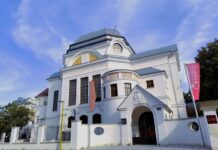
Mackintosh's famous portraitThe poster, with its elegant moustache and wide lavaliere, was displayed all over the city. It announces the major exhibition devoted to him this year by the Kelvingrove Museum*. Built in 1888 in the Spanish Baroque style, this monumental building flanked by a series of turrets stands in the chic and very green West End, a stone's throw from Finnieston. In other words, the docklands that were abandoned 20 years ago and are now one of Britain's hippest districts. As well as plans, photos and models of the buildings, the exhibition places Mackintosh's work in the artistic context of the time, and highlights the creations of the group Mackintosh formed with three other students in the mid-1890s, including the artist Margaret MacDonald, who later became his wife. Influenced by Japonism, Symbolism, Celtic imagery and the Arts & Crafts movement, 'The Four' invented what was to become the Glasgow Style, Scottish Art NouveauThe company's work covers a wide range of media: ceramics, mosaics, stained glass, metalwork, stencilling, embroidery, graphic design, interior design, furniture and architecture.

* Charles Rennie Mackintosh, Making the Glasgow Style, Kelvingrove Museum (until 14 August 2018)
A fetish of the upper middle classes
Les Quatre exhibited in Liège, London and Vienna and established themselves as fetish artists The city's population soared from 200,000 in 1835 to over a million in 1935. Constantly redeveloped to accommodate ships of ever-increasing tonnage, the port created on the Clyde - the river that runs through Glasgow - was one of the busiest in the 19th century, and a major hub for trade with the United States. Its surroundings were home to a cutting-edge metallurgical and mechanical industry that produced millions of tonnes of cast iron and steel. A quarter of global production of steam locomotives came out of its factories, while its shipyards were the largest in the world at the time. Clydebuilt" ships sailed the seas of the world. Many of the legendary liners of the Cunard Line were born here, including the Lusitania (1907), the Queen Mary (1934), the Queen Elizabeth (1938)... Considered to be the father of shipbuilding, one of the company's founders, engineer Robert Napier, was born in Glasgow.


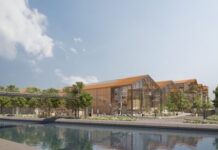
At the Riverside Museum, a transport museum located on an industrial wasteland beside the river, a 19th-century engraving depicts the activity of the time: a cohort of merchant ships are clustered in three rows along the teeming banks, bristling with Cyclopean cranes, lined with warehouses and factories that stretch to the horizon colonised by the smoky chimneys of factories. " Here we are at the height of Glasgow, spearhead of the Industrial Revolution and one of the richest cities in Europe." says Bob, one of the museum guides, proudly. Inspired by port architecture and designed by Zaha Hadid Like a huge shed zigzagging along the riverbank, the museum is unmissable for the wealth of its collections and its lively, interactive and fun museography. At the Riverside, visitors are invited to sit in the public transport vehicles on display, from underground trains to trams, the first of which, which entered service in 1898, was probably used by Mackintosh.

An assistant in a local architectural practice before becoming one of its architects, and then a partner at the age of 33, Mackintosh practised only in Glasgow, to his great despair, and in the United Kingdom. for a circle of die-hard fans which he deplored not being extended. Nevertheless, visiting the buildings he designed here is a pleasant way to discover the city. The Lightouse, dating from 1895, stands right in the centre; it was his first commission, an extension to the offices of the Glasgow Herald, the local daily newspaper.
To combat the fires that were ravaging the city, the municipality adopted regulations requiring businesses to take precautions. It was against this backdrop that the architect designed this impressive corner tower. Like a dungeon-campanile rising nine storeys high, the structure had a dual function. As well as housing a 36,000-litre water tank, this red sandstone beacon with its octagonal roof was also the newspaper's monumental sign.

Private rooms
Converted into a cultural centre in 1996, the building houses an interpretation area on the architect's work and temporary exhibitions, as well as several private rooms, including a meeting room nestling in the tower. The platform at the top offers a panoramic view of the shopping district, from which the silhouette of the clock tower of Glasgow Central (1879) stands out. This Victorian station is famous for the immensity of its stepped glass roof.

From here, the Willow Tea Rooms and the Glasgow School of Art, two of Mackintosh's major works, are joined by Buchanan Street. The artery crosses the Merchant City, the Tobacco Lords district who settled here in the 18th century. The first to trade with the United States and the Caribbean colonies, they built their fortunes on tobacco imports - 50 % of the leaves sent to Europe passed through Glasgow - as well as cotton, sugar, rum and the export of manufactured goods to the New World. It was they who shaped the city, initiated its industrialisation and financed the construction of its main streets and churches. These newly rich, immensely powerful men flaunted their status in a city where working-class conditions were among the most miserable in Britain.
" To set themselves apart, the Tobacco Lords had their own style of dress: a scarlet coat, a silver wig, a tricorne and an ebony cane with a silver head." explains Nancy Braid, event manager of Merchants House, the plush headquarters of the Merchants Guild, a philanthropic institution established in the 17th century and still in existence today. But their opulence is best measured by the splendour of their mansions in Merchant City. Some are only no more and no less than palacesThese include William Cunninghame's neoclassical mansion, now home to the Museum of Modern Art.
Kate Cranston was the high priestess, not of tobacco, but of tea rooms in Glasgow. Of the various designs Mackintosh conceived for her, the most striking, and the one that stands out the most, is the tea room. most representative of his stylistic freedom is undoubtedly the Willow Tea Rooms, opened in 1904. For the fourth establishment in the concept she skilfully promotes - the chic, respectable tea room as an alternative to noisy, smoky pubs - this ardent campaigner for alcoholic abstinence has given the architect, a notorious boozer, carte blanche...
At the Willow Tea Rooms, 'Toshie', as he is known to his friends and family, no longer plays the role of decorator as before, but that of total creator: this time, he is redesigning a building from top to bottom and designing the entire interior layout. In addition to innovative work on the façade, he designed a scheme in which every element contributed to creating a dreamlike world. Furniture, light fittings, mirrors and screens make up the whole. a harmonious haven of peace in every detail; a bright, refined atmosphere that contrasts with dark Victorian interiors. From the coat rack to the teaspoon, everything is invention. Take the cashier's chair, for example, with its semi-circular back featuring a tree. It's a unique piece of curved furniture designed with straight timbers - a real technical challenge...

Sophisticated work
" Get rid of all the guardians - those offered by tradition and power - and set off on your own. Crawl, stumble, but go it alone" the designer advised budding artists. His creativity was also put to the test 500 m away at the Glasgow School of Art, designed in two phases (1897-1899 /1907-1909). To the north, a Scottish manor house appears to be set into a facade that could evoke an industrial building, but the architect has sprinkled it with a family of decorative elements in wrought iron with precious motifs. Austere, mineral and partially blind, one of the façades suggests a fortress, while the other, pierced by vertiginous windows, adopts an ultra-modern layout for its time. These long panes of glass illuminate the school library, a work of architecture within the overall architecture. Based on a frame of sophisticated geometry, it is like a piece of furniture. After suffering a fire in 2014, this Mackintosh masterpiece was due to reopen its doors to the public in 2019, before fire ravaged it once again last June.


After the Glasgow School of Art, the architect, then aged 41, built nothing more. In all, he completed around fifteen projects - most of them privatisable - including a primary school, a church, now the headquarters of the Charles Rennie Mackintosh Society, and Hill House, currently being restored, in Hellensburg, north-west of Glasgow. Discouraged by the lack of commissions, he moved to London for a time, before returning to Glasgow. sets up in France in the Pyrénées-Orientales. In Port-Vendres, he painted landscapes bathed in light almost until his death. Robert Mallet-Stevens, when asked what he would do if he were God, replied: " I'd draw like Mackintosh" .
Also in this dossier: Glasgow: address book