















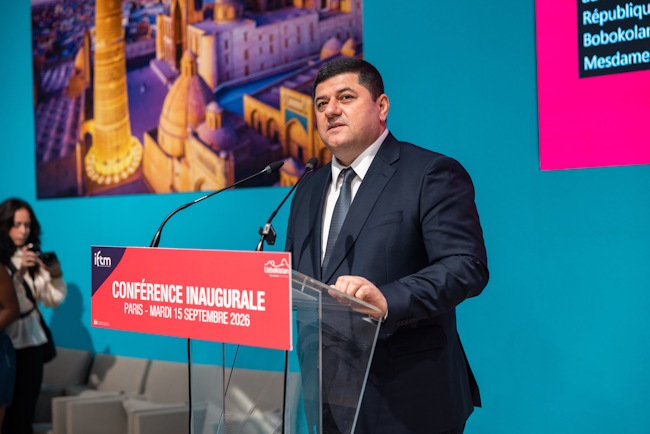
Uzbekistan was the country in the spotlight at the last IFTM fair. But for many, this destination is still unknown. Can you introduce it?
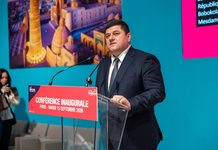
Sukhrob Bobokalonov: To begin with, Uzbekistan is a bit like France. This country has given as much to the civilization of humanity as it has received. The Silk Road, the domestication of the horse, the sciences with Avicenna and Al-Khwarizmi, to whom we owe algebra and the algorithm… Many empires have been built in these lands, from Attila to Tamerlan. Alongside this glorious past, Uzbekistan has been experiencing a very significant economic growth in the last ten years, with a % projected growth of just over 8 this year. It is a safe country in all respects, economically and socially, with a diversified economy based on several industries such as textiles, automobiles, chemicals, gas and oil.
Is tourism also one of its key sectors?
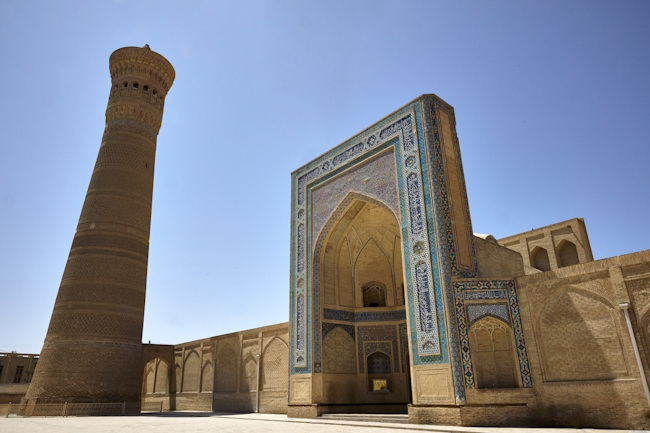
S. B.: Tourism is a priority sector, because Uzbekistan is a landlocked country. All around us, many countries have cheaper labor and resources and can compete with us. But in tourism, there is no other Uzbekistan. The facets that Uzbekistan offers, especially in terms of architecture, with all these wonders of the Islamic world, almost do not exist anywhere else. In Iran, of course, but you know the situation…
How is tourism developing in Uzbekistan?
S. B.: The State, supported by the President of the Republic, emphasizes creative and responsible tourism, which is unique to Uzbekistan. We should not imitate what is done elsewhere. On the other hand, we can offer a very high-quality service with an Uzbek touch, built on the history I mentioned, our cultural codes, politeness, and kindness.
How does this strategy translate into the tourist offer?
S. B.: Ten years ago, tourism in Uzbekistan relied solely on culture, its cities of the Thousand and One Nights and the Silk Road. But alongside these historical monuments, we also have mountains, lakes, and incredible landscapes… Today, we are looking at the potential of the regions around our cultural sites to, based on that, develop the services that go along with them. In this way, we are diversifying our tourism, especially towards events and MICE.
Is business tourism one of your development strategies?
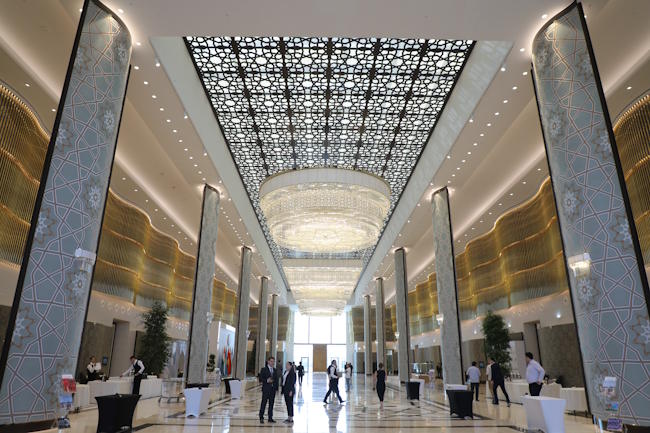
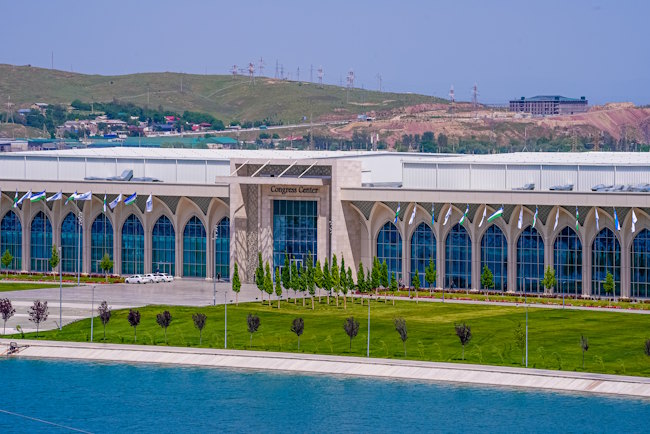
S. B.: Yes, we have done a lot of things in recent years with major convention centers first in Tashkent, then in Samarkand, and this year in Khiva. And in Bukhara, we are currently building a huge center dedicated to events, with a congress palace that will be completed in two or three months. We have great potential for MICE tourism. The country has seriously entered this market. In 2025, for example, the Samarkand convention center hosted the UNESCO General Conference, the first to be held outside its headquarters in Paris. This year, the city is hosting the world championship in chess. The world championship in mini-football was also held in Uzbekistan. The country attracts more and more global events.
Is it easy to organize a congress, an event or an incentive stay from France?
S. B.: First of all, there is a direct flight Paris-Tashkent from Uzbekistan Airways twice a week, on ultra-modern aircraft, such as Airbus A320neo. Apart from the national airline, there are nine local low-cost carriers – compared to just one ten years ago – that connect the interior cities, but also serve Istanbul, other European cities or Southeast Asia. In parallel, to come to Uzbekistan, travelers can also take flights from Turkish Airlines via Istanbul to Tashkent, Bukhara or Samarkand, as well as Ourguentch, Ferghana or Namangan. You see, the country is very well served.
To connect Samarkand or Bukhara from Tashkent, do I have to take a plane?
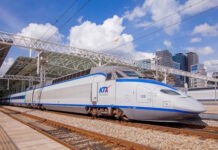
S. B.: Uzbekistan is a country of immense length, covering 2,000 kilometers from end to end, with around 300 to 400 kilometers between its various cities. And today, you can travel across Uzbekistan by train from one end to the other. Uzbekistan was the first country in Central Asia to offer ultra-modern trains, with TGVs purchased from the Spaniards at Talgo, then from the Chinese and Koreans. We have thus tripled the length of the network.
Do you feel a great deal of interest from French companies?
S. B.: About ten years ago, the French business was relatively little present in Uzbekistan. But over the last ten years, our presidents of the Republic have met several times. The relations are very good and, in this context, French companies have shown interest in the country, including hotel groups that have settled there, such as the Accor group (the Mövenpick, Ibis and Mercure hotels have recently opened in Tashkent, and another Mercure will be opening this autumn in Khiva). There are also French mountain companies that come to the country, because we are developing skiing very much and we have beautiful mountains. The French are very active.
