














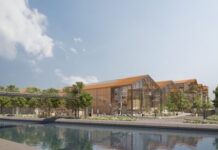







Casey A. Wynecoop, 35, co-director of The Intellectual House, University of Washington
Washington State still has 29 Indian tribes
I grew up on an Indian reservation, east of Seattle, in Spokane, a small town named after a tribe that means "the Indian people". "children of the sun. Washington State still has 29 tribes. But people of my generation, and even my parents' generation, have lost their original language, Salish. That's why, when I came to Seattle to study at the University of Washington, I opted for the American Indian Studies programme. After graduating in 2008,...
Casey A. Wynecoop, 35, co-director of The Intellectual House, University of Washington
Washington State still has 29 Indian tribes
I grew up on an Indian reservation, east of Seattle, in Spokane, a small town named after a tribe that means "the Indian people". "children of the sun. Washington State still has 29 tribes. But people of my generation, and even my parents' generation, have lost their original language, Salish. That's why, when I came to Seattle to study at the University of Washington, I opted for the American Indian Studies programme. After graduating in 2008, I worked in a Seattle clinic that only treats patients of American Indian origin. I was collecting data, particularly on diabetes, which is very prevalent among this population. Then there was talk of the University of Washington building a home on its campus for promote Native American culture and to support students from different tribes. That's how, in 2015, I started preparing for the opening of Intellectual House, which organises cultural events. Since then, I've become the co-director. Today, we're proud to have 35,000 visitors every year. We organise film screenings, cookery classes and workshops to learn how to make objects linked to Native American culture, sometimes in collaboration with entities such as 8th Generation, run by artist Louie Gong, which promotes the crafts and art of different tribes. My next goal: raise funds for the construction of a second house that will house artists' studios and spaces for the elderly to meet young people, while attracting even more visitors to raise awareness of Native American culture. "
www.washington.edu/diversity/tribal-relations/intellectual-house/ - www.eighthgeneration.com
Christophe Jospe, 32, co-founder of the start-up Nori
a region very sensitive to environmental issues
"I'm originally from Rochester, New York. After graduating, I went to Egypt to teach English, and then worked on fundraising for an NGO promoting the Arab world. Little by little, I became aware of the issue of climate change and went back to school at Columbia University to do a Masters in Environmental Science. There I discovered that you could make giant machines to capture carbon dioxide, based on the Direct Air Capture concept. But these machines are very expensive. So I wanted to create a more affordable technology, but still with this idea of reduce gas emissions. I said to myself that, since our governments weren't doing enough to protect the environment and the danger was imminent, it was up to us, the citizens, to do something. So I started looking for a partner who knew how to design software, because I'm primarily a fund-raising specialist. And I met Paul Gambill, a software engineer who lives in Seattle. We immediately thought of blockchain solutions to develop our market. I didn't hesitate to move to Seattle, because the Pacific Northwest is really a region that has a lot to offer. very sensitive to environmental issuesmuch more than New York. And so we launched Nori (editor's note: the name of a seaweed that absorbs CO2) in August 2017. At the moment, we're focusing on soil and working with farmers, providing them with applications that enable them not only to reduce their CO2 emissions - in particular by limiting the use of fertilisers and alternating their crops - but also to quantify their reductions and be financially rewarded for them. We then issue them with 'Carbon Free' certificates. We are currently in the pilot phase, but by the summer we hope to be issuing a million certificates. Because the system is working exponentially and will soon no longer be limited to agriculture.
www.nori.com
Hélène Costa, 35, founder of the start-up GarageHop
Seattle has 80,000 IT engineers
"I arrived in Seattle in 2013, when my husband, who was working for an American company, was transferred there. I didn't know what I was going to do, but I quickly fell into the start-up world, thanks in particular to the Franco-American Chamber of Commerce and the Female Founder Alliance. In Paris, I was working at the Directorate General for Energy and Climate. So I wanted to launch an environmental start-up. I had read that 30 % of gas emissions in towns and cities were linked to the search for a parking space, so I thought there was an opportunity here, especially as another study claimed that 30 % of garages remained unused. That's how the idea for GarageHop came about, an application that helps you find parking spaces, particularly in buildings or private spaces. The great thing about Seattle is that it has 80,000 computer engineers. So it wasn't difficult to find a partner. We launched our solution in January 2017 and eventually I'd like to develop the app in other cities in the United States."
www.garageHop.com
Liz Tran, 39, artist
I love living in Seattle, I feel very inspired by the nature that surrounds me
"I come from a modest family in Oregon. My father built fly-fishing boats. I spent a lot of time building them with him, and that's how I learned to work with my hands. That's also where my vocation as an artist came from. I moved to Seattle twenty years ago. I won a scholarship to Cornish College of the Arts, a university that teaches dance, theatre, music and painting. In 2002, after my studies, I went straight to the studio. managed to make a living from my work as an artistIt wasn't easy, especially when you have no connections in this field. But I've had artist residencies, and then little by little commissions. Recently, I did a large-scale project for JW Architects in Seattle. I often do large-scale projects, because I like to work with materials that I accumulate: buoys, lanterns that I pick up here and there. My husband and I bought a house about fifteen years ago, in an area that was then a shabby neighbourhood but which has become very sought-after. I was able to set up a fairly spacious workshop in place of the garage. I like living in SeattleI'm very inspired by the natural world around me. I like to go mushrooming and hiking in the Cascade mountain range. Plus, for an artist, the competition is a little less fierce than in Los Angeles or New York. And I'm lucky enough to have several gallery owners who support me.
www.liztran.com/home.html
Jin Lee, 30, IT engineer for Starbucks
Seattle is a great place to start your career
"I grew up in Tacoma, near Seattle, and began by studying psychology at Washington University. Then I realised that what I was really passionate about were computer sciences. So I took another degree. Right after I graduated, in 2016, I got a ten-week internship at Starbucks. Seattle is a great place to start your career. After my internship, Starbucks immediately offered me a job as an engineer. My day-to-day job? Improving the functionality of the app. For example, I made it so that you could offer coffees to your friends and collect points from your phone. I've learnt a lot in the world of sales, but it's time for me to move on. This summer, I'm going to start working for Google, in the very cool neighbourhood of Fremont. I want to develop my knowledge of IT tools and give my career a real boost. What's more, Google, like Amazon where my husband works, is "dog friendly. So I can go to the office with Pancha!

John Bassford, 29, sales assistant at Wayward Store
People here are very tolerant and open-minded
"Three years ago, I moved to Seattle from Virginia, where I was born and studied at James Madison University. I've always been fascinated by the west coastThe Pacific Northwest and its wide open spaces in particular. I've also always loved the beautiful, quality clothes that are made in this region. Leather shoes that last for years, thick shirts and canvas bags like those made by Filson, for example, a manufacturer of outdoor clothing and objects that was founded in Seattle in 1897 and continues to produce locally. So it's a pleasure for me to come into the shop every morning to sell these products and advise customers. At the same time, I'm a kick-boxing instructor. It keeps me in shape, which is important here where you're always on the move. The wonderful thing is to be able to live in the city and still be part of a family. very close to the mountainslakes and the sea. People here are very sensitive to environmental issues, and they're also very tolerant and open-minded. I feel at home, even though I come from the other side of the country and I'm of Korean origin. In Virginia, when you wear tattoos, people look at you strangely. Here, it's normal and nobody pays any attention to it. You feel really free.
www.waywardcollective.com
Colin Byrne, 38, lawyer
I became a lawyer thanks to a chance meeting in a bar
"I started my career in the film industry in California. Then I came to Seattle for personal reasons, but also to pursue my career in the film industry. theatre studies. I soon realised that this was going to be a difficult career. One evening, when I was earning my living as a barman, I met some lawyers who asked me to come and work for them as a legal assistant. Their aim was to avoid capital punishment for prisoners incarcerated in states where it is still practised. I accepted the job and very quickly became passionate about the cause. Because, more often than not, capital punishment is imposed on the basis of very marked racial and social criteria. We need to ensure that this barbaric practice is no longer practised on American soil. Twenty states, including Washington, have already abolished it, but there's still a long way to go. I passed the bar exam in July, and now I'm ready to become a lawyer. Thanks to a chance meeting in a bar... It says a lot about the ability of the people of Seattle to forge links and help each other."
