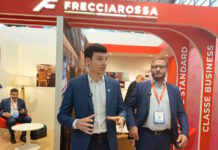
Were you surprised by the results of the EVP barometer?
Yorick Charveriat - What surprised me was the strong growth seen in 2018, which should be even more marked in 2019. When it comes to trends in travel management, I don't think there's much talk of travellers buying into travel policy on a day-to-day basis. We've been saying for some time that we're going to put the end customer back at the centre of the debate, and indeed we're listening to them more, but are there any actions behind this? I'm not really convinced. It's probably a long-term process, and it's going to take time for attitudes to change.
How can we explain that notion of "well-being is now at the centre of debate, as if it were a new trend?
Y. C. - It's true, this notion used to be less visible. Perhaps we're measuring traveller satisfaction more and more, both through official channels and simply through more or less formal discussions, which can give rise to expressions of dissatisfaction that are exponential. We are evolving in a field where we are offering eminently B2B tools to people who are used to B2B tools on a personal level. And they don't understand why we can't offer the same simplicity.

According to the EVP barometer, travel management seems to be 'split up' between different departments. Is this a threat to the role of travel manager?
Yorick Charveriat - No, quite the opposite: it's the glue that holds travel policy together. Visit travel manager is essential. But travel managers are intelligent people who realise that they can't do everything on their own. They need everyone's help to build the most appropriate travel programme for the company's travellers.
The American Express GBT study points to a rise in open booking and a fall in compliance: should we be worried?
Y. C. - France is a good pupil in this respect... But theexplosion in open booking in certain countries is perhaps salutary. Why worry about a phenomenon that may push us in the right direction, to give us the right arguments to put in place the right measures? travel policies that correspond to the travellers. As soon as we have the necessary information to locate travellers, this can be beneficial. Corporate Travel Policies are becoming increasingly flexible, but there will always be a need for a framework. The difficulty lies in allowing a degree of flexibility within a defined framework. It's all a question of finding the right balance, communicating well and involving the players concerned.
READ ALSO: " EVP 2019: European business travel takes off according to American Express GBT "
If the EVP barometer is to be believed, the Brexit does not seem to be putting the brakes on business travel?
Yorick Charveriat - We've been talking about brexitAnd everyone is working on it. British professionals are saying that they need to secure their positions in Europe. And that's just it, we travel most often to secure our client assets. If I were British, I would have been travelling internationally to see my clients 18 months ago, and I would have been there to reassure them.

Conversely, the French market is not the most buoyant...
Y. C. - That's true, but it's still showing good growth of more than three points for 2019, which is positive, particularly in relation to GDP growth. Of course, the increase is more spectacular in Spain, but it's also a question of catching up with the previous year. From my point of view, the growth rate in France remains rather attractive. It's up to us to match or even exceed it. That means supporting this growth by recruiting and training the right people. Growth is also a responsibility!
What is the current status of KDS and HRG Are the two entities fully integrated, if that is the objective?
Y. C. - We don't want to kill the uniqueness of these companies. KDS is - or at least was - a start-up, which has retained its geeky side. We don't want to stifle them by making them part of the American Express GBT universe. It's the same for HRG: there's a logic of complementarity at a geographical level, but not only that. There are strong competencies in terms of technological investment and customer service quality. And that's the basis of our business. So we're trying to get the best of both worlds, by keeping two distinct entities that continue to work with their own tools, for their respective customers.
Will the HRG brand disappear?
Y. C. - This has not yet been defined.
Are other acquisitions planned?
Y. C. - I'm not privy to the 'secrets of the gods'... We operate in a low-margin market, where you have to grow volume to get by. But growth isn't based solely on acquiring companies. The first vector of development is customer retention. For the last two or three years we've had retention rates of 97% or even 98%. That's why it's so important to focus on service quality, innovation, new technologies and people. We are in a service business: everything depends on our teams, who are there to know our products, our processes, our ecosystem, and to bring value to our customers. At the end of the contract, the customer won't even think about the call for tenders if we've brought them value, savings, innovation and optimisation. Our employees are crucial to retaining our customers and therefore to achieving growth.
So we can still insist on the human element, while bots are at the centre of discussions...
Yorick Charveriat - Of course we do! In fact, we are in the process of developing a chatbot: a communication system based on completely human collaborators. We are not yet at the stage of industrialising these chatbots. Of course, we are working on these issues, and we have a chatbot that can help with invoicing issues, for example, to free up working time for complex issues. But I'm convinced that we're in a service business, so the human element must remain at the centre. Our online booking rates are increasing, reaching 67% in France, and we are aiming for an increase in 2019. But there will always be a human element, and an important one!