












The Japanese Henn Na hotel in the Hen-Ten-Bosch theme park near Nagasaki recently hit the headlines with its redundancy plan. The establishment did not hesitate to brutally sack half its staff because of deplorable service. No union discontent in the face of this mass redundancy: the employees in question were nothing more than robots, some struggling to navigate the corridors, while others had the nerve to wake up customers in the middle of their sleep, confusing snoring with voice commands...".The voice-recognition service robots installed in the rooms have been removed,...
The Japanese Henn Na hotel in the Hen-Ten-Bosch theme park near Nagasaki recently hit the headlines with its redundancy plan. The establishment did not hesitate to brutally sack half its staff because of deplorable service. No union discontent in the face of this mass redundancy: the employees in question were nothing more than robots, some struggling to navigate the corridors, while others had the nerve to wake up customers in the middle of their sleep, confusing snoring with voice commands...".The voice-recognition service robots installed in the rooms have been removed, as they were not equipped with artificial intelligence and required frequent software updates. We are now focusing on technologies that can increase productivity"says H.I.S Hotel Holdings.
READ ALSO: "Robots in hotels, now!
Having been through the wringer at the hotel robotisationThe H.I.S group is continuing to develop its concept in major Japanese cities, and soon in Taipei and New York. At Henn Na Ginza, in the Japanese capital's business district, for example, the welcome is more polite and corporate, with two humanoid women acting as receptionists. In the sleekly designed rooms, a high-tech wardrobe designed by Korea's LG defrosts hanging suits in barely an hour, for an impeccable finish before you set off to meet your Japanese counterparts, who are always a stickler for etiquette.
"Henn" means both "strangeness" and "evolution" in Japanese, and this concept reflects the surprise awaiting travellers, as well as the ongoing transformation of the hotel industry. Like an invitation to the sector to rediscovering the pioneering spirit of its beginnings. In 1889, for example, the luxurious Savoy in London boasted the first electric lifts and lighting. The ultimate luxury for the time, the suites were equipped with baths. Then, in the Roaring Twenties, came the first radios, at the Park Plaza in Boston, and telex and air conditioning at the Bristol in Paris. Then came television, the minibar...
In recent years, this long tradition of innovation has tended to run out of steam in the face of the frenetic pace of technological innovation aimed at the general public. "But over the last five years, the hotel sector has taken a turn for the worse. digital shiftIt's a good thing that we've got the right people in place," says Anton Lissorgues, senior manager and leader in the hotel, tourism and catering sector at Mazars France. In 2014, the Aloft hotel in Cupertino - whose proximity to Apple's headquarters is no doubt a factor - also caused a sensation when it hired its first Botlr, a little R2D2-like robot capable of calling the lift using a WiFi connection and delivering drinks, toothbrushes and club sandwiches to the floors. But it is above all in Asia that robotisation is most widespread, not to say commonplace.
À SingaporeIn France, nearly 400 hotels already have high-tech employees, some of whom are in direct contact with guests, while others relieve staff of tedious tasks, such as pushing trolleys full of towels. "We also have beverage dispensing robotsThese robots have three compartments and can make several deliveries to different floors in a single journey. The latter, with three compartments, can make several deliveries to different floors in a single journey.We're delighted to be working with Techmetics," says Satya Chandrakumar, Business Development Manager at Techmetics, which offers its solutions at the Marina Bay Sands, the Sofitel, the Park Avenue Rochester and the Fraser Suites in the City-State. "We have a bright outlook for 2019 and 2020, with a number of projects in the pipeline," she continues. Ultimately, the return on investment of these robots (Editor's note: at a unit cost of between 50,000 and 65,000 US dollars for a seven-year lifespan) is less than one year, as they are replacing three jobs."A fascinating or terrifying prospect for the future. In any case, it's the answer that Singapore's hotels have found to cope with the growth in tourism combined with a shortage of manpower.

Caretaker robots
But is this development to the liking of nomadic executives? Mazars recently conducted a survey of 750 travellers on their expectations regarding new technologies. "Of the ten services tested, robots came lastsays Anton Lissorgues. It's not a priority expectation. On the other hand, meeting a concierge robot is an experience you can tell your friends and family about. The added value for the customer is fairly low, but very important for the school's image."
Robots may be the official showcase for high-tech in the hotel industry, but the sector keeps a close eye on all the latest trends. One of the most striking examples is the appearance in rooms of connected speakers such as Amazon Echo or Google Home. Even though almost 15 % of American homes are already equipped with them, these solutions are still far from having been massively adopted worldwide. However, as soon as the Internet of Things takes off, the hotel industry is already seen as a promising sector for this type of product.
In 2018, Amazon launched the Alexa for Hospitality programme, named after the voice assistant developed by the global e-commerce giant. Powered by artificial intelligence, the connected speakers take the place of the receptionist to answer simple questions about the operation of the establishment, for example giving the restaurant's opening times or the wi-fi code. Without picking up the phoneWith Alexa, travellers can also order room service, book a table at the restaurant or a massage at the spa, and the speaker can also be used to call for help if they feel unwell. A partner of Amazon since last summer, the Marriott group is testing the Alexa solution in some of its hotels, adding a special feature to all the above advantages. Marriott is a partner of TED conferences, so all you have to do is ask the speaker to broadcast a TED Talk on creativity or leadership, depending on your mood, and it will do the job.
But that's not the whole point of these connected speakers. "Alexa, open the curtains"Turn off the light", "Don't forget to wake me up at a certain time": from the comfort of their beds, travellers are transformed into the Alexander the Blessed of the 21st century.e century, passing off desires as orders. Connected to the home automation system installed in the bedroom, the speakers allow guests to take control by voice. They can even ask Alexa to produce relaxing 'white noise' to help them fall asleep.


Laboratories of the future
There is no doubt that connected loudspeakers will feature prominently in the bedroom of the future, the one that the Research & Development teams of major groups are working on. While Marriott has created a technology laboratoryIn China, Louvre Hotels has opened an Innovation Centre, called the IoT Guestroom Lab, in partnership with Samsung for connected objects and Legrand for home automation, to think about the hotel concepts of the future and develop technologies adapted to Chinese customers, who are very keen on innovation. This desire to innovate is reflected in the opening of its first Smart Hotel, the Campanile Jing An Shanghai.
For its part, Hilton presented the Connected Room at the end of 2017. This concept has been rolled out in a dozen hotels in the United States. intends to standardise the smartphone as the room's remote control. Thanks to the Hilton Honors application, members of the loyalty programme can take control of the television, temperature and lighting. New features are expected to enhance this concept, such as the ability to display their favourite photos or works of art in digital frames.
When will the bedroom of the future become the present? "We're hearing a lot about home automation and connected bedrooms these days, but it's still too early.says Ngor Houai Lee, Managing Director of Ascott Europe. In my opinion, we are still on gadgets for the time being. But in five years' time, things will be much more stable and industrialised."Pierre de Kervénoaël, Sales Director of Bowo, which offers hoteliers tablets with integrated access to Netflix, Spotify, Pressreader and Deliveroo food ordering, sees the potential for change.Thanks to artificial intelligence, it will be possible to automatically create an atmosphere based on the customer's profile. Because they are listening to this or that music, have just read this or that article, or are consuming this or that type of product, the music and lighting will be more or less soft, and the photos will be more or less dynamic. We call this experiential intelligence."

While the room of the future will focus on this famous experience, a number of digital services are already simplifying the stay of business travellers. And not just in the hotel, but outside too. For example, some smartphones left in guest rooms can be used to valuable services. As well as being able to control home automation, they offer the possibility of making unlimited local and international calls, avoiding costly roaming charges for mobile executives. And there's no need to buy a local SIM card to benefit from a 4G connection, as this service is also free. This means you can consult Google Maps or an automatic translator without breaking the bank. Always useful in unfamiliar cities.
With this in mind, hotels are taking advantage of the opportunity to slip a high-tech concierge into the traveller's pocket, providing a wealth of information about the city. Guests even have the ability to chat with the hotel concierge to find out about the latest trendy restaurants or the best shopping addresses. Japanese company Bespoke has gone a step further by developing a 'bot', a conversational agent that automatically answers questions, a novelty offered by the Holiday Inn Osaka Namba and the New Otani in Tokyo. By betting on the future of this type of solution through its handy smartphone, the Hong Kong start-up Tink Labs has even risen to the rank of unicorn, one of the flagships of the new economy valued at over a billion dollars. Tink Labs is a partner of major chains such as Sheraton, Novotel, Mercure, InterContinental, Crowne Plaza, Holiday Inn and Henn Na hotels, and the handy smartphone is now present in nearly a million rooms.

High-tech sesame
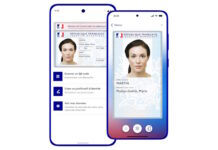
Optimum connectivity, home automation control... In addition to all this, handy also makes as a room keyThis technology has become commonplace since the former Starwood group - taken over by Marriott - and then Hilton began offering it to members of their loyalty programmes in 2014. Among the recent converts, Louvre Hotels began rolling out a new 100 % digital customer journey from summer 2017 by enhancing its Hotel For You app with features such as opening the room via a mobile key, dematerialised check-in/check-out and payment for the stay.
Checking in at the hotel is an exercise that business travellers go through a hundred times over. a must with questions that, while not as severe as a police interrogation, are no less intrusive. "What do we ask the customer? One, please line up. Two, show me your papers. Three, prove that you have money in your account.It's not surprising that one of the major demands is to remove the friction points of check-in and check-out by automating the whole process," says Fabrice Collet, Managing Director of B&B Hotels, whose budget hotels have recently started to allow remote check-in via a smartphone or the Internet. Not surprisingly, one of the major demands is to remove the friction points represented by check-in and check-out procedures by automating the whole process. According to "The Loyalty Divide" study conducted in 2018 by Oracle, 88 % of customers appreciate that the hotel's application allows these formalities to be carried out digitally.
In this context, technology can also foster... human relations! Thanks to a mobile tool that gives staff access to the hotel management system, the ibis brand has completely overhauled the way it welcomes its customers. "Qhen our receptionists are behind their desks, they are mainly focused on the administrative side of things. But when we come to the hotel, it's to have an exchange and we'd lost a bit of thatsays Iris Taeymans, Accor's Director of Operational and Digital Project Support. As staff also have access to the information shared by customers through the loyalty programme, they can invite them to sit down, offer them a glass of white wine because they know their preferences, discuss their hobbies with them, etc.." In contrast to this technology, which has been adapted for human interaction, facial recognition could change people's habits. In China, two Marriott hotels are testing interactive kiosks where travellers scan their ID, take a photo of themselves, give their fingerprints, then insert their credit card before being issued with their room key. The process takes just 30 seconds, compared with an average of three minutes. Smile, you're being filmed.


Robots at the pianoThe robotisation underway is not limited to the hotel industry. In China, JD.com, one of the local e-commerce giants, opened its first XCafe in Tianjin in November 2018, a fully automated restaurantIt is equipped with sensors, cameras and GPS beacons. Thanks to this, robots slalom between the tables amidst hundreds of customers, while others are busy at the piano. While in China, JD.com expects to open 1,000 XCafés by 2020, on the other side of the world, in Boston, four young MIT engineers have designed an equally innovative restaurant, Spyce. Behind an open kitchen, seven turbines mix, cook and concoct healthy and appetising bowls in less than three minutes. All this for an unbeatable price - less than eight dollars - and true gastronomic quality, with three-starred chef Daniel Boulud as a partner in the project. |
Machine translation
|