











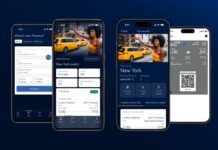

When it comes to business travel, companies of all sizes are striving to simplify travel booking and management. To meet this fast-growing demand, publishers have developed software platforms that can be accessed via self-booking tools.
In France, there are fewer than ten players in this market. In the front rank are KDS, the European leader in the automation of business travel processes on the Internet, followed by Amadeus and Traveldoo, major specialists in technologies applied to the travel sector. The main challengers, who have more or less recently integrated SNCF ticket reservation, are GetThere and Concur Cliqbook. In addition to these players, there is the SNCF, with its brand new Corporate portal, and the tools offered by both integrated travel agency networks (CWT, American Express) and voluntary networks, such as Sélectour, Afat and Tourcom.
Profile question
For its part, Expedia Corporate Travel has just changed its name to Egencia in order to better distinguish its positioning and offering from Expedia's leisure arm. At this stage, Egencia, which is not an SBT but a global solution, has designed a specific offering. "Our tools offer new functionalities linked to the profile of each traveller, as well as the possibility of checking in for their flight online rather than at the airport counter", explains Christophe Pingard, Senior Vice President Europe Expedia Corporate Travel and Director of Egencia. In addition, customers can receive automatic alerts when their season tickets or ID cards are about to expire. While key accounts choose a dedicated solution, other companies connect to a 'shared' portal through their travel agency. Using these tools, they can make online reservations with the various service providers involved: major airlines, local airlines, low-cost carriers, chain or independent hotels, car rental companies, cruise operators and rail carriers.
Integrating the train
Depending on the location of their commercial flows, large and medium-sized companies are tending to travel more and more by train in Europe. They prefer this mode of transport for environmental reasons, but also because of the high cost of oil. Against this backdrop, the advances in technological solutions proposed by the SNCF are attracting the attention of companies. This is the case, for example, with SFR, which has chosen the latest version of the KDS Corporate solution to process the journeys of its 4,000 passengers spread across its ten sites. In the eyes of the mobile phone operator, the 'multi-passenger' functionality, which enables tickets to be booked for travellers with different fare profiles, was a major criterion for adoption, since almost three quarters of travel is carried out with the SNCF.
SBTs are also highlighting these advances with rail carriers. Last March, Traveldoo, the European publisher of software platforms for booking and managing business travel online, made the new SNCF Riva 4 interface available to all its customers. Users of the Traveldoo Enterprise and Traveldoo Portal platforms can optimise their searches for round-trip journeys that are highly restricted in terms of price and access a wider range of international services", explains Olivier Mindren, Vice President of Marketing at Traveldoo. For example, when travelling between Lyon and Brussels, travellers will automatically be able to combine the fare advantages of their season ticket for Lyon-Paris with those of a Lys card or the TCP programme for Paris-Brussels.
GetThere (Sabre), the world leader in online business travel booking, has recently joined SNCF Riva. This new solution features simultaneous comparison of air and rail travel, fare solutions for each journey, negotiated fares, e-ticketing and personalised fare displays. For its part, Concur Cliqbook Travel, which received its SNCF certificate of conformity in June, is positioned as a service available within a unified Concur Travel & Expense business travel and expense management offering or as a stand-alone solution.
From a technical point of view, all SBTs need to be connected to a travel agency so that it can issue the tickets booked by the tool. To make this connection, an interface needs to be established that allows the two environments to communicate in a compatible format. The fact that SBTs are 'supported' by these networks also means that they can interface with them, whether American Express Travel, CWT or BCD Travel... Online booking tools integrate both content and data, from 'in-house' systems or others from external suppliers.
Evolving from simple booking assistance to comprehensive business travel management, they are also taking advantage of advances in mobile technology. However, these tools are mainly used to book simple, point-to-point journeys, i.e. from one airport to another without any connections, generally by employees travelling alone or in small numbers. For more complex journeys involving a group of passengers or combining several destinations or "segments", offline booking through an agency remains the norm.
Carbon offsetting
Simple and fast, the online booking tool can be further enhanced by integrating various solutions. Instead of using a single SBT tool, it may be a good idea for private or public companies whose employees make business trips to integrate a mission order tool," explains Anne-Laure Gogeon, a partner at the consultancy EPSA. Managed via the 'mission order' tool for all simple or complex trips, this single process maximises the SBT adoption rate: the tool decides whether the travel booking process is to be carried out online, i.e. via the SBT, or offline, i.e. via the travel agency".
Thanks to this mechanism combining travel orders and SBT, companies can optimise the expenses paid to the travel agency. What's more, the SBT can take into account expense claims issued after travel, as well as automatic invoicing flows. The SBT, enhanced by other solutions, covers all stages of the trip - before, during and after. It can even ride the wave of sustainable development, in tune with the zeitgeist. For example, some SBTs offer new tools for implementing travel policies that respect the environment and sustainable development, with compensation for greenhouse gas emissions linked to business travel.
At Traveldoo, and more recently at KDS, the calculation of emissions is based on the Bilan Carbone calculation method recommended by Ademe (Agence de l'environnement et de la maîtrise de l'énergie). Travellers can now measure and visualise the carbon footprint of their journey, whether by plane, train or car. At Traveldoo, thanks to Good Planet's Action Carbone programme, travellers can also choose to offset their carbon emissions by helping to finance projects to reduce greenhouse gas emissions (energy efficiency, renewable energies, etc.), thereby making their business travel 'carbon neutral'. In practical terms, offsetting involves the purchase and cancellation of carbon credits. With Action Carbone, the purchase of greenhouse gas reduction units takes the form of a tax-deductible donation.
Online booking: tangible benefits
Let's take the case of a trip to London from Paris. Using the online booking tool, the traveller or his assistant can access the various alternatives authorised by the company for this trip: by plane - traditional or low-cost airlines - or by train. These proposals are presented according to several comparison criteria: fares, preferences, suppliers, classes, etc.
Users can therefore choose their mode of transport and accommodation in real time, while complying with the rules defined by the company's travel policy. Beforehand, the tool will have been configured to take this into account. For example, if executives are only authorised to stay in three-star hotels, no four-star establishments will be displayed during the search phase. On the other hand, in the case of a telephone or fax booking, an over-zealous assistant, not wishing to displease his superior, might be tempted to upgrade him by asking the agency to book a category of hotel to which he is not necessarily entitled. The multimodal display shows availability and prices for rail, low-cost airlines and traditional airlines on the same screen. Faced with a wide choice of offers, users of online booking tools tend to book cheaper trips.
In addition to this online discipline, the automated tool provides invaluable information for organising a mission: cabin plan of the plane or placement on the train, photo and geographical location of hotels, delivery of the hire car to the meeting place. Not forgetting synchronisation with electronic diaries.
"Amadeus e-Travel Management provides specific solutions for companies and travellers: for companies, it enables them to manage their travel budgets more efficiently and cost-effectively; for travellers, it facilitates the personalisation and purchase of their business trips, while complying with their company's travel policy", explains Laurent Engrand, Corporate Sales Manager at Amadeus.
For private or public companies that position themselves as "travel buyers", the use of an online booking system translates into savings at several stages. In terms of the internal process, this eliminates the need for telephone calls, emails or faxes to the travel agency. According to Amadeus estimates, optimising online booking can reduce agency costs by up to 25 %. In addition, thanks to the combined effect of the automated application of the travel policy and improved follow-up with travel service suppliers, online booking can reduce the cost of transport tickets by around 10 %.
Priority: Getting adopted
If the tool is well 'adopted', i.e. used quickly and frequently, the results can be spectacular. "With KDS Corporate, we have made savings on three levels: firstly, by reducing our overall transaction costs by around 50 %; secondly, by automating the application of our travel policy; and thirdly, by reducing the cost of our tickets through a wider range of fares. So, in less than a year, we have achieved our return on investment", says Jessica Olsson, Head of Travel Purchasing at SFR.
When choosing an SBT, it is important to consider the level of integration with the expense claim service, to take into account the rules of the travel policy and other audit procedures, and to check the approval processes (including at the level of mission orders). Other criteria worthy of attention are the integration of all means of payment, electronic receipts and the dematerialisation of supporting invoices. "Through its numerous standard reports and its ability to generate specific reports via the integrated Cognos tool, Concur's offering enables companies to make the most of their data in ways that were previously unattainable," says Franck Joguet, Sales Manager at Concur.
Once the choice has been made, it is important to communicate within the company and to set an example, so that travellers or their assistants use it quickly. But that...


