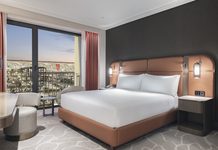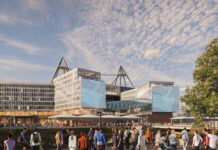

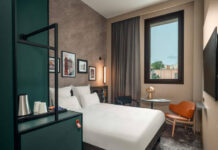
















Doing what you know how to do well, but do it even better This philosophy underpins the future activity of Accor's new Premium, Midscale and Economy (P&ME) division, which brings together the brands that have made the group's history. These brands, including Ibis, Novotel, Pullman and Mercure, still generate a large proportion of the French group's sales. " In the coming years, we will be refocusing on our core business to ensure that it delivers the expected level of performance. "As Jean-Jacques Morin, CEO of the P&ME division, explained at the recent investor day organised by the French group.
On the operational side, this strategy means giving our 230,000 employees the resources they need to do their jobs properly, by optimising distribution channels and deploying cloud-based management and revenue management tools. But it will also mean more concentrated development. " When you focus on fewer subjects, and in a more powerful way, you get more results.says Jean-Jacques Morin. As a result, 90% of openings over the next five years will be in 30 countries. ".
These include France, of course, but also Germany, the United Kingdom, the Mediterranean basin and Poland in Europe, as well as the United States. key markets around the world such as Australia, Brazil, Indonesia, Thailand and India.Saudi Arabia. These are all countries where Accor already has a strong footprint and which will help to make the French group the leader in all the world's major markets, with the exception of China and the United States.

While Accor is also the undisputed leader in mid-range and budget hotels outside China and the USA, the Group still has a long way to go. room for growth in the Premium segmentAccor is only the fourth largest player in this market. This is particularly the case in Europe, where this category represents only 6% of the number of rooms. " We can double this figure in three to five years with our Movenpick, Swissôtel and Pullman brands. Going from 10% to 12% is one of our objectives. "explains Patrick Mendèsthe new boss of the Europe-North Africa region, which includes more than 3,000 of the group's 5,500 hotels worldwide.

One of its other priorities will be to strengthen the consistency of the network. As part of its PURE project, Accor has identified around 10% of "detractors", ageing hotels that no longer meet brand standards or travellers' expectations in terms of experience. Hotels that have no alternative but to invest in renovations, change brands or leave the network. " We have not always been as rigorous in this area as American groups.says Jean-Jacques Morin. We prefer to have fewer hotels, but hotels that will enable us to develop even more hotels in the future, without reducing the value of our brands. ".
While the Ibis and Novotel chains established new design concepts at the turn of the decade, 30% of Ibis and 40% of Novotel in Europe have already done so. brought up to dateHalf of the Pullman hotels have also been converted. According to Patrick Mendès, this trend is set to accelerate: " We need to move faster in convincing landlords to make the investments needed to remodernise these brands, making them more funky ".
In one of Accor's other major regions, the Middle East, Asia and the Pacific, 79 hotels are also being transformed. In this vast market, the head of the region, Ducan O'Rourke, also sees an opportunity for Accor to expand.30% increase in the portfolio of premium brands in the next five years, thanks in particular to the Pullman brand. This is despite the fact that this segment is already more developed than in Europe, accounting for more than 30 % of rooms. Other development objectives for the region include doubling in size in Japan to around forty hotels, increasing Accor's presence in India and Saudi Arabia, and developing the economy and mid-range offer through franchising and conversions of existing hotels.
In view of the CSR challenges and the more restrictive financing conditions for owners, Accor intends to make the most of the following opportunities the appeal of its specialist conversion brands such as Mercure and Mövenpick, as well as two more recent brands: Greet and the Handwritten Collection. At the same time, Accor's growth model will involve the franchiseThis is a method of development that has already been deployed in France, but is becoming increasingly attractive around the world. " We're going to do it, but we'll do it wisely, in places where it makes sense. ". In other words, in tertiary or outlying towns, while hotel management will be the preferred model in major metropolises and secondary towns alike.

This augurs well for a more rapid roll-out of the Group's historic brands. But thanks to its profound transformation over the last decade, Accor now has other flagship brands, starting with luxury, where the French hotelier now owns three of the six big names in travel that emerged at the turn of the 20th century.e century - Orient Express, Raffles and Fairmont - the others being St Regis and Ritz-Carlton, owned by Marriott, and Waldorf Astoria, deployed by Hilton.
" In 2013, we had just one of our 13 luxury and lifestyle brands. Today, we have 26 brands in this segment, for a total of 46 chains.says Sébastien BazinCEO of the French group. In this rapidly expanding market, our pipeline grew by 45%, more than Hyatt and the other groups, demonstrating the demand from owners for our brands. ". Having closer relations with these investors is also one of the reasons why the group has been divided into two distinct entities, whereas previously, with the organisation by geographical zones, the bosses of the different regions could only allocate roughly the same amount of time to the Ibis franchisee as to the owner of a Raffles.

While the P&ME division is organised into four major global markets, the Luxury and Lifestyle division is divided into four brand collectionsEach of these brands has its own person in charge of global development. In this case, Omar Acar for Raffles and Orient Express, Maud Bailly for Sofitel, MGallery and Emblems, Gaurav Bhushan for Ennismore's lifestyle offer and, finally, Mark Willis for Fairmont.
This latest brand, a pioneer in sustainable development and largely focused on the MICEToday, a third of its establishments are being renovated to maintain its high standards, which will soon be enhanced by a new-generation F&B offering and a revamped brand image. Largely represented in the United States, its future is now looking to other continents, with its development targeting some forty key cities in the world. Of the 34 hotels announced for the 2023-2027 period, most of the planned openings will take place outside North America, in destinations as diverse as Prague, Djibouti and Tashkent, Cairo, Riyadh and Dubai, as well as Abuja, Hanoi and Tokyo.

Sofitel may not be as old as Fairmont, but Accor's original top-of-the-range brand is nonetheless on the move. towards his 60th birthdaywhich it will celebrate next year. Here too, the aim is to offer a more uniform quality network by taking out certain hotels that are far from the brand's standards, while focusing on hotels with the potential to become leaders in their markets. With 122 establishments today, Sofitel intends to accelerate its development in Europe - the recently opened Sofitel Barcelona Skipper embodying the future of the brand with its rooftop and attractive F&B offer - but also in China, Mexico and Vietnam. Among the openings planned for the coming years, Sofitel is expected to open in Dublin, as well as in Paris, Lille and Marseille. At the same time, the brand will be placing a strong emphasis on the major cities of Africa, the Middle East and Asia, with Cairo, Nairobi, Auckland, Riyadh, Sapporo, Shanghai and Nanjing among those on the shelves.
Also within the scope of this collection, MGallery, which has some forty establishments in the pipeline, is also focusing its development on on Southern Europe and Asia. A continent where the first members of theEmblems CollectionThis new luxury brand, launched in 2021, is awaiting its first developments in China - in Hangzhou and Guiyang - as well as in the Philippines and Vietnam, and in the Rocky Mountains of Canada. The first hotel in Europe is due to be announced soon, and the brand has announced a target of 60 hotels by 2032.
In contrast, Ennismore's collection of lifestyle brands is set to grow much faster. With Covid having come and gone, owners are no doubt increasingly attracted to all these brands which, like Mama Shelter, Hoxton and 25Hours, have demonstrated their resilience through their strong appeal to local customers. In fact, while Ennismore hotels derive 44% of their revenue from their rooms, the F&B offer generates 40% of these establishments' income, with the remaining 16% coming from coworking or residences.
With 137 hotels, Ennismore expects almost as many in the next four years, with more than a third of the expected developments concentrated in the Middle East, a further 28 % in Asia and 22% in Europe. This development could also take place in the United States, where American groups do not have such a well-developed lifestyle offering. " I've never seen such momentum in my life.said Gaurav Bhushan, head of the Ennismore entity. We're at the right time, in the right place, with the right brands. ".