












In France, it is often fashionable to ignore business aviation. Then, at the end of 2017, the sector was suddenly in the news when the media went wild over the private plane used by the Prime MinisterÉdouard Philippe, on his return flight from New Caledonia on 6 December 2017. During a stopover in Tokyothe Prime Minister has booked a Airbus A340 from the private company Aero Vision back to Paris. Cost of the charter : 350 000 € for a 100-seat First Class aircraft that brought around sixty people back to Paris. "We knew that there was no commercial flight at the time we would be returning. And we knew we had to get back for something imperative [...]", the Prime Minister pleaded in the face of the controversy. "It's frighteningly expensive and I'm perfectly aware of that; I'm so aware of it that I try to keep costs down.".
If we decode the Prime Minister's explanations, we find in fact all the elements pleading both for and against business aviation. Flexibility and availability are, of course, the main assets of private jets. They are even the main selling point of business aviation. The European Commission recognised this in a 2008 report examining the conditions for environmentally-friendly growth: "Business aviation offers a flexible means of transport, tailor-made for individuals, businesses and local communities, and increases the mobility of populations, the productivity of business communities and the cohesion of regions".
Door-to-door service
According to theEuropean Business Aviation Association (EBAA), the average saving per journey made thanks to private aviation is two hours. But it is above all on multiple routes that private jets really come into their own: according to a study carried out in 2016 by the EBAA, 16,000 business jet rotations in Europe included at least three stopovers. For companies and individual travellers, this meant a saving of 75,000 overnight stays, an average of 15 million euros !
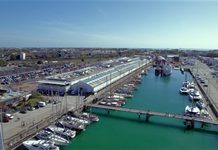
These savings in time and money can be explained in particular by the presence of almost 4,000 airfields in Western Europe, compared with 350 airports commercials. That's a tenfold increase! Requiring only minimal infrastructure - a short runway, sometimes grass for some platforms; a reception area for passengers; a checkpoint and possibly a paraffin refuelling point - business aerodromes play the proximity card to attract their customers. Most of them can be reached in an average of 15 minutes from the cities, hence the idea of a "business airport". door-to-door air servicealmost tailor-made. What's more, customs and security formalities are quicker, as they are set up for the charter of one or two aircraft, and these airports never suffer from air traffic congestion. The same reduced time on arrival... You can quickly calculate the time saved, especially on routes with multiple stopovers.
Let's take a route for example Rouen-Mannheim-Cracow By chartering a plane for the day, the cumulative time for the three flights in a Beechcraft King Air B100 - a 13-seater propeller plane with a flying speed of 490 km/h - would be less than six hours to cover a distance of 2,734 km. This ensures a same-day return. If, on the other hand, all these journeys had to be made by airliner, or possibly by train, there would be numerous connections, not to mention the waiting time at airports or stations. The Rouen-Mannheim route alone would take half a day, as passengers would either have to take the train to Paris CDG airport to catch a direct flight to Mannheim, or go via Lyon, with five to six hours in between!
Going beyond the "bling bling" image
However, there is a lot of controversy surrounding business aviation, based on two grievances: service at the high price and, above all, a very "bling bling. The latter brings to mind the ultra-luxury Falcon produced by Dassault, with a bed and Porsche waiting for the passenger on the tarmac. Of course, this does exist - companies such as XOjet and Twin Jet are just two examples - but it is not the only way of thinking about private air travel. The problem may lie in the fact that the industry does not communicate sufficiently about the enormous range of solutions that business aviation actually offers.

Take the example of Edouard Philippe's trip from Tokyo to Paris, which cost 350,000 euros. If we calculate the cost per person, we find that, for a delegation of 65 participants, the flight coupon with its business service came to 5,385 euros. This compares with the fares offered at the end of January on the Air France website for a one-way Tokyo-Paris flight scheduled for 12 February 2018. The price of a seat in business class ranged from €5,466 to €5,987. Conclusion: the fare for the 'scandal of the Republic' was cheaper per person than on an airliner!
While many people in France think that business aviation is a "luxury", it's not. luxury reserved for the happy few, elsewhere in the world, on the other hand, people are completely convinced of the usefulness of such a means of transport. Just go to the EBACE exhibition (European Business Aviation Convention & Exhibition) in Geneva to gauge the health of the sector. At the 2017 event, the organisers made no secret of their satisfaction. The event, supported by the NBAA (National Business Aviation Association) and theEBAA (European Business Aviation Association), attracted over 400 exhibitors, 13,000 visitors and showcased 56 aircraft models.
"The show was bursting with energy and covered some very interesting developments concerning our future, as well as demonstrating the progress of the technology. Business aviation is growth in Europe and EBACE has highlighted the new models that will enable our market to continue to prosper"As Brandon Mitchener, CEO of the EBAA, explained on the sidelines of the event.
In Europe, there are several dozen business aviation operators, making it possible to offer 22,000 intra-European lines on routes that conventional airlines cannot offer. Moreone million passengers use the services of a private business carrier each year across the continent. 700,000 business aircraft movements were recorded in Europe in 2017, representing an increase of almost 6 % compared with 2016.
And while the French often regard business aviation as a luxury, that doesn't stop France from being the most popular destination for business travellers. Europe's leading destination for business jets, with an average of 157 departures per day, giving a total of 57,000 departures over the year. The airport of Paris Le Bourget is now Europe's leading airport in terms of the number of movements. In 2017, the hub recorded 24,600 departures, followed by Geneva Cointrin with 16,200 movements and London Luton with 14,200 movements. The airport of Nice is also in the European top 10.
According to the EBAA, more and more people are taking up business aviation. This development is all the more interesting given that only 3 % of jets are in private hands, with the remainder divided between government or public institutions and large companies. But the democratisation of the business jet has also been extended to SMES with the arrival of less expensive jets. You don't necessarily have to travel in a Falcon, a Bombardier or any other luxury jet. Not everyone is Madonna! On the other hand, a trip to an intra-European destination can easily be made in a Beechcraft or Cessna propeller plane, small aircraft that are very affordable for an hour's flight.
A sense of sharing
Using a business jet is now much simpler, thanks to the development of air charter companies. on-demand equipment hire or those offering the option of owning a jet, but by device sharing formula. Shared ownership is an option that has been around for a dozen years. leader in Europe is NetJets. The principle is simple: a potential buyer acquires an aircraft by sharing it with other users. The share is generally based on the owner's needs. The aircraft is then available according to the share. If, for example, an owner acquires 10 % of the aircraft, he has the right to use it for 10 % of his flying time.
At NetJets, the shared-owner does not have a specific aircraft at his or her disposal, but the whole of the rental company's fleet, i.e. around one hundred aircraft in Europe. This is reassuring, because it guarantees the availability of an aircraft at any timeNetjets has also launched the Private Jet Card for less frequent travellers - those who fly less than 50 hours a year. For less frequent travellers - those who fly less than 50 hours a year - Netjets has also launched the Private Jet Card, which gives access to NetJets services without a long-term commitment by prepaying for 25-hour periods on a certain type of aircraft.
As in traditional air transport, there is also a need to mix genres. Carriers such as Lufthansa, Air France, Delta Air Lines or Qatar Airways have set up a business jet' subsidiary which allows passengers to combine scheduled and à la carte flights. Lufthansa and Qatar offer First Class service to their private jet customers. Air France works with WijetAF Première passengers can travel by private jet to some 1,200 destinations from Roissy.

Jets à la carte
For his part, the American Surf Air has inaugurated a clever system of à la carte private jets. The company, which was set up in 2014, has expanded across Europe, opening a base in London last year, followed by others in Cannes, Luxembourg, Milan, Munich and Zurich. It offers monthly subscriptions hovering around €3,500 for unlimited use of its ultra-light jets, namely eight-seater Embraer Phenom 300s offering business-class service with USB port, WiFi and in-flight services with access to private terminals.
At its launch in Luton, Surf Air said it wanted to win back business class customers from traditional carriers. Tickets are sold by application, and the company says it can have a plane available in 15 minutes. All options remain open. And, as in the rest of air transport, business aviation has become one of the many forms of air travel. Glamorous or not!
Also in this dossier: