















In Singapore, prohibitions are the stuff of jokes and the stuff of T-shirts, exposing to public hilarity the endless list of prohibited acts, gestures, products and customs. Thou shalt not spit, thou shalt not flush the toilet, thou shalt not chew chewing gum (at least not too much, since it is now available in pharmacies), thou shalt not cross the street at red lights...
But for some, this famous rigour is actually a source of satisfaction. In the banking sector, this is the case. One example is section 47 of Singapore's Banking Act, which can be summed up as follows: thou shalt not reveal any information about thy customers. Entitled 'Secrecy', section 47 stipulates that no personal information about customers should be divulged by Singapore banks. And given the astonishing growth in the financial sector over the last five years, it is clear that the rigour of Singapore, which has some of the strictest banking secrecy laws in the world, has something to do with it.
Back in 2006, Raymond Baer, Chairman of the privately-owned Julius Bear Group, told the Wallstreet Journal that "Singapore [was] one of the best ways to avoid tax". Not only is there no tax on interest and profits here, but discretion over the source of funds is the backbone of banking institutions. This is why, since the European Union imposed its right of scrutiny on confidentiality laws, many Swiss banks have expatriated their clients to their Singapore branch. And to woo this particular clientele, they are increasingly inviting highly-qualified Singaporean staff, trained in the utmost discretion, to work in Zurich or Geneva. But does this absolute discretion open the door to unscrupulous practices? Absolutely not," says Leeanne Leong, vice-president of strategic planning at a well-known local bank. While we mainly accept capital that is escaping taxes, we are uncompromising when it comes to drug and terrorist money.
Reassuring political stability
In any case, the growth in financial activities, which account for 11 % of GDP and 5 % of Singapore's working population, shows that despite the current crisis, the small country is playing the winning card. This success is also due to its geographical location at the heart of Asia, which makes it an impressive air and sea hub and the world's second largest port, ahead of Rotterdam.
However, for many Singaporeans, the City-State's success also lies in its political stability. We are one of the few countries in Asia with such a stable and transparent system," says Richard Seah, former business journalist with the Singapore Times. Even if people sometimes complain about the rigour of our government, the People's Action Party has been running the country for more than forty years without a single major incident." Indeed, this is what encourages the large number of foreign investors to set up business without fear in Singapore, one of Asia's four Dragons. After all, since its independence in 1965, the country has been a virtual one-party state. And for understandable reasons. "90 % of Singapore households live in state-subsidised housing. Thirty years ago, we were still an underdeveloped country. The government gave us a roof over our heads and an ever-improving standard of living. Why would we vote for any other party?
Operation seduction
But times are changing. And prohibitions are being lifted in a bid to arouse Western interest. This liberalisation is reflected in a policy of entertainment, the implicit message of which is that Singapore is "fun". The Singapore Flyer, the grander equivalent of the London Eye, opened in March 2008. A series of "events" are also in the pipeline, including the inauguration of a Formula 1 track that will host the first Night Grand Prix on 28 September, and the first Youth Olympic Games in 2010. Bolder still, the country that had long banned gambling will open two casinos in 2009.
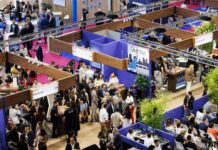
Singapore is also offering these events to position itself as the largest convention centre in Southeast Asia. To welcome more visitors, the hotel industry needs to gain momentum. At the end of 2007, the Saint Régis was the first five-star hotel to open in eleven years, and the arrival of the Marina Bay Sands Resort is expected in 2009, a complex with a capacity of 2,500 rooms and 100,000 m2 of convention space. This site will have required an investment of 3.8 billion Singapore dollars (around 1.9 billion euros).
The aim is to attract 17 million visitors by 2015 - a huge target, but one that is undoubtedly achievable. Not just because of the efforts being made to attract visitors, but also because attitudes are changing. Change is constant and palpable," says Catherine Rubens, a long-standing expatriate. When we arrived in the early 80s, I didn't dare hold my husband's hand in the street. Nobody did. Today, like many other things that were unthinkable at the time, it has become a natural gesture". In other words, expressions of affection are even being encouraged, since the government, in order to boost the birth rate, has just proposed courses in... seduction at universities.
