













The news was like a patch of blue sky in a storm. Yesterday morning, the Pfizer and BionTech laboratories have revealed that anti-covid vaccine on which they have been working since March has produced some very encouraging results.
The clinical trial began at the end of July on 43,580 participants of all ages, genders and ethnicities. According to a press release from the American laboratory, the distribution of cases between those vaccinated and those who received a placebo indicates a vaccine efficacy rate greater than 90 %. This result appears seven days after the injection of a second dose.
Pfizer and BioNTech are in a position to produce the vaccine before the end of the clinical trials and before regulatory approval is obtained. The stated objective is to supply up to 100 million doses worldwide by the end of 2020, and approximately 1.3 billion doses by the end of 2021.
The two laboratories have already taken steps to obtain approval for this vaccine in Europe and the United States.
From Monday onwards, all the stock market values linked in one way or another to the travel and transport industry surged. From airlines and credit cards to theme parks and hotel chains.
End of the covid nightmare in spring 2021?
It is true that if the positive results of this vaccine are confirmed, its distribution could begin before the end of the year. At the end of the first quarter. For the first time in eight months of health crisis, this would offer a real prospect of a way out.
IATA recently spoke of the the need to rebuild passenger confidence andabolish restrictive measures to travel. First and foremost, quarantine requirements and, of course, border closures. The vaccine could enable a gradual exit from this regime.
The MICE sector is particularly concerned by the application of a vaccine. The EventMB website, which tracks information and organises seminars for event operators, has carried out a survey. According to its research, 40 % of planners rank a vaccine as the number one factor (out of a total of eight) with a positive impact on the sector's recovery.
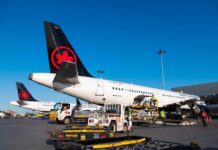
But there are some unknowns. Firstly, the rate of production. We know that global annual vaccine production capacity is 4 to 5 billion doses for a population of 7.8 billion... If all the laboratories in the world start working on the production of this vaccine, transport problems will also arise. Visit air freight capacity have been undermined by the pandemic with the suspension of thousands of flights.
What's more, the vaccine requires extreme storage conditions at temperatures between -20° and -60°. Only a few air operators, such as Fedex or Lufthansa have such resources.
Rebuilding trust
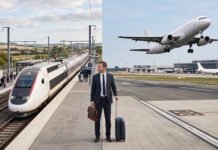
Finally, and this is an essential element, it will be necessary to restoring the confidence of politicians and travellers. Politicians to lift the drastic measures closing their borders; the general public to encourage them to travel again.
The psychological behaviour may vary depending on the social background, age group or even nationality. Asians, for example, are known to be very cautious about travelling as soon as something troubling appears.
A Inmarsat study For example, women and older passengers are more cautious than others. However, the vaccine should reassure them.