


















The IFTM Top Résa trade show provides an opportunity to look back at the major trends in business travel. With barometers, including Kactus's, which takes the pulse of seminar activity, and EPSA's, which has analysed the state of the sector for the 16th time. This makes for a positive assessment, as spending is expected to reach a new record in 2026 at ‣31.6bn, representing growth of 2.3% compared to 2025, before a rise of 3.5 % is expected in 2027.
The uncertain economic, geopolitical and climatic environment does not translate into a downturn in activity, whilst demand is expected to remain virtually stable next year (-0.2 %) despite prices tending upwards with the return of inflation and the rise in the price of oil.« After stabilising at a high level in 2026, the challenge for 2027 will be less about demand, which remains robust, than about the return of inflation, predicts Christophe Roth, associate director – Consulting Expertise BU at EPSA. For businesses, this new setup makes anticipating travel and closely managing expenses even more essential ".
Of all the business travel sectors, air transport was the first to be affected by geopolitical tensions and soaring oil prices. Over the first half of 2026, the average prices recorded by the EPSA panel rose by 2,6 % on domestic routes, 1,9 % on medium-haul routes and 4,8 % on long-haul routes. At the same time, French air traffic registered a slight drop of 0,8 % over the first half of the year.
However, as EPSA points out, the rise in fuel costs has not yet been fully passed on in prices, cushioned in particular by the hedging policies enjoyed by airlines. But these are gradually expiring, which is expected to have an impact on ticket prices next year. EPSA therefore forecasts inflation of between 4,2 % and 4,5 % in France, with sustained demand adding to the fuel effect.
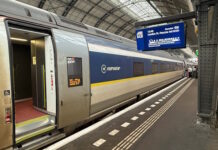
Meanwhile, in the rail sector, price rises are expected to be much smaller next year, ranging from 1.4 % to 1.7 %, following on from the 1.6% growth observed by EPSA in the first half of 2026. Unlike the aviation sector, the rail sector is obviously less exposed to the international economic climate and is continuing its growth momentum, supported by high demand. This is pending a significant increase in supply with the forthcoming launch – but when? – of the TGV M trains by the SNCF, ahead of intensified competition in the coming years. Whether from Trenitalia, which has ordered 19 trains to bolster its existing routes and prepare for new ones, or from Velvet, which is expected to compete with the SNCF from 2028 on the western coast.
When it comes to the hotel industry, EPSA relies on the business hotel barometer put together by CDS-S4BT and MKG to report a certain stability in the average corporate rate in France - 130.78 euros - as well as in the average length of stay - 1.8 days. This comes ahead of an expected increase of between 1.7 % and 1.9 % next year. However, behind this apparent stability following a phase of sharp price increases, significant differences are hidden depending on the destination, with noticeable drops in Toulouse (-4%) and Lyon - down -6% due partly to the absence of the SIRHA trade fair, among other factors - while other major French destinations are on an upward trend.
This is also the case in other major European cities such as Geneva, where corporate rates are up by 25 %, as well as Milan, boosted by the Winter Olympics, and Barcelona, where anti-Airbnb regulations are benefiting hoteliers. In London, the British capital's appeal to business travellers has resulted in a 14 % increase in corporate rates, whereas public rates have fallen by 3.9 %.