
















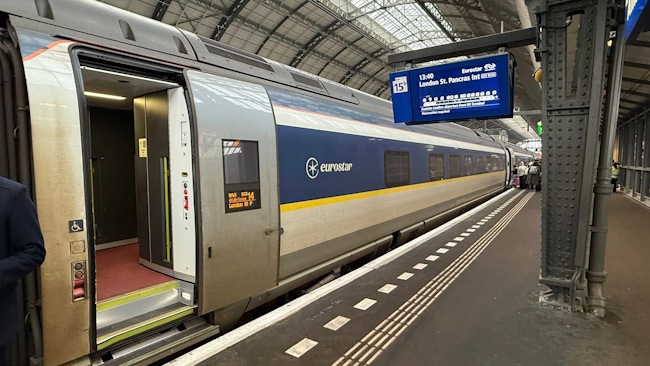
Simplification. Such is the guiding principle of the new range Eurostar dedicated to business travellers, in place for a few days now. « Now that the merger with Thalys is complete, Eurostar has listened to its customers' requests to establish a new framework and make its business programme clearer », explains Sales Director François Le Doze. In fact, this Corporate Programme consists of two tiers, the first accessible from €/£50,000 in annual spend across the entire Eurostar network, and the second from €/£150,000 per year.
Travellers receive a 5% discount on ticket prices in Eurostar Premier class and a -3% discount on Eurostar Plus for Level 1, supplemented by a dedicated customer service, specific services and additional discounts negotiated on a case-by-case basis for Level 2. Below €50,000 in annual spend, companies have access to Eurostar for Business, the railway company's corporate portal. « While companies chased discounts 15 years ago, today they favour ease of use, ticket flexibility, services, not to mention the environmental issue linked to carbon emissions "he adds.
An API tailored to business travel needs
At the same time, Eurostar is working on making distribution easier for business customers. This is done via Eurostar for Business, which is widely used by SMEs and VSEs, as well as TMCs, GDS Air, and technology platforms that integrate the Eurostar offering into their self-booking tool. Eurostar has also just created its app within ChatGPT in the UK, Belgium, and the Netherlands. Business and leisure travellers can use it to plan their trips by accessing detailed route information, timetables, and fares. « AI is transforming the way customers prepare their trips. It was important to bring accurate and reliable information to this tool », explains François Le Doze. A link then allows the internet user to switch to the Eurostar.com website to finalise their booking.
Business traffic up by 2% in 2026
While the sales director did not discuss the global 2026 trends, he welcomed the strong performance of business travel, which saw traffic increase by 2% compared to last year. « The train has become companies' top priority for transport«, states François Le Doze, who also highlights the appeal of the Eurostar network. The Paris-Brussels and London-Brussels routes are the most frequently used by business travellers.
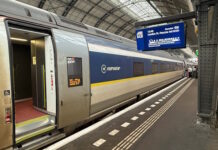
Eurostar’s international subsidiary will add 4 stops a day in Antwerp to its London-Amsterdam route in mid-December (out of the 5 operated daily). In the other direction, business travellers will be able to get a combined ticket with the SNCB to travel to Brussels Midi station and undergo customs and security checks there prior to boarding an Eurostar train to London.« International visitors, particularly long-haul travellers, are boosting our footfall »he confides, welcoming the overall 40 % increase in volumes on the London-Amsterdam route. This is a good omen as services from London to Germany and Switzerland are announced for the 2030s.
A monopoly soon to be undermined
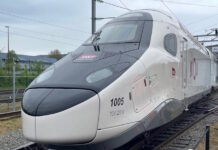
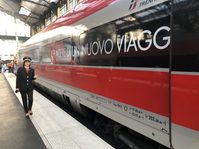
The issue of station terminals will thus be a crucial element in Eurostar's development as it has ordered 30 TGV trainsets to be delivered by Alstom starting in 2031. Almost at full capacity, Gare du Nord, St Pancras International and Amsterdam Centraal will indeed have to make room for two new players, Trenitalia in 2029 and Virgin Trains in 2030. Richard Branson's company has already obtained access to the Temple Mills depot currently used for the maintenance of cross-Channel trainsets, but Eurostar has lodged an appeal with the Office of Rail and Road to challenge the access agreement for HS1, the high-speed line between the London station and the Channel Tunnel. To be continued...