


















While Madrid remains Spain's most important hub, with all the intercontinental routes operated by the national carrier Iberia, Barcelona has gradually closed the gap with the Castilian airport. Barcelona is now flirting with the 40 million passengers a year while Madrid recorded almost 47 million passengers in 2015. Or a difference of 16% in favour of the Madrid hub. Twenty years ago, the difference between the two airports was double.
Significantly, on the Spain-France route, Barcelona is now Spain's leading destination. The airport is linked by eight overhead lines to France, carrying almost 3.5 million passengers last year. While Madrid is linked to nine French cities, the Spanish capital saw its traffic in France reach 3.2 million passengers.
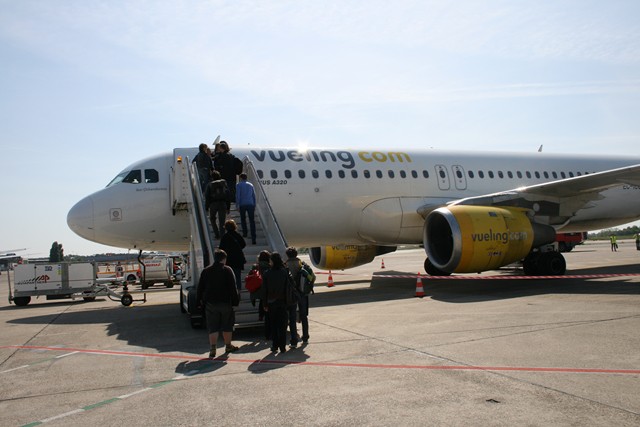
Barcelona enjoysfiercer competitionThis is particularly true of low-cost carriers. Vueling has its main base here, but the Spanish airport also hosts flights from Easyjet, Transavia and, more recently, Ryanair, which has transferred part of its operations from Girona to Barcelona El Prat.

Prices in Barcelona are very competitive indeed. Barcelona's dynamic, contemporary image makes it one of the most popular destinations for French business and leisure travellers alike. The gap even seems to have widened since the start of the year, with Barcelona El Prat recording growth of more than 10% over the first six months, double the growth recorded in Madrid Barajas.
The other major routes from France are Paris-Malaga with 636,000 passengers, Paris-Valencia with 489,000 passengers and Paris-Seville - including Beauvais - with 380,000 passengers. Of particular note is the remarkable performance of the route between Basel-Mulhouse and Palma, with almost 300,000 passengers in 2015.