















Is your new My Wo brand, dedicated to coworking, a response to the current situation in the hotel industry?
Olivier Cohn - It's not an idea that's been dreamt up in a few weeks to find new sources of revenue. We launched this process a year ago and this major project drove the work of our marketing, sales, purchasing and design teams, in association with a group of hotels interested in the idea. We also turned to Zalibari, a firm specialising in the design of work spaces, which helped us to structure our thinking, define the codes to be adopted and the graphic design of this new brand. The fruit of this work was due to be presented in April, but its unveiling was postponed until September due to the circumstances. In the end, this gave us more time to fine-tune our offer.
Is coworking a legitimate issue in the hotel industry?
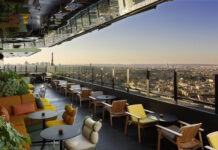
O. C. - The two markets are very close in terms of skills and needs. Coworking is as much about real estate as it is about hospitality and services, which are also part of the hotel industry's DNA. What's more, some of our customers were already used to working in our hotels, without the name coworking being attached to it. So what shape were we going to give to this new offering? With the aim of rapidly developing a wider network, we decided to launch a brand in its own right, with a signature design and the ability to have. The intuition of this need has been borne out by the facts. With the massive use of teleworking, people no longer leave their homes and no longer bump into each other. As well as business needs, there is also a need for the kind of social contact that the establishments in our network can offer. Best Western's strategy is to make our hotels places where people live, where they can play a full part in the life of the city. Coworking is part of this approach.
What does the MyWo brand actually offer?
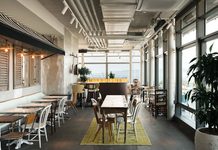
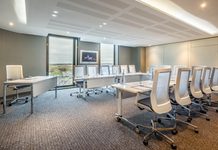
O. C. - There are three products. Starting with My WO Lib, areas located near the bar or reception where mobile professionals can take a break almost free of charge - a drink is required - to work between meetings. Identifiable by the MyWo signage, they are furnished with comfortable seats, tables and a signature feature of our offer, a large open travel trunk where customers can find pens, pencils and stress balls. They're also bigger, so they're isolated and therefore less noisy, My Wo Lounge areas encourage concentration and can be hired by the hour, half-day or day. These spaces, different from traditional meeting rooms, reflect the coworking spirit, with alternating high and low tables, backed up by a catering service, as well as wellness and indulgence products. Finally, the last offer, My WO Meetings, is aimed at working groups who need meeting rooms to work together on a project. In the coming days, the My Wo app will make it possible to book all these offers onlineThe MyWo Lounge can be set up in the same way as a meeting room, with or without catering. All of this is also available on our website.

How quickly will the My Wo brand be rolled out?
O. C. - We started with 14 hotels, enough to launch the brand but still manageable to get started. But I think we'll soon reach 50 hotels early next year. Eventually, I even think that half, or even two-thirds, of the establishments in our network could structure this offer. Whether in the city centres of major metropolises or secondary towns, business travellers can sit down in cafés to work, but this solution is not ideal in terms of security. While companies have obligations in this area, our hotels can offer dedicated, secure areas. We are also going to offer the corporate market contracts for coworking.
Let's talk a little about the current situation. Is the recovery still tentative?
O. C. - It's not quite what we had in mind before the summer. We were expecting a decline from -30 % to -35 % for 2020. In this case, we are heading for a fall of between -35 % and -40 %. And that's just an average. It will probably be much more in Paris. While the summer was good on the coasts, in the mountains, in the countryside and in secondary towns, the season has been a real disaster in the town centres of major cities. And this trend continued in September. The Paris region is still not taking off, and the other major cities are also lagging behind. While, as we can see, small and medium-sized businesses have resumed marketing, which benefits secondary destinations, large groups are completely absent. No flow, no travel, reliance on videoconferencing for client meetings: everything is frozen. There are a few seminars for 10-12 people, but no major events. The future is very unclear, and bookings are made at the very last minute, to a maximum of 3 days ahead. This trend is unlikely to be reversed between now and the end of the year. Some hoteliers in major cities are now considering closing their establishments in November and December.