















How do you explain the growing interest of major hotel groups in Africa?
Trevor Ward – Hotel groups, particularly those listed on the stock exchange, critically need growth. However, compared to other markets like the United States, where brand penetration is over 70 %, Africa remains very poorly covered. Less than 10 %of hotels on the continent are affiliated with an international brand today, according to my estimate. The development potential is therefore considerable.
Is this dynamic driven more by new builds or by the conversion of existing establishments?
Television The vast majority of projects are based on new builds. Very few existing hotels can meet the standards of international brands, either in a simple or economically viable way. Furthermore, a large portion of the African hotel stock belongs to individual owners who do not necessarily feel the need to be affiliated with a brand.
In your study on group pipelines, you note that some projects have been in development for a very long time. What obstacles are still hindering the acceleration of this growth?
Television Our figures record hotels and resorts whose contracts have been signed between chains and property developers. Some are under construction, others still exist only on paper. For the chains, the main difficulty lies in identifying serious developers who have both the financial resources and the necessary technical skills to develop establishments that meet their standards – hotel groups do not build or finance the hotels themselves. For developers, the obstacles are essentially threefold: securing land titles, accessing finance, and the availability of design and construction expertise.
Accor, Marriott, Radisson have been present in Africa for many years. How do you explain the more recent interest from groups like Hilton, IHG, or Hyatt?
Television This perception needs to be corrected first: Hilton is one of the brands with the longest history on the continent! Its hotels in Abuja, Nairobi, and Yaoundé date back to the 1980s, with other establishments following in the 1990s and 2000s. Hyatt, admittedly, has expanded more slowly, but the group was already present in Johannesburg in the 1980s. In reality, it's Marriott that could almost be considered a newcomer to sub-Saharan Africa. It was only in 2016 that the group significantly strengthened its footprint thanks to the acquisition of the Protea chain, and then in 2016 through the acquisition of Starwood, whose Sheraton brand had been established on the continent for a long time. And today, according to our figures, if all the announced projects were to materialise – which they won't! – Marriott should overtake Accor in terms of rooms on the African continent.
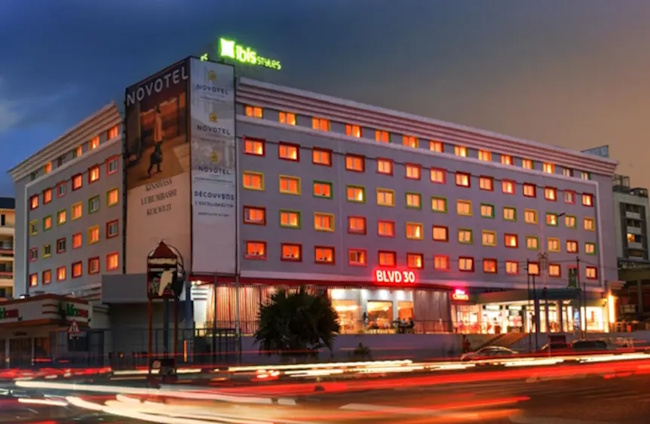
Accor has been present on the continent for several decades and has established itself as the hospitality leader in Africa. What is your view on its development? Should the group fear for its leadership?
Television Accor has indeed had a presence in Africa for several decades, primarily in French-speaking West African countries: its first hotels on the continent were in Ivory Coast and Senegal. To some extent, their development focus has recently re-centred on North Africa, particularly in Morocco. According to pipeline data published by the group earlier this year, Accor signed 20 new contracts in North Africa for 2024 and 2025 combined, compared to only 9 in Sub-Saharan Africa. This is to be compared with the 40 completed by Marriott International, the leader in this region. However, based on my discussions with Accor executives, this relative lack of dynamism in Sub-Saharan Africa is reportedly due to certain difficulties that are in the process of being resolved.
Faced with these "Big Five", can pan-African groups hold their own? Which ones are the most active today?
Television Outside South Africa, where a few domestic and regional players stand out – Southern Sun, Peermont, City Lodge, and Sun International – the main African operators are Onomo and Mangalis, both of whom participate in our survey each year. Both groups started by building and operating their own hotels. Onomo has since repositioned itself as a brand owner, seeking to expand through franchise agreements rather than direct investment, while Mangalis signs management contracts with owners of existing or under-construction hotels.

Regarding hotels in major African metropolises, do business travellers constitute the majority of their clientele? Do these establishments rely on international tourism, or can they count on a pan-African customer base?
Television Yes, the vast majority of clients are professionals, and among them, a significant proportion are representatives of government institutions. Some cities attract more leisure tourists than others, like Cape Town, where demand is also driven by conferences. Client profiles vary considerably: Cape Town relies essentially on an international clientele, whereas hotels in Lagos or Abuja cater mainly to domestic travellers. The size of the country plays a decisive role: Benin, Togo, Ghana, and other comparable markets depend almost entirely on international visitors, their domestic clientele being structurally more limited.
Lagos, Accra, Nairobi, Addis Ababa: beyond Cairo or Casablanca, these cities are concentrating a growing number of projects. What are the drivers of this dynamic? In your opinion, which are the most promising emerging cities for hotel chains?
Television The determining factors are essentially three in number: economic growth, political stability, and an improved business climate. Every city holds opportunities! The larger the metropolis, the greater the prospects, mainly due to the economic growth that urbanisation generates. Nevertheless, caution should be exercised: cities like Lagos, Abuja, Accra, or Nairobi certainly have a large number of projects in the pipeline, but these do not always translate into actual openings. The obstacles mentioned previously – land, finance, expertise – remain limiting factors whose significance would be imprudent to underestimate.