














How important is Asia for Air France in terms of passenger traffic and capacity?
Patrick Roux - For Air France-KLM, Asia Pacific represents 20 destinations, i.e. more than 220 weekly flights from our hubs at Paris-Charles de Gaulle and Amsterdam-Schiphol, and nearly 300 flights with our Asian partners. It is in fact the Group's leading long-haul network in terms of capacity, with a market share of 28%. In fact, on the Europe-Asia route, the Air France-KLM group's market share stands at 8.4%, making us the world's leading airline in terms of capacity. the european leader.
How did the market perform in 2014?
P. R. - We carried almost ten million passengers in 2014 between Europe and Asia, a relatively stable figure compared with 2013, and one that can be explained by greater competition, slower growth and a complex international economic situation.
What are the growth prospects for the region in 2015? Are you looking at new routes?
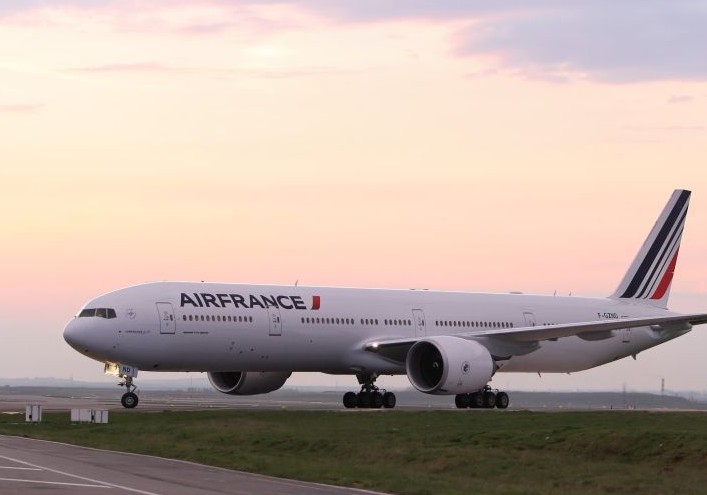
P. R. - For the summer 2015 season, the Air France-KLM group's offer is on an expected growth of 1.7% compared to the summer 2014 season. Air France is continuing its daily service to Hong Kong with both Airbus A380s - five times a week - and Boeing 777-300s (twice a week). We are also increasing our capacity to Seoul, served by 383-seat Boeing 777-300s, and to Singapore with three additional weekly flights during the summer. We continue to serve both Tokyo-Haneda with 13 weekly flights and Narita with one daily flight allowing connections to Nouméa. We are also strengthening our cooperation with our Asian partners. KLM and Garuda Indonesia have set up a code-share agreement on flights between Amsterdam and Jakarta. KLM has also just signed a memorandum of cooperation with Xiamen Airlines to improve accessibility between the Netherlands and China.
How do partnerships work with Asian airlines, particularly Chinese ones?
P. R. - Air France-KLM completes its offer through alliances and strategic partnerships which above all meet the needs of our customers. Air France and KLM are members of the SkyTeam alliance which brings together 20 airlines, seven of which are located in Asia: Korean Air, China Airlines, China Eastern, China Southern, Xiamen Airlines, Vietnam Airlines and Garuda Indonesia. Air France and KLM have signed joint venture agreements with our Chinese partners. Starting with China Southern in 2010 on departure from Guangzhou and Beijing, and since 2012 with China Eastern on departure from Shanghai. Thanks to these partnerships, Air France and KLM have access to around forty secondary stopovers in the Chinese provinces. This is not an insignificant market, since joint venture routes between Europe and China represented a turnover of more than 800 million euros in 2014.
What other benefits do your partnerships in South East Asia with Garuda and Vietnam Airlines bring passengers?
P. R. - In July 2014, Air France inaugurated the Paris-Jakarta route, as a continuation of Singapore. This new destination complements KLM's offer, which also serves Jakarta from Amsterdam but via Kuala Lumpur. Air France and Garuda Indonesia have also signed a code-share agreement enabling Air France customers from Singapore and Kuala Lumpur to continue their journey, with extended timetable options, to Jakarta and Denpasar (Bali), or to Surabaya from Singapore. For their part, Garuda Indonesia customers benefit from easier connections to Paris and Nantes on arrival in Amsterdam. The code-share has strengthened an existing agreement between KLM and Garuda. KLM passengers now have a wide choice of destinations in Indonesia, such as Balikpapan and Surabaya, as well as Brisbane and Sydney in Australia. In Amsterdam, Garuda passengers can choose from a vast network of European destinations.
What about Vietnam?
P. R. - Air France has been present in Vietnam for over 80 years and we are the only European airline to offer a direct service to Vietnam. Vietnam Airlines is a historic and strategic partner. Our cooperation dates back to the early 2000s when we first signed a code-share agreement, which was further strengthened when Vietnam Airlines joined SkyTeam in 2010. Thanks to our agreements with Vietnam Airlines, our customers have access to a wider range of destinations in Vietnam, Cambodia and Laos. It is also an opportunity for Vietnam Airlines to strengthen its presence throughout Europe thanks to the Air France network from Paris-Charles de Gaulle.
How is Air France's image changing in Asia? Is the airline making a strong comeback and rediscovering its brand?
P. R. - There's no doubt that Asia is an area where service standards and expectations are very high. Requirements that we meet. We have a single objective: to offer the best products on the market and to stand out from the crowd with an excellent level of service. On the ground and in the air, our customers to Asia benefit from tailor-made and personalised services. Our new products and services are being rolled out across our network in Asia, including Air France's new long-haul cabins and KLM's new World Business Class. Feedback from our customers has been very positive. Particularly on Air France, the art of travel "à la française is in the company's historical DNA, and our mission is to share this culture with our customers all over the world. Beyond the quality of our products, this means offering a real reason to choose us, by offering not just 'transport', but attention and an experience of the highest standards. Our presence and strategy in Asia, alongside our partners, demonstrate our ambition to be a key player in this region. Singapore and Jakarta, for example, were among the first Air France destinations to welcome the Boeing 777-300 equipped with our four new service cabins, including La Première. KLM, for its part, is offering its new World Business Class on the Boeing 747s in service to Bangkok. We are also listening to our customers, in particular via our social networks on Facebook and Twitter, which are invaluable tools for a close relationship with our customers, particularly in Asia. Our aim is not only to remain the leader between Europe and Asia, but also to become the most Asian of European companies.
What does the future unified ASEAN market mean for Air France? Does it open up new prospects for the Group?
P. R. - Southeast Asia is a region undergoing rapid economic expansion and represents a major growth driver for Air France-KLM. We offer eight destinations from Europe and nearly 100 flights a week with our partners to Bangkok, Denpasar, Ho Chi Minh City, Jakarta, Kuala Lumpur, Manila, Singapore and Hanoi. Jakarta was the last destination inaugurated by Air France in ASEAN in July 2014, as a continuation of Singapore. This destination complements KLM's offer, which serves Jakarta from Amsterdam as a continuation of Kuala Lumpur. From Singapore, travellers can also fly to Jakarta with Air France, but also to Denpasar with KLM as a continuation of the flight from Europe, with an optimised connection time. Singapore's Changi airport is thus a "mini" hub for the Group in this region. And thanks to our codeshare agreements with our partners Garuda Indonesia, Bangkok Airways, Malaysia Airlines, China Airlines and Vietnam Airlines, we are offering more frequent flights between Europe and South-East Asia by enriching our network with 22 additional destinations in Cambodia, Indonesia, Laos and Myanmar as well as in Malaysia, Thailand and Vietnam.