


















The US administration's sanctions on theIran will virtually mean a halt to business flows with the country, with Western companies having between three and six months to move and leave Iran. The fear of being deprived of access to the US market has already been a factor since the announcement of the US withdrawal from the Iran nuclear deal in May. Especially since the airlines that were arrivals en masse in 2016 - following the lifting of sanctions by the international community - have not really made inroads into the Iranian market: the devaluation of the local currency has not helped to stimulate business flows and has curbed the desire of the Iranian middle classes to travel.
Among the first companies to cease services were Lufthansawith the suspension of its Munich-Tehran flight last autumn, and Etihad which abandoned its five weekly flights to Iran at the end of January. However, Lufthansa is keeping its Frankfurt-Tehran route...
Air France-KLM also reacted to the worsening economic climate in Iran, announcing in April that it was stopping flights to the Iranian capital. Joonwhich took over the Paris-CDG-Tehran route from Air France, will cease services on 17 September, a month earlier than planned; KLM will withdraw from Teheran on 22 September, with the last return flight to Amsterdam scheduled for the 23rd.
From Paris, however, Tehran will still be linked to the French capital by Mahan Air (4 flights a week this summer) and Iran Airwhich returned to France in the spring with two weekly frequencies. Iran Air flights will be operated by Airbus A300 instead of Airbus A330 from October.
The latest companies to pull out recently include Air Astana - which stopped its two weekly flights on 31 July - and Austrian Airlineswhich will cease services to Isfahan and Shiraz, but will retain its Vienna-Tehran route. For its part, Alitalia says it has no intention of leaving Iran: the airline continues to offer one daily flight, using an Airbus A320 instead of an A330. This represents a daily capacity reduction of 100 seats. Germania will also continue to offer three weekly flights between Berlin Schönefeld and Teheran. However, the airlines that will continue to serve Iran may be banned from operating flights to the United States. We can already imagine the outcome of this showdown, particularly at Lufthansa, British Airways and Alitalia, which operate a major network to North America.
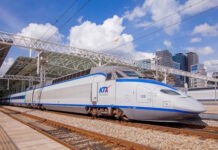
Airlines are not the only players in the travel sector affected by the US decision: the hotel and rail transport industries will also have to adjust to the new situation, as shown byAccorHotels and Rotana (United Arab Emirates), which have hotel management contracts in the country. AccorHotels, for example, manages two hotels at Tehran airport. The Spanish chain Melia had also signed a partnership agreement to manage a five-star hotel, currently under construction. All these chains will have to suspend their operations or find an alternative way of operating under a different name. On the rail front, Italy's national railway company is set to lose a contract to build a high-speed line in Iran.