


















Only 20 years ago, we could never have imagined that Europe's skies would be in such competition with each other, a commercial war that has resulted in a plethora of products ? On the Paris-Rome route, for example, business travellers have no fewer than five airlines to choose from: traditional carriers such as Air France and Alitalia, of course, but also the three low-cost carriers Easyjet, Ryanair and Vueling. The range of fares varies from one to three, from €39 to €118 one-way in economy class (fares quoted on 20/02/19 on Skyscannner for a flight on 29/03/19). Even better is the example of Paris-Vienna, where the arrival of low-cost carriers Laudamotion and Level has increased the number of flights on offer, with a dozen daily flights between the two cities, while at the same time lowering fares, which now range from €20 to €200.
According to Airports Council International (ACI), traffic in Europe continues to grow rapidlyvery rapidly indeed. In 2017, the continent's airports recorded their strongest passenger growth in thirteen years, with a jump of 8.5 %. In 2018, this momentum continued, with growth of 6.1 %, albeit at a slightly slower pace. "It's a real paradox, given the uncertainty surrounding Brexit.said Olivier Jankovec, Managing Director of ACI Europe, an association of some 500 European airports, last year. Even though the market is mature, passenger traffic has increased by almost 30 % on intra-European routes since 2012. This proves that demand for air travel continues to outstrip the continent's economic performance, even defying geopolitical risks."24 European airports had more than 25 million annual passengers in 2017, ten more than in 2012. The low-cost effect has boosted traffic at a number of hubs. For example, Dublin now handles more passengers than Zurich. Similarly, Oslo took the lead from Stockholm Arlanda in 2017.


Always in the foreground
Europe remains a leading continent in global air transport. And that's despite the level of taxes affecting European airports, the uncertainties linked to Brexit, the surge in oil prices in 2018 and the fact that Europe is still the world's largest air transport market. the disappearance of major companies such as Monarch and AirBerlin, the consequences of which have been felt on the supply side in 2018. Not to mention competition from other modes of transport on the Old Continent, led by high-speed trains.
Travellers' appetite for air transport seems insatiable. Nearly 450 million passengers choose to travel by air within the European Union. The International Air Transport Association (IATA) confirms this. Out of more than four billion passengers worldwide in 2018, Europe alone accounted for a market share of 26.7 %, admittedly less than Asia-Pacific (34.5 %), but more than North America (22.4 %).

Tariffs dragged down
Despite this, no airline executive seems to be doubting the potential for growth in passenger traffic in Europe, a number of questions arise as to the profitability of the market. As we have seen, the very strong competition is actually moderating rate increases. "Many of the people we spoke to, for example, were surprised that the Lufthansa group does not serve the Paris-Berlin route.admits Michael Gloor, the German group's Sales Director for France. It's not for lack of traffic. We have tried this service several times, but frankly, with the low-cost competition, the average revenue per passenger is too low."
This competitive situation particularly penalises traditional airlines. Many of them have had to abandoning important lines under pressure from low-cost carriers. British Airways, for example, has refocused all its European routes on London Heathrow and Gatwick, leaving the way clear for competition on business destinations such as Birmingham and Manchester. For its part, Swiss has ceded to easyJet the leading position it held in Geneva, despite it being a business hub par excellence, while Iberia has transferred all the routes it operated out of Barcelona to its low-cost subsidiary Vueling.
Traditional carriers now prefer to concentrate their offering from theeur main hubEuropean routes are essentially used to supply their long-haul flights. Air France dominates business at Paris CDG, while maintaining a strong presence at Orly, particularly for flights to the provinces. For its part, Lufthansa serves Europe under its own colours at Frankfurt and Munich only, while Alitalia now favours its Rome Fiumicino hub to the detriment of Milan. This means that they can all offer continuity of service on their long-haul routes, with the same classes and the same services such as business lounges and transfer services.
However, when it comes to making short-haul routes profitable, it is often grimace soup for many of these so-called historic airlines. In a document reserved for the unions on Air France's economic situation and published last year, the French media revealed, for example, that the national airline was still largely loss-making on its medium-haul routes. The heads of the major airlines have already decided to put the screws to the price collapse for 2019. Last November, the CEO of the Lufthansa group, Carsten Spohr, indicated that prices on its lowest fare classes would probably rise to 70 euros, instead of 50 euros for a single ticket. This, in turn, would lead to a general rise in fares. In its forecasts for 2019, the business travel agency Carlson Wagonlit estimates that air fares in Western Europe should grow by an average of 4.8 %.
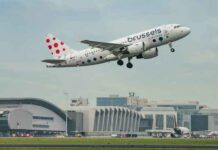
To better counter the low-cost offensive, traditional airlines are mainly playing two trump cards: on the one hand, multi-branding through the creation of genuine groups, and on the other, the niche market. If not both at the same time. The quintessence of multi-brand strategy, Lufthansa Group In addition to the German carrier, it now includes traditional airlines such as Austrian Airlines, Swiss and Brussels Airlines, as well as low-cost carrier Eurowings and leisure carrier Condor. This enables the group to cover all market segments. Lufthansa, Swiss and Austrian serve premium traffic through their respective hubs in Frankfurt, Munich, Zurich and Vienna, while Eurowings has merged with Brussels Airlines and operates short- and long-haul traffic mainly on point-to-point routes. Finally, Brussels Airlines is also a niche carrier to Africa, with 23 destinations on offer, the highest density in Europe.


To each his own speciality
The IAG Group (International Airlines Group) is, for its part, resulting from the merger in 2010 of British Airways and Iberia, later joined by Vueling, Aer Lingus and low-cost carrier Level. However, the two original pillars of the group have retained their own identities, each specialising in well-targeted geographic markets. British Airways remains a key player on the North Atlantic route, thanks to its close historical links. The airline serves some thirty cities in the United States and Canada, and this summer will inaugurate a new route to Charleston, South Carolina, becoming the only carrier in Europe to serve the destination. Iberia, its Latin American counterpart, offers flights to 17 cities on the subcontinent. "We are positioning ourselves as the European hub to this part of the world, with the most comprehensive network and more than 250 weekly flights. A real asset for our airline"said recently Marco SansaviniCommercial Director of the Spanish airline.
Europe's third-largest airline group, Air France-KLM nevertheless lags behind the competition in its multi-brand offering. Of course, the duopoly has its own low-cost airline, Transaviawith bases in Amsterdam, Orly, Lyon and Nantes. On the other hand, the creation of Joon in 2017 never delivered the expected results due to unclear strategic positioning. Hence the decision by the new CEO of Air France, Ben Smith, to dissolve the brand after only 13 months of existence, transferring all assets to Air France, thereby confirming the premium positioning of the national airline.
Alongside the three European giants, smaller carriers have managed to prosper by playing the niche market. This is particularly true for Finnair and TAP Air Portugal. In less than a decade, the former has become one of the leaders on Europe-Asia routes, taking advantage of its position in northern Europe. This has enabled it to reduce flight times to Asia, with the fastest routes to Japan, Korea and China. Finnair has become a specialist in serving secondary cities such as Chongqing, Nanjing and Xian in China, as well as Phuket in Thailand and Nagoya in Japan. On the other side of the world from Helsinki, TAP Air Portugal is establishing itself as a major player on routes to Africa and, above all, Brazil. It now has flights to ten Brazilian cities, and is even the only airline to serve cities such as Belem, Brasilia, Natal and Recife from Europe.
Austrian, too, has long been regarded as a niche carrier to Central and Eastern Europe. Still specialising in these markets, it now faces competition from Poland's LOT and low-cost carriers... It is in this latter segment that the growth of European air traffic is being played out, in particular... from secondary towns. EasyJet, for example, is the number one or number two airline at 47 European airports. The orange airline is the biggest carrier at Basel-Mulhouse, Berlin, Geneva and Venice. Lufthansa's low-cost subsidiary Eurowings is number one at both Düsseldorf and Hamburg. Transavia is the leading international airline at Orly, Vueling dominates the market in Barcelona and Jet2com is inseparable from Manchester. In many markets, business travellers now only have a choice between low cost and low cost.
|
Table Top 15 European airports by number of passengers (2017) |
|
|---|---|
| London Heathrow | 78,013,771 |
| Paris Charles de Gaulle | 69,473,157 |
| Amsterdam Schiphol | 68,515,425 |
| Frankfurt | 64,500,386 |
| Istanbul Atatürk | 63,854,109 |
| Madrid Bajaras | 53,388,044 |
| Barcelona | 47,262,826 |
| London Gatwick | 45,555,569 |
| Munich | 44,577,241 |
| Rome Fiumicino | 40,968,756 |
| Moscow Sheremetyevo | 40,092,806 |
| Paris Orly | 32,040,870 |
| Moscow Domodedovo | 30,657,854 |
| Dublin | 29,582,468 |
| Zurich | 29,345,153 |
| (Source: ACI) | |
|
Europe's largest passenger air markets by country in 2017 |
|
|---|---|
| United Kingdom | 264.62 million |
| Germany | 212.38 million |
| Spain | 209.82 million |
| France | 154.11 million |
| Italy | 144.31 million |
| Netherlands | 76.24 million |
| (Source: Eurostats 2018) | |
Air Italy, the little newcomer with big ambitions
|