














Your group is growing from strength to strength. How far do you plan to go?
Pierre-Frédéric Roulot - We are the world's fifth-largest hotel group, and our ambition is to be number three within two years. In 2017, we opened nearly 1,000 hotels worldwide, two-thirds of them in China, where our group has several subsidiaries, Plateno on the budget side, Vienna in the upmarket segment and Jin Jiang for five-star hotels. Since the Louvre Hotels Group was acquired by Jin Jiang International in 2015, the Campanile, Golden Tulip and Kyriad brands are all present in China, and I think that within three to five years we should have 250 hotels for each of these brands in this market.
And in other parts of the world?
P.-F. R. - Europe remains at the heart of our preoccupations, with strategic markets in which we wish to continue to develop, such as Germany and Great Britain. However, one of our top priorities is to continue our expansion along the Silk Road, where we have set up nearly 200 branches in just three years. To pursue this project, we are going to strengthen our presence in Russia. We are also the leading hotel operator in India following our acquisition of Sarovar. We intend to take advantage of this Indian group's connections in East Africa and the UK to expand in these markets. Similarly, we will leverage Louvre Hotels' relationships in French-speaking Africa to expand our footprint there. The Golden Tulip brand, both upscale and business, but also with a leisure component, is particularly well suited to this continent, which is in the midst of a revival.
Today, everyone is dedicating concepts to millennials. Golden Tulip is in keeping with this spirit, while retaining a statutory feel.
And now to your brands. Golden Tulip has had a serious facelift. Why this repositioning?
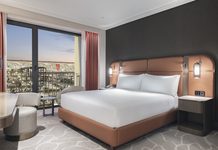
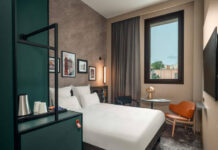
P.-F. R. - Today, everyone is dedicating concepts to millennials. Golden Tulip is in keeping with this spirit, while retaining a statutory feel. Once they start working, generation Y executives don't want to arrive in a young person's place. They want us to take into account their lifestyle and, at the same time, their new status. Recognition that comes in the form of a nice bathroom, a king-size bed and Michelin-starred restaurants offering light menus at around 35 euros. They want to be able to work and relax at the same time. At Golden Tulip, they can leave the meeting and go for a tandem ride to discover the city, for example. These days, we're losing sight of these basics in favour of digitisation. But an app is just two minutes of interaction, whereas customers stay with us for at least eight hours. In our hotels, digitalization is intended to be gentle, always complementing human interaction.
And what about the lifestyle touch that appeals to millennials?
P.-F. R. - We have a number of markers that immediately give the hotel an urban feel and make it less sacred, such as staff in trainers or a food truck in front of the entrance. In the lobbies, we have interactive walls where you can find cultural information about the city, but also leave messages for other guests, for example "who wants to share my taxi tomorrow morning? At the same time, Golden Tulips always add a local touch, for example with a boulodrome in Marseille on the roof terrace. We have also created "body care bars" where guests can help themselves to shampoos and soaps and personalise their stay with beauty products adapted to their needs.
On the luxury side, you recently took over Hôtels et Préférence. What are your ambitions for this voluntary chain?
P.-F. R. - I'm a great believer. Until now, I've been offered lots of beautiful establishments, for example a boutique hotel in the middle of Havana or lodges in Africa, little nuggets that I couldn't place under one of our brands, but which fit in perfectly with the Hôtels et Préférence offering. Today, this chain has 150 establishments, a third in the Paris region, a third in the provinces and a third abroad. I think we can increase the number of members fivefold.
In a similar vein to Hôtels & Préférence at the top end of the market, you have just launched Kyriad Direct, a new brand designed to bring together non-standard budget hotels. What are your ambitions with this new brand?
P.-F. R. - With this new brand, we wanted to conquer a segment where we were not yet present: the two-star segment. Kyriad Direct completes a portfolio of brands ranging from one to five stars to meet all the expectations of our customers, but also of our investors. There is something for everyone in our ten brands. We saw the two-star segment as a real opportunity, as the French market is looking for a new low-cost offering. Every day, many independent hoteliers close their doors for lack of visibility and customers, but also because their establishments are no longer up to standard. With Kyriad Direct, we are going to support these hoteliers, who will be able to draw on the distribution power, reputation and expertise of a world top-five group, without losing their identity, since the establishments will be de-standardised. We have identified 600 establishments in the French network likely to be interested in this new offer. We are aiming to open 100 stores in France over the next 18 months, both in city centres and on the outskirts.
What guarantees of quality and experience will Kyriad Direct offer business travellers?
P.-F. R. - Our Kyriad Direct brand is aimed at both business and leisure travellers. The brand's aim is to offer the best in comfort at an affordable price. Our guarantee of quality is to be one of the top 5 in the world, with fundamental standards in terms of welcome and service. Each stay at Kyriad Direct will also be a guarantee of a unique experience, since it will be different and not standardised in each of the brand's establishments. Each hotel will offer its customers the same fundamentals, while surprising them with its own authenticity and identity. And that's what this new brand is all about: the best value for money for an experience that's always different.
Jin Jiang is heavily involved in the luxury hotel sector in China. Can this expertise be extended internationally?
P.-F. R. - Jin Jiang owns nearly 160 luxury hotels in Asia, most of which are managed by big names such as Waldorf Astoria and Fairmont. But we want to create our own universe of luxury based on three brands: Kunlun, which will replicate the timeless luxury of the Kunlun hotel in Beijing on an international scale; J Tower in a more contemporary and trendy style, named after this tower in Shanghai - the second highest in the world - in which we are going to open a hotel at the end of the year; and finally, a rather crazy project, the Ying Gardens, which we want to offer in the major Asian cities. The first hotel has opened in the middle of Beijing - another will soon be completed in Shanghai - and recreates the palaces of Chinese noble families as they might have been five centuries ago, filled with antique furniture, all set in a 60-hectare park with lakes where you go by boat from villa to villa. The Ying Garden has the comfort of a five-star hotel steeped in authenticity and history. As if you were sleeping in the Forbidden City.
Key datesGraduate of ESCLCA and a Master's Degree from HEC Paris. Before joining Louvre Hotels Group, Pierre-Frédéric Roulot spent 20 years with McDonald's, where he held strategic positions such as Deputy Managing Director France and Chief Operating Officer Southern Europe.
|