














Summer has not spared the SNCF, judged to be « Very difficult », by Jean Castex, The president of the railway group. The network, its infrastructure and its equipment have been put to the test by the drought, the repeated heatwaves, the storms, the lightning and more. fires These occurred near the tracks. Although 97% trains operated in July and 98% in August, regularity declined with significant delays in some cases, even cancellations such as those decided on a precautionary basis on the Intercités Paris-Clermont Ferrand, Paris-Limoges-Toulouse and Bordeaux-Marseille lines.
In July, the regularity rate fell to 79% for TGV (compared to 84% in July 2025) and to 64% for Intercités (75% a year earlier). In the end, TGV carried nearly 30 million passengers this summer, a stable result compared to the record summer of 2025, while TER carried 67.3 million (+4.5%) and Intercités 2 million, down by 10%. Some 630 train cancellations were carried out by the SNCF compared to 217 in the summer of 2025. The company thus estimates the cost of the disruptions at €80 million in lost revenue over the summer period and €180 million since the 1ster January, 2026 being an exceptional year due to the heat records set.
Invest more in renovating the network
During his press conference, Jean Castex recalled that the company had launched a plan to adapt to climate change as early as 2024. A veritable roadmap, the document outlines the actions to be undertaken and the objectives to be achieved regarding the monitoring and protection of railway infrastructure, including adapting trains to climate conditions, protecting stations and SNCF sites. Several hundred million euros per year will be allocated to these operations, whether for renewing catenary systems, adapting rolling stock, or protecting stations, sites, and technology centers from high temperatures. Overall, the group aims to increase its investments in order to maintain and modernize the network. From the current 3 billion euros per year, SNCF aims to increase this amount to 4.5 billion euros by 2028.
New materials more resistant to high temperatures
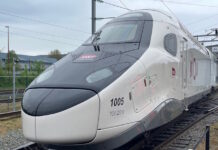
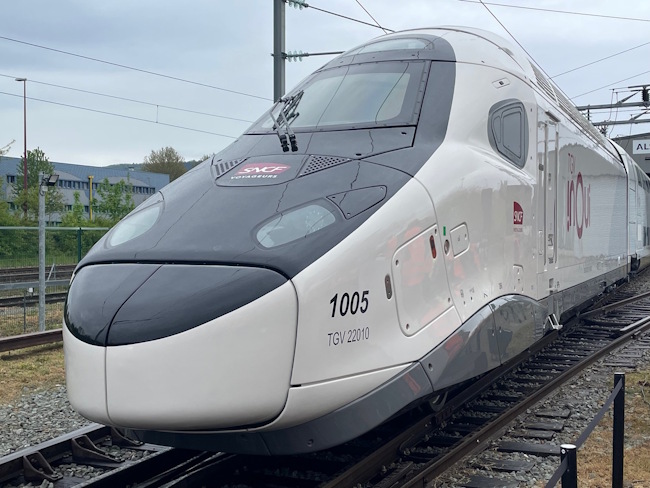
Regarding the railway equipment, improvements are expected with the future TGV M Regarding comfort, energy savings and better reflection of the sun’s rays thanks to the white livery of the carriages. After three years of delay, the first trains could enter service this autumn if all technical problems are finally resolved by Alstom. The Intercités will benefit from the replacement of the old Corail trains with the new Oxygène carriages ordered from the CAF manufacturer starting next summer. With that, there is also a delay in the initial delivery schedule; 28 carriages have been purchased with the advantage of having air conditioning capable of operating at outdoor temperatures reaching 45°C. This will prevent preventive cancellations.