

















With the main holiday departures now over, SNCF Voyageurs has experienced a departure from the norm with the announced exit of Christophe Fanichet on July 21st. He has served as its CEO since 2020, since the creation of this highly lucrative subsidiary which operates TGV Inoui, Ouigo, Intercités, TER, and the Transilien network in the Île-de-France region. This strategic decision is the first major one taken by Jean Castex since he took over as chairman of the SNCF group in January 2026.
SNCF Voyageurs is indeed being reorganised, with a two-headed leadership from now on: Laurent Trevisani, the current Deputy Chief Executive Officer for Strategy and Finance of the SNCF holding company, will become its Chairman, and Jean-Aimé Mougenot its Chief Executive Officer. Laurent Trevisani had been acting head of the SNCF group between the departure of Jean-Pierre Farandou, who was set to become Minister of Labour, and the arrival of Jean Castex. Jean Castex thus wishes to " to drive new momentum and new strategic directions from a very positive review « , the SNCF states in its press release.
Disavowed despite excellent financial results for SNCF Voyageurs, with a turnover of €20.9 billion and an EBITDA of €2.7 billion in the 2025 financial year, Christophe Fanichet will be asked to take " other functions within the group But will he agree to remain within the railway company?
The Destination 2030 plan abandoned
With this departure, the "Destination 2030" plan, drawn up by Christophe Fanichet over many months, is also buried. This planned the creation of two entities, with, on one side, a business division bringing together TGV activity, and on the other, a division dedicated to "public service delegations" with the TER. Jean Castex is thus following the demands of SNCF unions, which were opposed to the creation of local subsidiaries intended to respond to tenders as part of the opening of regional lines to competition.
In addition to salary negotiations, this halt to asset transfers was indeed at the heart of the demands during the last 10 June strike launched by trade unions CGT Cheminots, Unsa Ferroviaire, Sud Rail and CFDT Cheminots. The group announces that SNCF Voyageurs will have a new organisation lighter » early 2027, the guidelines for which will be « decentralisation ", " the performance , but also the maintenance of the unity of the railway group ".
It should be noted that Alain Krakovitch, the former director for six years of TGV-Intercités under Christophe Fanichet's era, who had left in April to oversee rolling stock, is returning to the fold as Deputy Chief Executive Officer. His mission will be to develop this organisation. collectively built with the SNCF Voyageurs and holding company teams The CGT Cheminots, for its part, welcomed the abandonment of the Destination 2030 project in its statement, stating “ that the SNCF must be put back on the public service track ".
The delay of the TGV M weighs on SNCF fares
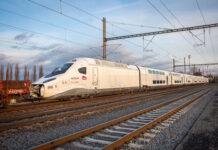
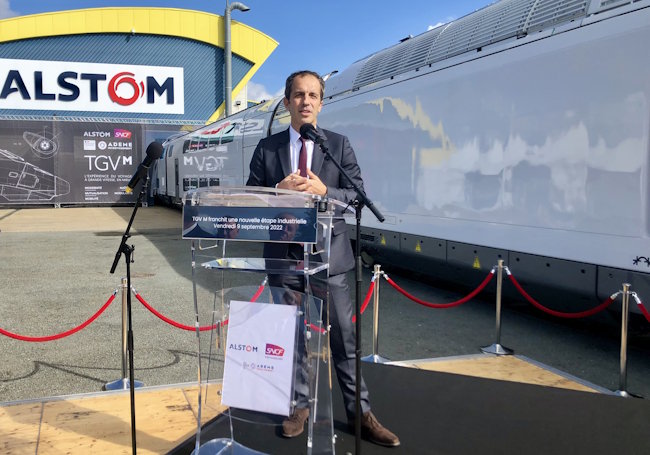
While Christophe Fanichet developed SNCF Voyageurs in France and internationally for six years, the TGV branch is facing significant delays in the launch of the TGV M, with only two initial trainsets expected to run this autumn. After almost three years of testing this 5th generation TGV built by Alstom… Due to this delay, and with 160 trainsets having been ordered, SNCF cannot fully meet customer demand for rail travel and must contend with regular criticism over high ticket prices.
To remedy this, Christophe Fanichet launched the O2D programme (short for Operation Planned Obsolescence) in February, aiming to extend the lifespan of almost a hundred TGV trains by 2 to 15 years, which is a third of the SNCF's fleet. Thanks to the upcoming reorganisation of SNCF Voyageurs and the arrival of the TGV M, the SNCF finally hopes to remedy this situation while estimating that its subsidiary will be able to respond. to the intensification of opening up to competition ".