














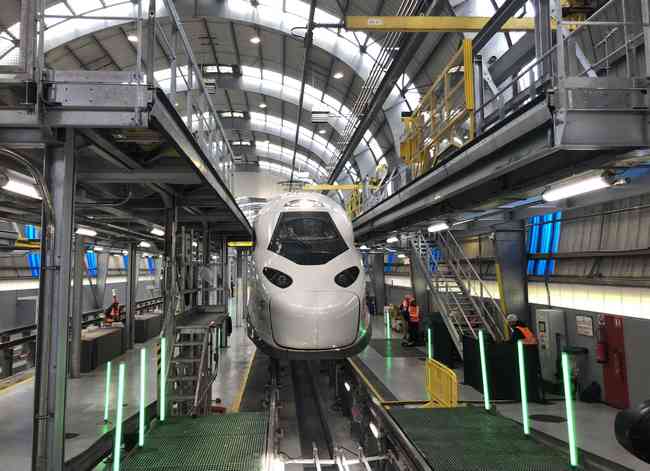
SNCF has announced that it is buying 15 additional TGV M trainsets from Alstom for €600m. The trains will be delivered from 2029 onwards, and are scheduled to operate between the Belgian Brussels-Midi station and major French cities other than Paris (such as Marseille and Lyon). With this contract, SNCF is exercising a new option following its mega order for 115 trainsets, 15 of which will run between France and Italy on the Paris-Milan route. The French group has also ordered 30 TGV M (with 20 trainsets as an option) for its international subsidiary. Eurostar to travel on its European network (the ex-Thalys network) between France, Belgium, the Netherlands and Germany.
By investing its own funds, SNCF is anticipating a further increase in TGV traffic in general, and cross-border traffic in particular, in order to secure its deliveries over the next decade. Alstom's order book is already particularly full, with 115 TGVs to be delivered to SNCF (at a rate of 15 trainsets a year for ten years), 30 trains for its international subsidiary Eurostar, 18 for Morocco, 12 for Proxima under its Velvet brand...
SNCF will only have 4 extra TGVs for summer 2026
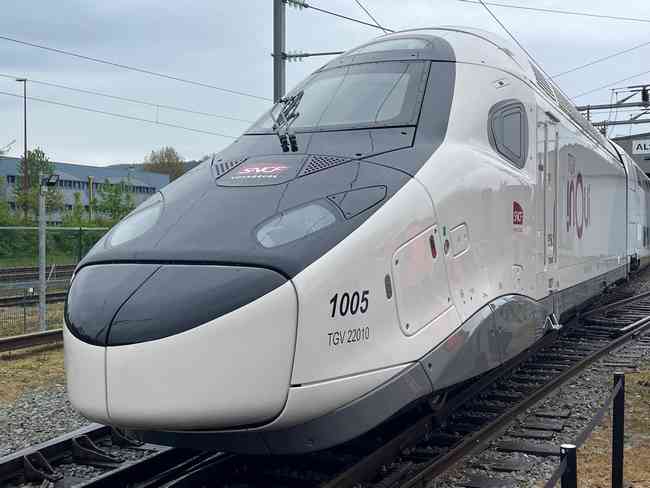
At last week's press launch of its new Optimum+ class between Paris and Lyon, SNCF once again confirmed that the first four TGV M trains would go into commercial service on 1 January.er July on the Mediterranean route between Paris and Marseille. " These TGVs will be operated as single or double trainsets, with maintenance constraints. "said Benjamin Huteau, Director of the TGV Sud-Est at SNCF.
After missing the peak summer season once again, SNCF hopes to have a fleet of eight TGVs by September and 13 trainsets by Christmas 2026. There have been countless months of delays, as the TGV M was originally due to enter service for the Paris 2024 Olympic Games. Begun in December 2022, the testing and certification campaign is proving to be much longer and more complicated than expected for Alstom and SNCF. This 5th generation, derived from the Avelia, is characterised by its 400 industrial and technical innovations, which necessitated numerous adjustments and major modifications, particularly in terms of braking, vibrations at high speeds and the rapid wear and tear of certain parts.
SNCF hopes to start in-house training and testing as soon as approval is granted
However, in December, the TGV M reached a new stage in its approval process, with SNCF submitting a marketing authorisation application to the European Railways Agency, the agency responsible for rail safety and interoperability. The company will then be able to launch the pre-operational test phase, which includes training drivers and on-board staff for these trains". revolutionaries "We'll also be doing some role-playing in stations, etc.
" We have to make sure that everything runs smoothly from the start of commercial operations. This TGV has special features, such as fully independent access for people with reduced mobility (PRMs), but also for bar refuelling, with its new configuration requiring more complex loading of products. "adds Benjamin Huteau. SNCF will have to continue to respect an average turnaround time at Paris-Lyon station of 40 minutes, while the TGV M will have 20% more capacity, with 740 seats compared with 634 today.