



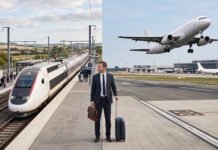




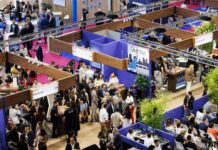






On the occasion of the opening of the IFTM-Top Resa tourism trade show in Paris-ExpoThe SNCF has taken stock of its leisure and, above all, business activities. The summer was marked by a 10% increase in traffic in July-August compared with 2019, which was already a record year for the rail company. Some 28 million tickets were sold on French and European routes during this period. "The momentum started before the summer. 100% trains were mobilised, with 800 TGVs running every day and multiple units to increase capacity." said Jérôme Laffon, TGV-Intercités Marketing Director. Note that three tickets out of...
On the occasion of the opening of the IFTM-Top Resa tourism trade show in Paris-ExpoThe SNCF has taken stock of its leisure and, above all, business activities. The summer was marked by a 10% increase in traffic in July-August compared with 2019, which was already a record year for the rail company. Some 28 million tickets were sold on French and European routes during this period. "The momentum started before the summer. 100% trains were mobilised, with 800 TGVs running every day and multiple units to increase capacity." said Jérôme Laffon, TGV-Intercités Marketing Director. It should be noted that three out of every four tickets sold were at reduced prices, with 4.1 million Avantage card holders travelling, 32% of whom benefited from capped prices.
Business activity to return to 95% in 2023
The surge in business traffic also began in June, linked to employees' need to travel, meet up and organise team-building activities to bring their teams back together in the wake of the pandemic. According to a study carried out by the SNCF among its companies under contract, 82% of Pros travellers were in favour of a return to travel after this episode. In addition, 85% of companies applied less strict business travel rules in order to visit suppliers and customers, attend training courses, take part in trade fairs, team seminars and internal meetings, and also to prospect.
In terms of figures, the traffic backlog compared with 2019 remains in the region of 10% to 15% depending on the route. " The trends were confirmed in mid-September with a level of 88% of 2019 traffic and good bookings for October" he adds. And he hopes to return to sales of 95% in 2023 and reach the 101% in 2024. The resumption of European and intercontinental travel has also enabled SNCF to boost ticket sales. TGVAir in partnership with certain airlines. New features will be unveiled this autumn concerning this specific offer, which accounted for 300,000 coupled tickets in 2019.
VSEs and SMEs are already looking forward to 2019
In detail, theVSEs and SMEs are the most dynamicwith traffic levels already back to 2019 levels. " These companies are particularly mobile, with the desire and need to meet their customers." notes Olivier Pinna, the SNCF's Director of Travel Agencies & Businesses. Small companies account for 40% of the carrier's business activity, compared with 60% for major accounts. The Carte Libertéwhich is on special offer (at 299 euros) until the end of September, is particularly popular. More than 21,000 cards have been sold since the start of this sales operation ten days ago, an increase of 28% compared with last year.
Since June, these advantages have been complemented by the addition of the benefits of the Avantage card. " Depending on the type of trip, you can choose the price or the flexibility." says Jérôme Laffon. The company now also has 14,000 subscribers to its teleworking offer Max Actif and Actif+. " The number of commuters has doubled in the last year. Based 2 to 3 hours from Paris, they make 2 to 3 return trips a week." continues the TGV-Intercités marketing director. In fact, between 200 and 300 season tickets are still taken out every month.
SNCF plays the ecomobility card
To push the train forward, the railway company is raising its customers' awareness of the challenges of environmental protection. Ecomobility. And to remind you that, according to the Ademe scale, trains emit only 4 grams of CO2 per passenger and per kilometre travelledThis compares with 30 grams for a long-distance coach, 47 grams for an electric car, 105 grams for a combustion-powered car and 260 grams for a plane. " SNCF is clearly well positioned" insists Olivier Pinna. Since the beginning of 2022, an incentive has been in place to encourage companies to switch to rail. " A calculation is made of the CO2 10% on the volume of trains consumed during the year. This also enables the company to communicate positively internally." explains the manager.
For key accounts, this can mean a saving of tens of thousands of euros, with the SNCF offsetting this by selling additional tickets. "Eco-responsibility, with companies taking the train more often, counterbalances the effect of teleworking and videoconferencing from Covid." adds Jérôme Laffon. Some companies, such as Orange and Technip, now prefer to use the train for journeys of up to three or even four hours. According to the study, 62% of Pros travellers say that their company takes greater account of the environmental effects of travelling by train. And 70% of Pros passengers plan to choose the train for ecological reasons. "Actions increasingly correlate with discourse" says the Marketing Director with satisfaction.
Functional TGV confirmed for 2024
In fact, business travellers using the train are now going further afield. Like Toulouse (4h30 from Paris) and Frankfurt (3h40), for example. Since the spring, the train has overtaken the aeroplane's market share for journeys between Paris and the German financial city. All in all, this means that train journeys are taking longer, now taking around 2.2 days, compared with 1.5 days previously. As a reminder, SNCF's ambition is to double the train's market share in France, expected to reach 20% by 2030.
Lastly, this presentation to the press was an opportunity to revisit the recent announcement by Alain Krakovitch, Director of TGV-Intercités, concerning the launch in 2024 of a "company TGV" service designed to reduce the number of company cars in circulation in France. " There is a demand for this and we have begun discussions on the subject with a number of companies. This will enable them to offer alternative solutions, particularly to employees who have little or no interest in this benefit." concludes Jérôme Laffon, who reminds us " that one in three cars in Hauts-de-Seine is a company car..."