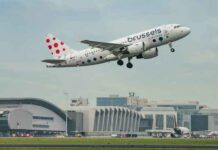



















Airberlin's demise in autumn 2017 had repercussions not only in Germany, but also on Swiss air traffic. The bankruptcy of the German companys strong presence in the Swiss market, particularly in Zurich, has led to the suspension of operations at Belair Airlines, Airberlin's Swiss subsidiary. But this is not the only consequence. Etihad's financial debacle with its 'toxic' investments in Airberlin and Alitalia forced the Abu Dhabi carrier to sell its Swiss regional subsidiary Darwin Airline (Etihad Regional) in July 2017. Taken over by Slovenian national carrier Adria Airways, the respite was short-lived. Darwin, which served numerous regional routes from Geneva and Lugano, finally filed for bankruptcy in December.
This rationalisation of Swiss air transport has mainly benefited Swiss and easyJet Switzerland, the Swiss subsidiary of the orange airline. And while there is competition between the two carriers, in practice there is a kind of non-aggression pact, with the two airlines sharing traffic according to the airport they serve.
A subsidiary of the Lufthansa group, Swiss remains THE airline of choice at Zurich Airportpositioning the airport as its global hub. Of the 29.4 million passengers welcomed at Zurich last year, 52 % used Swiss routes and even 58 % if the traffic of Edelweiss, Swiss's leisure subsidiary, is included. Zurich now accounts for 87 % of Swiss's seat capacity, which increased by 11.5 % in 2016 and 9.1 % in 2017, pending the impact of AirBerlin's bankruptcy this year. This situation is boosting business traffic, especially as 20% of Swiss's traffic is on intercontinental routes. According to Zurich airport statistics, 31% of passengers cite business travel as their main reason for travelling.
While easyJet accounts for just 2 % of Zurich's total traffic, the orange airline is the major player at Switzerland's other two major airports, Geneva and Basel/Mulhouse. In Geneva, easyJet now represents almost 45% of the 17.35 million passengers recorded in 2017, with an increase of 8.5% last year. Swiss comes in second with a 12.1% share of traffic, down 0.4 points on 2016. At Basel/Mulhouse, easyJet accounts for 62% of the hub's total traffic, with Swiss completely absent.
With 13.5 million passengers, easyJet is now Switzerland's second-largest carrier, accounting for 24% of the country's passenger traffic and 21% of the number of seats offered. Last year, the airline boosted its offer with 11% more seats and by basing a new aircraft in Basel.
Economic growth in Europe and Switzerland should therefore have a positive impact on the growth of Swiss air traffic. The only uncertainty is that Aerosuisse, the umbrella organisation for the country's air transport industry, believes that this will not be the case in the future. Capacity saturation in Geneva and ZurichThe two hubs' longterm development will be affected by the current competition, particularly in terms of the number of aircraft movements. Geneva is currently building a new jetty for intercontinental traffic and is working on better coordination of movements on its single runway.
Only Basel/Mulhouse still has the reserves to cope with strong growth. And as the airport is only 100 km from Zurich, synergies should be possible, probably propelling Basel/Mulhouse to the top of the world rankings. as an intercontinental airport in the long term. Especially as a railway station will link the airport to the entire French and Swiss rail networks by 2027. A real plus for the Grand Est region of France.
| What is the volume of air traffic between Switzerland and France? According to statistics from the Swiss Federal Statistical Office, air links between Switzerland and France accounted for 2.03 million passengers in 2017, representing 8.5% of passenger traffic to Europe from Switzerland. France is the fourth most important destination from Switzerland after Germany, the United Kingdom and Spain and ahead of Italy, Portugal and the United States. 53.6% of passenger traffic is concentrated at Geneva Cointrin (1.1 million), followed by Zurich with 26.6% (0.54 million) and finally Basel/Mulhouse (0.40 million) with 19.6% of the passenger total.The Zurich and Geneva hubs generate almost the same number of passengers - nearly 800,000 - to Paris CDG, the Air France hub and also the main gateway for business traffic. The Switzerland-Nice route is the second most important in terms of volume, with 425,000 passengers departing from Switzerland, followed by services to Paris-Orly, Bordeaux and Nantes. |