
















How is easyJet developing in the business market?
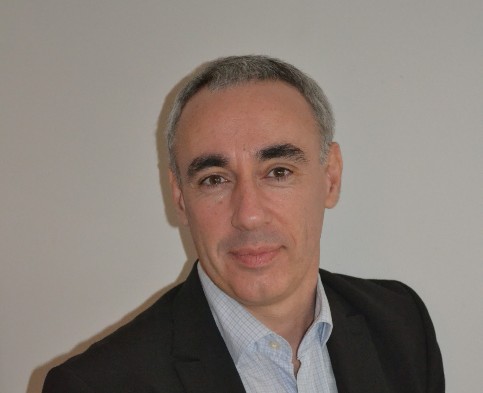
Sébastien Calmejane - The share of corporate travel is increasing, particularly in France, and we are approaching 12 million business travellers. We had to develop specific offers without abandoning our business model, which is working very well. The work we've been doing over the past three years is bearing fruit, thanks to tailor-made services for business travellers such as our Flexi and, more recently, all-inclusive fares. We've also worked hard on distribution with GDSs and online tools. Companies are adopting the 'best buy' approach and turning to low cost. This way of travelling has been democratised enormously. Low-cost airlines are a natural choice for leisure travel, particularly among the younger generation, so it's not a punishment for business!
What are these new products for business travellers?
S. C. - The 'flexi' fare guarantees all the flexibility needed by business travellers: free changes for four weeks, hold baggage, speedy boarding, mobile phone boarding passes, etc. If, for example, the meeting ends earlier than planned, this fare also offers the possibility of taking the previous flight free of charge if there is any space left, or taking the next flight in the event of a no-show, for a fee of 75 euros. We also launched the all-inclusive fare last September: a standard fare that changes according to how far in advance and how full the aircraft is, including hold baggage, choice of seat and payment costs. All of this can only be booked on GDS and SBT, with a packaged fare.
How much room for improvement do you still have?
S. C. - This will depend on the maturity of the markets. The margin is no longer the same in the UK, where low-cost is over 50%, as it is in Germany, where we still have a small presence, even if there is a lot of competition. That's why we've opened a base in Hamburg. It remains to be seen when the new Berlin airport will arrive... So we still have a lot to do on the German market, but also in Italy and of course in France. If there are opportunities to open routes, we open them. So I don't think we're going to run out of steam. Our load factor is quite impressive, at 90% for the year on our 1,300 daily flights. And the fact that we don't have a hub makes our model very flexible for transferring our aircraft. In fact, we ordered 135 aircraft at the Paris Air Show to support our growth and renew our fleet. The market is not saturated, we are going to continue to develop, and business travel is one of our priorities in Europe. We also have a very strong presence in the corporate market, partnerships with players such as the AFTM and ACTE, and we are strengthening our network. So easyjet has a great future ahead of it, because the model has proved its worth.
Where do you draw the line between traditional and low-cost airlines?
S. C. - We are at a crossroads with the traditional airlines. They are unbundling their offer and even investing in low-cost subsidiaries, whereas we have moved upmarket and are seeking to simplify travellers' lives while saving them money. Margins in the airline industry are not huge, and these airlines envy us our additional sales model by adopting it. We've moved upmarket but we're still low-cost: it's in our DNA to optimise our costs, we operate point-to-point, without hubs, with a single type of aircraft and a simplicity of operation that means we'll always be in a class of our own.
Who are your competitors today: traditional airlines, Ryanair, trains?
S. C. - Our real competitors are clearly the national airlines, including Air France. A company like Ryanair will find it difficult to launch from secondary airports in France. Michael O'Leary clearly understood that he was losing ground in the leisure sector, so Ryanair is now trying to copy and paste what easyJet has done. It will be complicated in terms of image, and will require time and quality of service. There are many other players arriving: we saw Régional launched in Switzerland by Etihad, which is also looking at Alitalia... But at the moment, it is above all Air France that is being challenged to take market share.
Can we imagine an easyJet frequent flyer programme, or even a long-haul network?
S. C. - Other airlines have tried long-haul low-cost, but I'm not convinced. It would be complicated because we rely on small aircraft and fast turnarounds. So it's not on the cards. We want to make Europe orange, and there is still enormous potential for low-cost flights in France, Germany and Italy. Let's do it right and then see if there are other opportunities. We have also thought about a frequent flyer programme, but we prefer to be aggressive in terms of fares. And we don't know how the status of miles will evolve... We may increase the services offered by the easyJet card, but a real frequent flyer programme as such does not fit in with the airline.
How is the partnership between easyJet and Emirates going?
S. C. - Very good: Emirates travellers can use their frequent flyer points to buy from us. So it's both interesting in terms of image and useful for travellers. But that's as far as it goes, there will be no code share. It's not part of our philosophy, and it won't be because it's not part of our business model.