















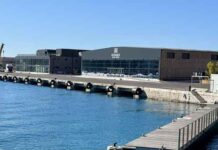




Wildly active, Tokyo seems to be in perpetual motion. And yet, beyond its ultra-modern centre, with its village-like neighbourhoods, the Japanese capital adds to this extreme modernity a Zen-like tranquillity and an exquisite savoir-vivre.
In 2015, Tokyo topped the Safe Cities Index, the ranking of the world's safest cities published by The Economist magazine. Aside from personal safety, which is fully guaranteed apart from the risk of earthquakes, the air you breathe in the Japanese capital is almost as pure as in Stockholm. Greener and even better connected - the old image of travellers crammed together at rush hour is long gone - Tokyo aims to attract 20 million foreign visitors a year. This compares with 13 million last year, or the equivalent of the city's inner city population.
The city elected to host the 2020 Olympic Games has big ambitions. It is aiming for the top of the podium in terms of both the economy and tourism. "Tokyo's governor would like to make his city the world's leading financial centre, although it currently hovers between fourth and fifth place, behind New York, London, Hong Kong and Singapore."explains Akito Tadokoro, Promotion Director for the Tokyo Convention & Visitors Bureau.


Openness policy
To increase its influence, Japan has embarked on a policy of openness, which will certainly benefit Greater Tokyo, home to a third of the national economy and almost 35 million people. "Prime Minister Abe is travelling much more than his predecessors, particularly in South-East Asia. This is strategically interesting for Japan, as the countries in this region are gradually turning away from China, which has given them little support.This economic policy is a clear sign of the country's determination to break out of its island straitjacket," says Benoît Laureau, head of trade relations at the French Chamber of Commerce in Tokyo. This economic policy marks the country's clear desire to break out of its insular straitjacket. Japan is soon to sign a free trade agreement, the Trans-Pacific Partnership, to lift customs barriers with certain countries in the Pacific zone, including the United States, Canada, Chile, Mexico and Australia. Similarly, a free trade agreement with Europe is scheduled for late 2015-early 2016. This agreement could boost the European Union's economy by 0.6 % to 0.8 % of its GDP, generating the creation of around 400,000 jobs. EU exports to Japan could even increase by 33 %, and Japanese exports to Europe by more than 23 %. A real plus for these economies in these gloomy times.
While the country is looking abroad to stimulate growth, there is no time for austerity at home. From monetary easing to buying up bank debt, the stimulus programme set out by Prime Minister Shinzo Abe - a programme that has earned the nickname "Abenomics" - aims to pull the Japanese economy out of deflation and boost consumption. The Japanese government is printing money to encourage investment and raise wages. This also involves compliance with labour law, in particular the payment of overtime. A detail long neglected by Japanese companies.

What is chômage?
This policy is bearing fruit, as the country is currently enjoying a period of full employment, with 3.7 % of unemployment, a minimal figure covering mainly the latency period between the end of training and the hiring of young people. In terms of growth, the world's third-largest economy behind the United States and China posted 1.4 % last year. The GDP of Greater Tokyo, which includes Yokohama, the country's second most populous city, is equivalent to that of Mexico.
There are still a few uncertainties about the future, not least the ageing of Tokyo's population, which is not increasing very much as a result. In fact, 40 million Japanese are over 65. This is supporting the growth of the Silver Economy, with numerous advertisements aimed at the elderly and adapted supermarket shelves, but it is also weighing on the dynamism of the economy. This is because this generation, which owns 30 % of assets, has a tendency to grow its nest egg rather than invest. So the Olympic Games have come at just the right time to give the country a new boost. Now that Japan will be under the world's gaze, the government is not hesitating to invest in major projects, including ecological measures - by 2020, all Tokyo's public buses should run on hydrogen - and improvements to the rail and road networks. These major works also concern the hosting of the Games, with the construction of the athletes' village on the seafront and the demolition of the national stadium in the city centre, which was used for the 64 Olympics, to make way for a brand new stadium. But this is the unknown. The project designed by Zaha Hadid was cancelled in July by Shinzo Abe. The budget had been doubled, and the Japanese public was hostile to the design, described as a "intergalactic bicycle helmet"by the starchitect, but qualified as "aobscene raw oyster"As a result, construction of the stadium is starting from scratch, with a new project expected by the end of the year. Time is of the essence...
Located halfway between these two nerve centres, the Toranomon district will be in the spotlight in 2020. Formerly of little interest, it will become the city's new 'Champs-Élysées' and its latest showcase, focusing on lifestyle, with terraces, restaurants, fashion boutiques and cultural spaces. The already emblematic Toranomon Hills tower, where the Andaz hotel opened, is now the second highest in the capital and has changed the city's skyline.


Breaking the shackles
"Japan wants to project a welcoming image, and the run-up to the Olympic Games is giving a real boost to Japan's policy of opening up to the world."says Benoît Laureau. A prime example of this desire to break down barriers is the growing number of discussions on same-sex marriage, something that was absolutely impossible just a few years ago. Shibuya Town Hall, one of Tokyo's 23 shopping and youth districts, now symbolically celebrates gay weddings.


Tokyo and Japan are banking heavily on tourism, but there is still some way to go. The level of English spoken in Japan remains a stumbling block. Recently, the local press - in particular the English-language Japan Times - condemned the mediocrity of secondary school teachers, most of whom do not reach TOEIC (Test of English for International Communication) level. "Major communication campaigns are trying to develop English at all levels, because at the moment, even French-speaking Canadians are being asked to teach English."says Benoît Laureau. He also points out that in 2013, Japan sent half as many students abroad as South Korea, which has a much smaller population. This problem is due to the fact that young Japanese are often forced to take a job as soon as they finish their studies, and that a year spent abroad risks compromising their future career. Be that as it may, Tokyo promises that a large proportion of its taxi drivers should be trained in English by the fateful date of 2020.
"Tokyo is gearing up for the Olympic Gamessays Pascal Furth, Export Director for Business France Japan. "The 1964 Games had already revolutionised the urban landscape. The Japanese had built major hotels, and also launched a high-speed rail network with the first Shinkansen trains."he continues. At the time, the symbolic significance of these Games, the first to be broadcast by satellite, was enormous, against the backdrop of Japan's economic miracle. In 2020, it will be even greater: after twenty years of economic gloom, Japan will once again have the opportunity to demonstrate its know-how and emerge from the growing shadow of its Chinese neighbour. The Olympic slogan "Discover Tomorrow" says it all.


High-tech culture
Of course, Tokyo is not just looking to 2020 to shape its future. Above all, the city remains a key centre for business and services, a megalopolis where consumers have high purchasing power and make choices that influence consumption patterns; a high-tech capital that is quietly pursuing its path as an innovative city. "Tokyo is a city of start-ups, even if it can't be compared to an American-style Silicon Valley, because the Japanese only take measured risks."explains Pascal Furth. To attract investment, the government agency JETRO (Japan External Trade Organization) recently began offering a new office space free of charge for several months to foreign companies wishing to open a subsidiary in Japan. In addition, in the Marunouchi district, the Egg Japan project hosts a network of 560 entrepreneurs within a platform for the creation of new businesses. Meanwhile, in an intelligent building in the Shinjuku district, Orange has set up its start-up accelerator, Orange Fab, designed to identify innovative companies in the telephony and communications sectors. In addition to these incubators, Tokyo offers a large number of business centres where companies can set up turnkey, collaborative environments.
Innovation, biotechnology and high technology are now at the top of the agenda. As a sign of the times, the country, an industrial heavyweight that still accounts for 30 % of the world's car production, has given way to the Koreans for the production of television sets, one of its former specialities. However, it continues to manufacture the technology. Today, Japan, one of the countries in the world that registers the most patents, devotes 3 % of its GDP to research and development, compared with just over 2 % in France. This is the price we pay for knowing how to reinvent ourselves.

Special report - Tokyo: open to the world
- Trend - Tokyo no longer likes insularity
Success story - Interview with Yusuke Nakagawa, CEO and founder of Asobi System
Japan at full speed
Business - The beautiful ways of the Rising Sun
Hotels - Keeping the flame alive
Restaurant - European business meals
The spirit of the place according to Taku Obota
Tokyo: address book


