











 How is easyJet's offer for business travellers evolving?
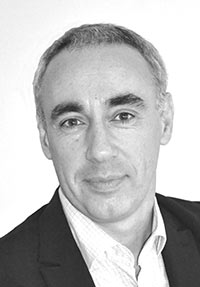
Sébastien Calmejane - The share of corporate travel is growing and we are approaching 12 million business travellers. We had to develop specific offers without abandoning a business model that is working very well. The work we've been doing over the past three years is bearing fruit, thanks to tailor-made services such as the 'Flexi' and, more recently, 'All inclusive' fares. Companies are adopting the best price policy and turning to low cost.
Where do you draw the line between traditional and low-cost airlines?
S.C. - We are at a crossroads with the traditional airlines. They are unbundling their offer and even investing in low-cost subsidiaries, whereas we have moved upmarket and are seeking to simplify travellers' lives. Margins in the airline industry are not huge, and these airlines envy us our additional sales model by adopting it. But we remain low cost. It's in our DNA. We optimise our costs, we operate point-to-point, without hubs, with a single type of aircraft and a simplicity of operation that means we will always be different.
Can we imagine an easyJet frequent flyer programme, or even a long-haul network?
S.C. - Other airlines have tried long-haul low-cost, but I'm not convinced. It would be complicated because we rely on small aircraft and fast turnarounds. So it's not on the cards. We want to make Europe orange, and there is still enormous potential for low-cost flights in France, Germany and Italy. Let's do that in a good way and then see if there are other opportunities. We've also thought about a frequent flyer programme, but we prefer to be aggressive when it comes to fares. And we don't know how the status of miles will evolve... We will perhaps increase the services offered by the easyJet card, but a real frequent flyer programme does not fit in with our airline.
Special report - Low-cost air travel: a business model
Low-cost air travel: a business model
- "We want to turn Europe orange" Sébastien Calmejane, Easyjet