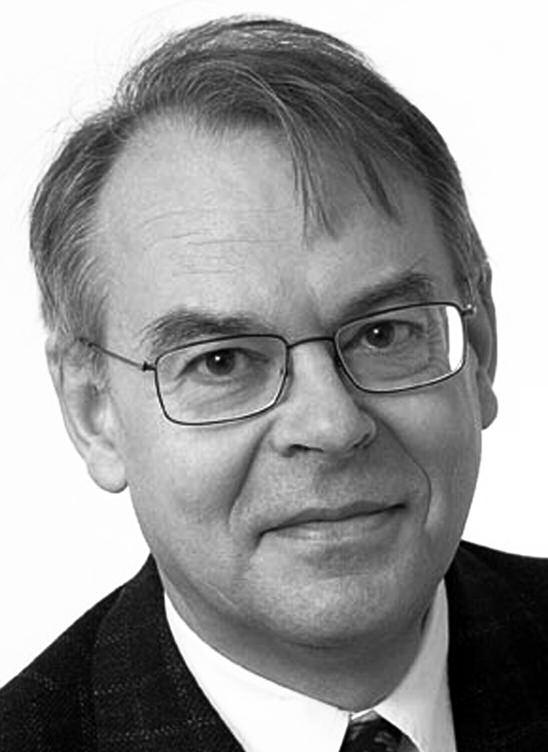
Responding to companies' concerns about eco-responsibility is an essential mission for Ademe, which is developing its information and assessment tools with this in mind.
What does Ademe offer companies?
Michel Rochet: We have a very broad offering. It's aimed particularly at SMEs, because they have a greater need for advice. The range includes diagnostic tools and technical guides that answer the main questions: Is my company managing its waste properly? How can I improve energy efficiency? How can I improve the environmental quality of the products I manufacture? It also includes the carbon footprint, a method for assessing all the greenhouse gas emissions associated with a company's activity.
We have just published the "Ecoresponsibility in the office" guide, which gives an overview of the measures to be taken to be ecoresponsible in office activities. The mobilisation and support of staff is fundamental to any programme of this type, which is why we distribute an original awareness-raising tool - the Clic'Ademe - which is being adopted by more and more companies to appeal to their employees.
Does the Agency issue recommendations for business travel?
M. R. : Yes. First of all, limiting travel as much as possible. Videoconferencing, for example, is now the best way of organising meetings, and has been widely adopted by Ademe. Next, we need to choose the least polluting modes of transport. Company car fleets need to include more clean vehicles. But above all, for the longest distances, we can often use the train: the TGV emits almost 50 times less greenhouse gases than the plane or the car.
What guarantees are provided by the "charter for offset operators" signed in 2008?
M. R. : It is essential for the credibility of the system that this offsetting is carried out according to harmonised rules for calculation and cost, quality of the projects financed and total transparency. The voluntary offsetting charter initiated by Ademe meets these objectives. The list of offset operators who have signed this charter is available on the "compensation CO2" website. Ademe organises audits at the signatories' sites, to guarantee that the commitments made are respected.
Hasn't "the crisis" pushed "sustainable development" off the list of corporate priorities?
M. R. : On the contrary! The number of requests made to Ademe has never been so high. In 2008, for example, 1,200 carbon audits were carried out, as many as in the previous four years. The crisis is leading companies to question the sustainable nature of their activities, and in particular their consumption of exhaustible resources such as fossil fuels and raw materials. They are increasingly aware that energy savings and waste prevention are financially profitable initiatives. A recent study shows that out of 30 companies that have adopted eco-design for their products, 28 have improved their financial results through reduced expenditure and access to new markets. Green growth is not a theoretical concept with distant application, it is already here.
Bio Express
1975-1984 Engineer at Drire, then project manager at ANRED (Agence nationale pour la récupération et l'élimination des déchets) in Upper Normandy.
1984-1985 Head of the Ile-de-France delegation at ANRED.
1985-1993 Head of the Seine and Nord de France Interregional Delegation, then Director of Technical Action and Productive Sectors at ANRED.
1993 Ademe, Director of Industry, then Director of the Customer Division.