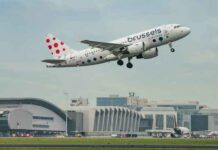


















The situation seems paradoxical. For two years, airport authorities and airlines have been repeating over and over again that they were all forecasting a recovery in traffic - some putting it at 2022, others at 2023. It appears that in fact In reality, not many people have prepared - except in words - for the big return of passengers to airports in Europe this spring....
As June draws to a close, negative headlines about Europe's air transport industry are making the headlines. Following the example of the Reuters press agency, which on 19 June published a dossier with the rather unsettling headline "European airlines in trouble". Summer chaos for travellers in Europe" . At the...
The situation seems paradoxical. For two years, airport authorities and airlines have been repeating over and over again that they were all forecasting a recovery in traffic - some putting it at 2022, others at 2023. It appears that in fact In reality, not many people have prepared - except in words - for the big return of passengers to airports in Europe this spring.…
As June draws to a close, negative headlines about Europe's air transport industry are making the headlines. Following the example of the Reuters press agency, which on 19 June published a dossier with the rather unsettling headline "European airlines in trouble". Summer chaos for travellers in Europe" . In the United Kingdom, London Gatwick, Heathrow or Manchester are all over the news. They show hordes of passengers queuing for several hours...
It is true that, over the past two years, the airline industry has been forced to downsize its workforce in a context of confinementquarantines and other border closures. According to Eurocontrol, 2020 resulted in losses of 56.2 billion euros for airlines, airports and air navigation services; 1.7 billion fewer passengers and 6.1 million fewer flights; and 51% of grounded aircraft fleets.
By 2021, traffic has picked up again. Eurocontrol indicated in its business report that it would was still short of 1.4 billion passengers compared with 2919. In 2021, European aviation losses still totalled 22 billion euros.. Over the year as a whole, traffic levels reached 56% in 2019 - an improvement on the 45% recorded in 2020...
Already in the last quarter, Eurocontrol, IATA (International Airline Association) and theACI Europe (Association of European Airports)) noted the recovery. This should prepare airlines and airport hubs for the return of air transport to favour.
Lack of foresight?
And yet, it has to be said that words have not really been followed by deeds - or at least not until it's too late. As is often the case, no one is really taking responsibility. For example, Virginia Lee, Director of Media and Communications at ACI Europe, has cleared the airports of any responsibility. because every airport is different" . It points out that governments did little to help airports during the Covid crisis.
The majority of public financial aid would therefore have favoured the airlines. " It would have been imprudent for airports to keep their staff during a period of almost total traffic restrictions.. Or to anticipate by hiring on a massive scale when the supervisory authorities in the countries concerned were themselves unsure of the conditions for recovery." she describes. " We regret that Europe did not give airports more support during the crisis." underlines the head of ACI Europe.
We can also blame airlines that have set up flight schedules with capacities very close to what they were before the Covid crisis. Low-cost carriers in particular. They have taken travellers' desire to get away from it all as a godsend after two years of restrictions.
According to Eurocontrol, air capacity in Europe now stands at 85% to 86% of the pre-covision level.. And the organisation even forecasts that traffic will reach 95% of its 2019 level during the peak of the summer season. This makes feel the impact of the shortage of ground staff even more keenly. In a report published in March 2021, the trade unions at Roissy estimated that the hub had lost 20,000 jobs out of a pre-crisis total of 94,000. This represents just over 20% of the total workforce. This figure is also found at German airports. At Amsterdam Schiphol, there are now 10,000 fewer employees than there were 68,000 before the crisis in 2020.
What's more, many airport employees seem to have left the sector altogether in the meantime. The main reasons for this are low wages and irregular working hours. This situation is also found in other sectors, such as the catering and hotel industries.
Faced with airport congestion and queues lasting several hours, for the time being European air transport has found few effective short-term solutions. Of course, airports are recruiting like crazy. ADP is offering to take on 4,000 new staff. While the German airport association ADV is asking for the possibility of temporarily hiring 2,000 ground handling workers from Turkey. In Portugal and Spain, the authorities will be sending new police forces to airport border posts.
" But all this takes time. You can't train security staff in a few days. It therefore takes several months to get security staff up to standard. On average this represents 16 weeks of training" explains Virginia Lee. She adds: "The bigger the airport, the greater the need for staff".
The other - much more radical - solution taken by the airlines is quite simply to cancel flights. Easyjet seems to have become a champion of this type of measure, reducing its capacity throughout Europe.. In the UK, a number of carriers are now in the process of reducing their capacity, particularly at London Gatwick. KLM does the same in Amsterdam. Whereas Lufthansa Group has just announced a programme to reduce its frequencies over the weekend at all major German airports and in Zurich. Air France has made no such announcement to date..
Airlines are advising travellers in the EU to avoid checking any baggage in the hold. And to go immediately to the security checkpoints.
There is one last solution for passengers: to travel by train within Europe. Admittedly, the journeys may seem longer. But between spending an extra three hours sitting quietly in a train or queuing for three hours in an airport, the choice is probably a quick one...
A situation exacerbated by strike callsThe already chaotic situation at several airports could reach a new level in the next few days, or even weeks. The tensions that have built up over the last two years among airline and airport staff are crystallising in a number of different ways. calls for strike action. L'Brussels airport was paralysed on 20 June. In the aftermath, employees of Brussels Airlines had targeted the dates of 23, 24 and 25 June. At RyanairOn 24, 25 and 26 June in Belgium and Portugal, and on 25 and 26 June in France, the trade unions attempted a European mobilisation. France on 25 June in Italy and from 24 June to 2 July in Spain. Travel to and from the Iberian peninsula is also likely to be disrupted by the mobilisation at easyJetThe strike will cover the first, second and last weekends of July. Strike notice has also been given at Air France and Transavia for 25 June - the low-cost subsidiary is planning other dates for action during the summer -, while a walkout has been voted for at British AirwaysThe date is not yet known. |