



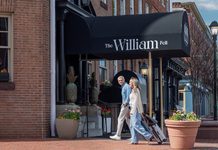
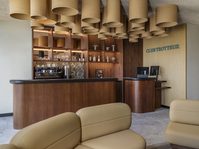
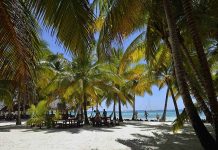
















With around twenty luxury hotels around the world today and another thirty or so to come, the Six Senses brand, which became part of IHG following its acquisition in 2019, has no shortage of ambition. Not least because the future of this brand, launched in 1995 around exclusive resorts with a focus on sustainability and well-being, is also being written. in an urban version. Later this year, for example, the IHG brand will set up in the centre of Rome, near Corso, in a palace dating from the XVe century. Under the contemporary direction of architect Patricia Urquiola, the former Palazzo Salviati Cesi Mellini will be transformed into an intimate and exclusive pied-à-terre of 96 rooms and suites, topped by a rooftop bar set in a Mediterranean garden with views over the city.
The brand's commitment to preserving its heritage and the environment will soon be reflected in Tel Avivby 2025. And this, in the very heart of the cityon the corner of boulevard Rothschild and rue Herzel and rue Lilienblum. This is where, more than a hundred years ago, around sixty families gathered in the north of Jaffa to build their first homes, the forerunners of what would much later become one of the world's leading high-tech centres.

Already established in Israel with a resort in the Negev desert, Six Senses will be delving into the roots of the country's largest metropolis by taking in five of its original 66 buildings, dating back to 1909. " It's extremely exciting to have the chance not only to be part of this city, but also to lay the foundations for the future. our foundation stone next to its foundation stone" said Six Senses CEO Neil Jacobs.
These heritage buildings will form the foundation of a 42-storey tower, naturally designed to the highest LEED Platinum sustainability standards. When completed, the Rothschild 10 tower will house a Six Senses hotel with 140 rooms and suites, as well as 55 residences. The hotel will feature a gourmet restaurant, a sky pool at 17e floor featuring a cocktail lounge, a spa and a holistic anti-ageing centre, as well as an Six Senses Place, dedicated to reflection and reconnection overlooking a garden. As for the historic buildings, they will house a variety of public spaces, for a journey back in time.
The brand's urban dimension will become even more pronounced in the years to come, again by revisiting the past. In 2024, Six Senses to set up in West LondonWhiteleys, a historic department stores' in the Bayswater district, is being refurbished. Under the leadership of Foster+Partners, this Art Deco building is set to be revived with a host of high-end boutiques and restaurants, as well as a luxury hotel with 110 rooms and 14 residences. In Lisbon, it is an older heritage that Six Senses will bring back to life by 2025 through the conjunction of two former palaces from the 17th and 18th centuries.e and XVIIIe centuries, the Palacio Lavra and the Palacio de Pedrosas.


While the brand is present in Istanbul, within ancient Ottoman mansions on the banks of the Bosphorus, Six Senses does not shy away from more contemporary things, notably in Kyoto, with an 81-room urban retreat located opposite the Myoho-in temple. Organised around a garden courtyard, this resort in the city will play on a soothing Zen atmosphereThe hotel is a great place to do business, even in its meeting rooms with fireplaces. For business discussions by the fire.
Hotel development is not always a linear process, and the brand's urban positioning has suffered a few shocks. Its two boutique hotels in Singapore, Six Senses Duxton and Maxwell, closed at the start of the pandemic and have now been integrated into Marriott's Autograph Collection. Similarly, its long-awaited property in New York no longer on the opening radar. Part of the One High Line project, the hotel was due to open in the coming months within two twisted towers designed by architect Bjarke Ingels. But with Covid having put a strain on the developer's finances, it seems that the project will be taken over by the Faena group, Accor's partner.
Six Senses rolls out its eco-friendly luxury worldwide
For all that, Six Senses can console itself with other exciting projects which will nourish its leisure roots. Luxurious resorts will open this year, from the Swiss Alps at Crans-Montana and the Saudi desert to the crystal-clear waters of the Maldives. And in 2024, the deep black waters of the Norwegian fjord Holandsfjorden will be waiting to be explored. With its futuristic circular shape designed by Snohetta - also known for the Oslo Opera House and Le Monde headquarters in Paris - Six Senses Svart will have the distinction of being the world's first positive energy building.
Dubai, Kitzbuhel, Victoria Falls, Belize, the Galapagos, India or Iceland: the future destinations in the pipeline are as diverse as they are varied, but the locations are always exclusive. Closer to home, Six Senses is also preparing for its arrival an hour and a half from Parisin Sologne. The brand is involved in the ongoing development of the Bordes estate, a prestigious golf resort launched by Baron Bich in the late 1980s.


Bought by British investor RoundShield Partners in 2018, this golf & country club - ranked by Forbes in the Forbes world top 25 - has since seen its history rewritten. Its 560 hectares will be dotted with luxury private villas - 89 in all, of which around 20 will be delivered by the end of the year - and a 50-room Six Senses hotel with 53 villas is due to open in 2025. Massimiliano Binda, CEO of Les Bordes Estate, explains the choice of this brand for his project size " lifestyle and eco-friendly" .
While eight rooms, a bar and a Michelin-starred restaurant will be built within the walls of the estate's original château, other buildings will be constructed in the local style to house the other rooms, villas and a vast spa. Embellished by a white sandy beach bordering a natural lake, life at the resort will be organised around a number of activities.'a real small village with bakery, local organic market, restaurant, art gallery, open-air cinema, club house with bar and meeting rooms.
The venue will also be open to seminars VIP, accompanying the work sessions with a host of possible activities: archery, ball trap, electric go-karting, fly fishing, horse riding, forest walks or bike rides. And golf, of course. While the Old Course and New Course are reserved for select members of the golf club, hotel residents have access to the 10-hole Wild Piglet course. As for the Château de Chambord, 20 minutes away, the estate already organises private tours and cocktails for its privileged guests outside public opening hours. No doubt Six Senses will do the same.
