


















The year 2023 will go down in the annals of SNCF history, marked by a new traffic record with 122 million passengers carried. This represents an increase of 4% compared with the previous year, which was already historic for the national railway company. Including international traffic in Europe, this increase even reaches +6% for 156 million passengers. This excellent result for the company's accounts can be attributed to the growth in leisure traffic (+2%/2022), but also to the return to its best levels of business passengers, up by 6% compared with 2022.
"In 2023, a year ahead of our forecasts, we have returned to the level of business customers we had before the health crisis, and demand is continuing to grow." said Christophe Fanichet, Director General of SNCF Voyageurs. SNCF has thus done more than resist the competition consisting of the ramp-up of Trenitalia and the arrival in 2023 of the Renfe in France. In the Business segment, SNCF benefited in particular from recommendations from companies as part of their CSR policies which favours rail travel, which emits much less carbon than air or car travel.
Intercity and TER trains also performed well, with growth of +4.5% (for 11 million passengers) and +8% respectively compared with 2022. L'regional train craze has even accelerated in recent years, rising by 21% compared with 2019. "We are even seeing exceptional growth in some regions, such as Occitanie, where passenger numbers have risen by 40% in 4 years." added Christophe Fanichet.
Growth held back by lack of train capacity
SNCF believes that it could have done even better in 2023 if it had not been confronted with a shortage of TGVs during leisure periods with heavy traffic, in particular holiday departures. It points out that a third of the Inoui TGVs were fully booked, but up to 60% for the Ouigo trains, which is testimony to the popularity of this low-cost service. To compensate for this lack of supply and to benefit from better fares, customers have been booking more in advance, with one ticket in two purchased more than 24 days before departure (+3 days on average).
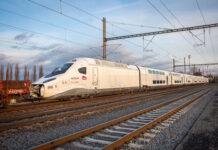
To solve this problem, SNCF has decided to run more of its 38 Ouigo trains and keep its Inoui TGVs for longer, 5 to 10 years for the oldest units. " But there's no miracle. I don't have any new trains, so we'll be adding a few hundred thousand seats in 2024, but we won't be making millions." he concluded. SNCF will have to wait until 2025, when the first TGV M trains, ordered from Alstom for a total of 3.5 billion euros, will be delivered. This so-called "TGV of the future" will have the added advantage of being able to carry 720 passengers, compared with 630 today. The SNCF, which currently has a fleet of 105 TGVs, is due to receive 12 per year according to the schedule agreed with the rail manufacturer.