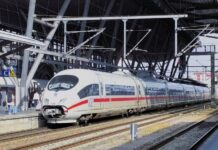












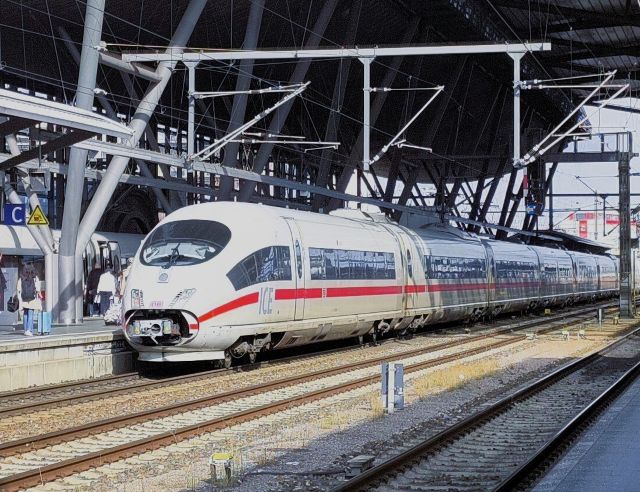
The new timetable of the Deutsche Bahn, The new service, applicable from December 13, 2026, will be international with more than 320 daily connections. This represents an increase of approximately 20 % in five years. More than 200 cities in 14 countries will thus be directly accessible from Germany.
For French travelers, several developments directly affect connections with Germany, notably from Paris and Strasbourg, but also the services to German cities near the border. Tickets for the new timetable are now available on bahn.de, in the DB Navigator app and at the company’s sales points.
Paris better connected to Germany
The Stuttgart–Paris connection will benefit from significant improvements. Thanks to the cooperation between Deutsche Bahn and SNCF, six daily trains will run in each direction, a total of twelve, compared to ten currently. An additional evening connection will be offered daily in each direction, with ICE and TGV trains.
Starting from Munich, a new morning train will also allow for a 30-minute time saving to reach Paris. On weekends, a second additional direct train will facilitate travel between Paris and Munich, with stops in Augsburg and Ulm.
These improvements are part of DB’s strategy for developing cross-border rail connections, which aims to offer more alternatives to air travel and car travel on major European routes.
For the French, an improvement in the offer at German railway stations near the border will also be an interesting alternative. Thus, near Strasbourg, the stations of Offenburg (25 minutes by train from the Alsatian capital) and Baden-Baden will now offer up to 41 ICE connections (the German high-speed train) both to the south and the north of the country. With the possibility of reaching Berlin, Hamburg, the North Rhine-Westphalia region, but also Switzerland.
At the Lorraine border, Sarrebruck will for the first time benefit from a new direct connection to Hamburg, offering another possibility to reach the metropolis of the North, including departures from Paris.
Faster trains between major German cities
The new timetable also includes an increase in the number of ICE Sprinter trains, designed to speed up travel between major German cities by reducing the number of intermediate stops.
Between Hamburg and Munich, three trains per day and in each direction will run with stops only in Hanover and Nuremberg. The journey will be reduced to five hours and twenty minutes, which is a gain of twenty minutes compared to the existing offer.
The Berlin–Stuttgart high-speed connection will also be strengthened: three daily departures in each direction, compared to one previously. With a stop limited to Nuremberg, the journey will be completed in four hours and forty-five minutes, which is approximately one hour less than the conventional connection via Frankfurt.
Nationally, the network will have approximately 70 daily Sprinter trains. DB will also restore a thirty-minute frequency between Berlin and Hamburg following the completion of modernization work on this line. Other direct services will be restored or improved. An ICE connection will once again link Cologne to Munich via Hamm, Kassel and Würzburg. Eisenach will regain a direct connection to Berlin, while Intercity trains between Dresden, Berlin and Rostock will once again run every two hours.
More trains to Italy, Denmark and Austria
To return to international travel, other countries will benefit from denser rail connections with Germany. For example, Copenhagen. The Danish capital will be connected to Hamburg starting March 2027 with 7 daily return trips. During the peak summer season, this offer will increase to up to ten daily trains.
Italy will be another major innovation. Subject to the homologation of the rolling stock, the Frecciarossa high-speed trains of Trenitalia are expected to enter service gradually starting in the summer of 2027 between Munich, Milan and Rome. The program initially envisages a daily round trip to each of the two Italian cities.
The Frankfurt–Nuremberg–Vienna connection must also be strengthened after the completion of the work on the Nuremberg–Passau corridor, with 14 long-distance trains per day, two more than before the start of the work last year.
Finally, up to four direct trains per day in each direction will connect Hamburg with Amsterdam.
Tickets, reservations and offers for all travelers
Some good news on the pricing front. Deutsche Bahn will keep the prices of its long-distance tickets, its flexible fares, and the BahnCard 25 and 50 cards.
The sale of tickets from European partner companies is also simplified. Customers can book trips operated by the Austrian railways ÖBB, the Swiss railways CFF, Trenitalia, SNCF, Eurostar, SJ in Sweden and National Rail in the United Kingdom on bahn.de and in DB Navigator. This integration already provides access to more than 10,000 additional European destinations, and its development is set to continue.
Since October 1st, groups of at least six people have benefited from more flexible booking conditions. Up to 60 days before departure, they can book the Sparpreis Gruppe rate free of charge and without obligation for 14 days. Up to 30 days before the trip, a reservation can be made with a deposit of six euros per person and per direction, without having to pay the full price immediately. The number of participants can also be reduced online. This could therefore be an interesting product for MICE groups or business travelers traveling in groups.