


















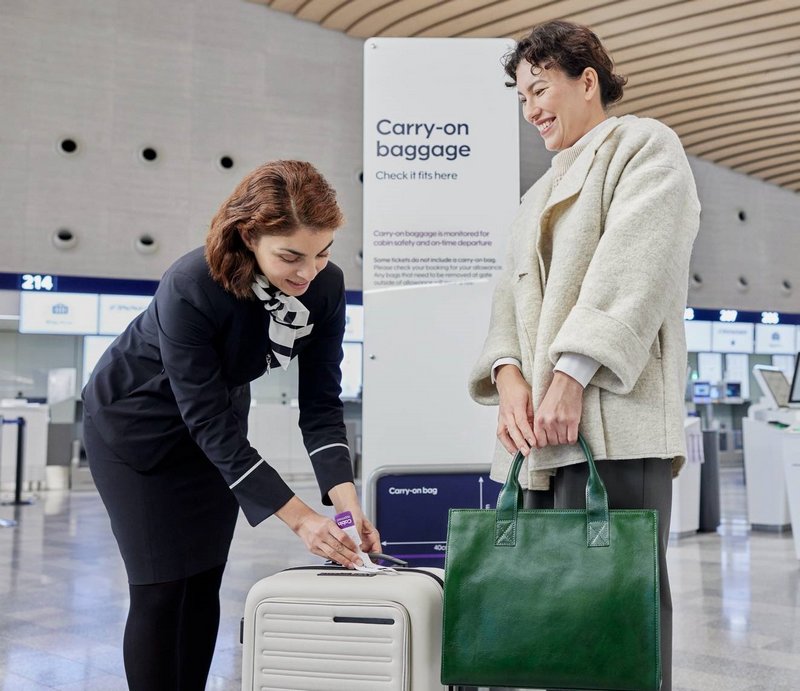
This February - but also in April and May 2024 - Finnair is collecting data on the average weight of customers and their hand baggage. The operation only takes place from theHelsinki airport. This anonymous data is then used to optimise the balance of the aircraft. Voluntary customers and their hand luggage are put on the scales at the boarding gate. A similar initiative was launched last year by Air New Zealand.
Each aircraft has a defined maximum weight to ensure safe take-off, and this weight must not be exceeded.. The weight of the aircraft includes the aircraft itself, the fuel, checked baggage and freight, in-flight catering and water tanks. The great unknown remains customers and their hand luggage. Airlines generally use an average weight calculated by the civil aviation authorities.
Another option is for airlines to use either their own measurements and confirmation of their results by the authority, or standard weights defined by the European Aviation Safety Authority (EASA).
Since 2018, Finnair uses average weights determined on the basis of its own measurements, but the authorities require these figures to be updated every five yearss. As the previous measures were taken in 2017 and 2018, the Finnish carrier must once again collect updated data.
Finnair assures no physical discrimination
According to Satu Munnukka, Head of Ground Processes at Finnair, "The data collected is in no way linked to the customer's personal data. So there's nothing discriminatory about it, as some might suggest.
"We record the total weight and general information of the customer and their hand luggage, but we don't do anything else. we do not ask for your name or booking numberfor example. Only the customer service agent working at the measuring point can know the total weight, so you can take part in the study with complete peace of mind," explains the Finnair manager.
The average weights calculated on the basis of the measurements will be delivered to Traficom - the Finnish transport and communications agency - between July and September 2024. After confirmation of the weights, these data will be used to establish new aircraft balance and load calculations between 2025 and 2030. The 'climb on the scale' covers a selection of European flights in the Schengen area and a number of long-haul flights.